
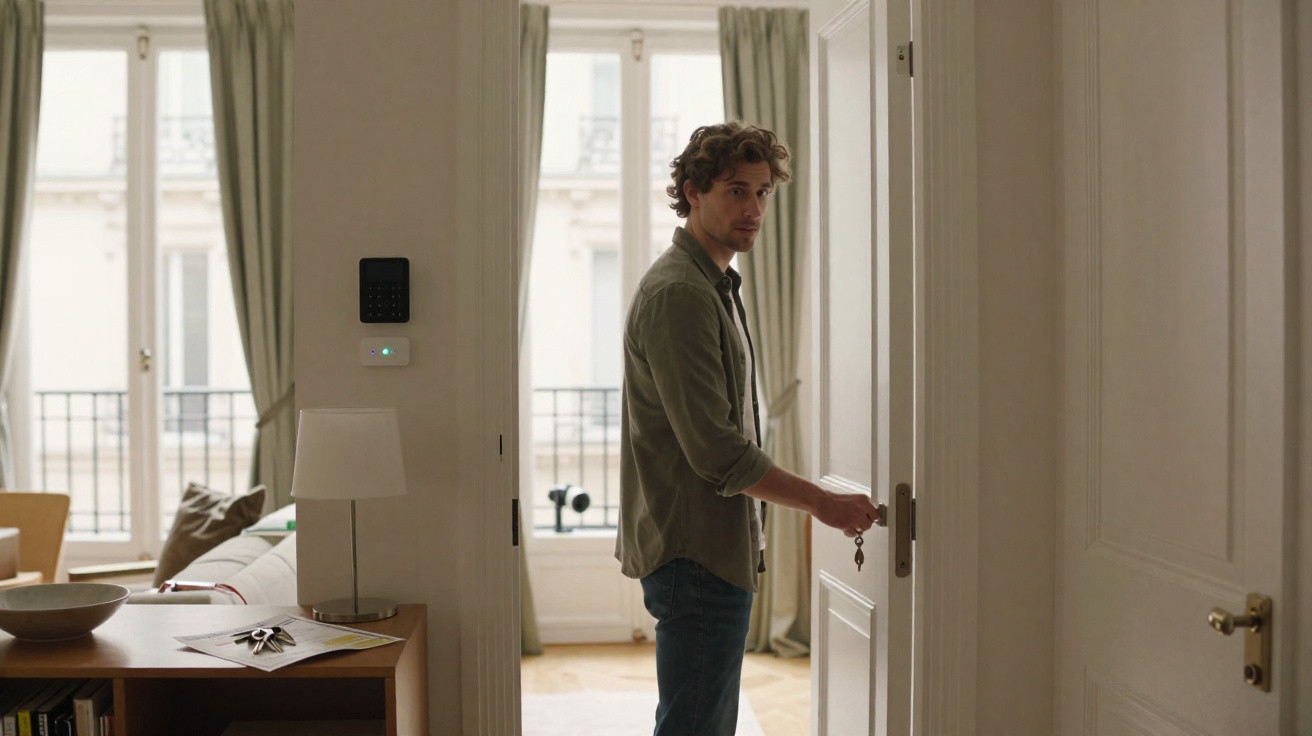
In France, burglaries often target homes where an occupant’s absence appears easy to identify from outside.
Published on 13 May 2025, the source article stresses that protecting a home is not solely a matter of buying expensive equipment. It advocates combining everyday habits, physical security measures and monitoring tools to reduce the opportunities available to burglars.
Signs of absence can attract attention
A quiet property, shutters kept closed for several days, an overflowing letterbox or an untended garden may all suggest that nobody is home for an extended period. Burglars generally aim to minimise the chance of being disturbed by a resident or neighbour.
Creating the appearance that someone is present is therefore a straightforward precaution. A light switched on at selected times, a moving shutter or a radio occasionally turned on can make a property seem occupied. Timers and remotely controlled bulbs can create these changes without leaving devices running constantly.
“A home that appears lived in and watched is a less comfortable target than a house that is clearly empty.”
Posts on social media also require particular care. Publicly announcing a trip, sharing holiday photographs in real time or stating a return date can disclose that a home is vacant. Waiting until returning home before posting such content avoids giving this information to unknown people.
Useful checks before leaving home
- Check that doors, windows, garage doors and gates are properly secured.
- Do not leave valuables visible through patio doors or windows.
- Ask a trusted person to collect post if the absence will be prolonged.
- Never hide keys beneath a doormat, flowerpot or close to the entrance.
- Arrange suitable outdoor lighting around entry points and less visible areas.
Home entry points must delay a break-in
The front door remains a key area of concern. The source article advises fitting a reinforced door and a multi-point lock. The intention is not to claim that a home can be made impossible to enter, but to make an attempted break-in harder and slower. The longer an intruder has to spend at the property, or the more noise they have to make, the greater the likelihood that they will be noticed.
Windows, French doors, shutters and secondary entrances should not be overlooked. A partly open window, a poorly locked service door or access through the garage may be enough to weaken the whole security arrangement. Outbuildings should also be checked, particularly when they contain tools that could help someone force their way inside.
Possessions visible from the street may draw attention. A computer, an expensive bicycle, jewellery left near a window or packaging from costly equipment placed outside the home can indicate what might be available indoors. Keeping sensitive items out of sight reduces this opportunity for reconnaissance.
“Security does not rely on a single lock: it is based on several successive barriers, from the gate to the rooms where the most valuable possessions are stored.”
Alarms and cameras: tools requiring a considered approach
Alarm systems have become more affordable, according to the source article. Some devices detect movement and send an alert to a phone. Others are designed to tell the difference between an animal passing by and a person, helping to reduce unnecessary activations.
An alarm can act as a deterrent, provided it is installed and used correctly. It needs to be activated whenever people leave, its batteries or power supply should be checked, and arrangements should be made for situations in which several people enter the home. Equipment that is switched off or incorrectly configured will not provide effective protection.
Cameras may assist with monitoring the area around a house, an entrance or a garden. They are not a replacement for physical security measures. They can also raise privacy concerns, especially in residential areas where neighbouring properties are close together.
What the rules in France allow
In France, an individual may install a camera to secure their home and private land. However, they must not record public space or neighbouring properties. A camera aimed at a pavement, street or the entrance to a neighbouring house may infringe the privacy of the people being filmed.
People who may be recorded in a private setting, such as visitors or employees working at the home, must be told that the system is in place. The National Commission on Informatics and Liberties reiterates these principles for systems installed by private individuals.
People planning to be away can also ask their local police station or gendarmerie brigade about the Holiday Peace-of-Mind Operation. This service allows them to report an absence. During their usual rounds, patrols may then pay particular attention to the specified home.
Preparing for a response after a break-in
Prevention also involves planning ahead. Keeping invoices, photographs and identifying details for valuable possessions can make matters easier following a theft. In particular, these records help establish a more accurate list of stolen items for the insurer and law-enforcement authorities.
After discovering a break-in, it is better not to touch forced entry points or immediately put everything back in order. Leaving the scene as it is may assist with any examination. The appropriate next steps are to contact the police or gendarmerie, then notify the insurer in line with the terms set out in the policy.
A fixed or concealed safe can protect certain documents and belongings, but it does not remove the need to keep proof of purchase somewhere other than inside the safe itself. Distributing the most sensitive items, keeping them less visible and reinforcing entry points creates a cumulative effect: every measure adds another obstacle for someone attempting to get inside quickly.

Comments
No comments yet. Be the first to comment!
Leave a Comment