
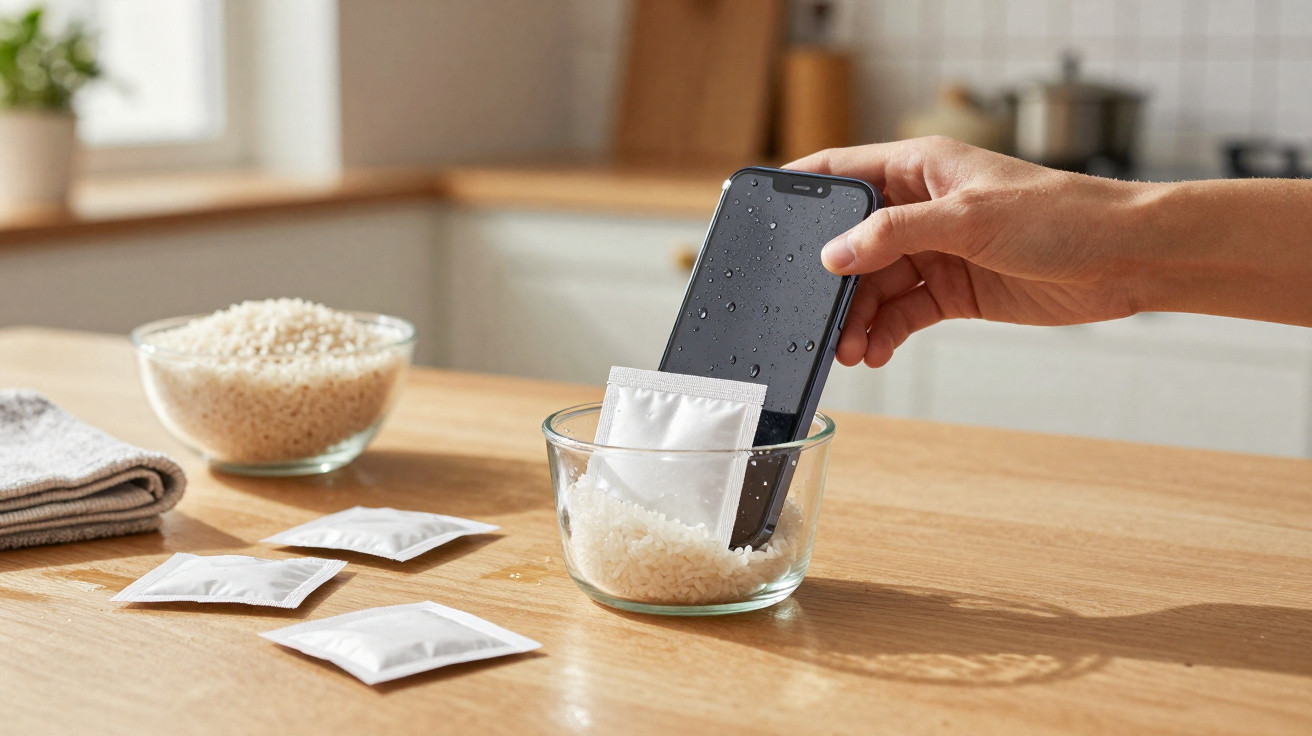
Small white sachets bearing cryptic warning labels are tucked into shoe boxes, electronics packaging and handbags almost as a matter of course. Most are thrown straight into the bin. That is a pity, because these little packets can rescue an expensive smartphone in an emergency, prevent jewellery from tarnishing and protect paper documents from mould – for years to come.
What the white sachets contain – and why they work so well
Inside these tiny packets is an unremarkable substance: silica gel. It is a solid, highly porous drying agent made from silicon dioxide. The beads may look ordinary, but they do some serious work behind the scenes.
Its effectiveness comes down to surface area. Each bead is filled with microscopic pores. Water molecules in the air attach themselves to the surface rather than soaking into the material as they would into a sponge. Experts call this adsorption, not absorption.
“Silica gel can take up around 40 per cent of its own weight in water without breaking down or becoming sticky.”
That is why these sachets appear wherever moisture could cause major damage: in shoe boxes, leather goods, cameras, laptops, headphones and delicate spare parts. Their job is to keep the product dry during transport – but they can continue doing useful work at home long afterwards.
Forget bowls of rice: how silica gel helps wet smartphones
The most dreaded scenario is familiar: a smartphone slips into the toilet, the sink or a puddle. Many people instinctively wipe it off, perhaps reach for a hairdryer, or put it in a bowl of uncooked rice. None of these is a good solution.
Rice does absorb some moisture, but it works far more slowly than silica gel. Rice grains can also push crumbs and starch into ports and openings. Silica gel sachets are clean, low in dust and considerably more effective.
Step-by-step advice for an emergency
- Switch the smartphone off immediately; do not turn it back on or charge it.
- Remove the protective case, card(s) and, where possible, the battery.
- Carefully dry the outside of the device with a soft cloth; do not use a hairdryer or an oven.
- Put the smartphone into an airtight box or freezer bag if possible.
- Add several silica gel sachets, ideally ten or more depending on their size.
- Leave the box sealed for 48 to 72 hours and do not test the device in the meantime.
After this period, there is a much better chance that the device will start again. There is never a guarantee, particularly if the contacts have already corroded. However, the prospects are better than with the rice trick – and you may avoid an expensive repair altogether.
The same approach can be used for other electronic devices as well: compact cameras, e-readers, gamepads, wireless headphones and fitness trackers can be dried in a silica gel bath, provided they were not powered on when water got inside.
Where silica gel can save money around the home
Wet electronics are only one possible use. Moisture acts as a quiet destroyer in many parts of the home, and silica gel can help in a surprising number of places.
Protecting photographs, documents and memory boxes
Old photo albums, certificates, contracts and diaries are especially vulnerable in a cellar or loft. Paper becomes warped, pages stick together and the familiar “old book” smell develops.
Simply place one or two silica gel sachets in:
- document folders containing important originals
- shoe boxes storing old photographs or letters
- memory boxes containing children’s drawings, tickets and programmes
This lowers humidity in the immediate area around the papers and helps prevent distortion, mildew marks and odours.
Keeping jewellery, watches and cutlery shiny for longer
Silver cutlery, costume jewellery and some watches are sensitive to humid air. They tarnish more quickly, change colour or develop unattractive marks.
A discreetly hidden sachet in the cutlery drawer or jewellery box noticeably slows this process. That means less polishing, fewer specialist cleaners and less frustration over dull necklaces and spoons.
Sports bags, trainers and the car: tackling stale smells and misting
Almost everyone knows the problem of damp sports shoes or a stuffy gym bag. Here, silica gel has a dual effect: it dries the items and consequently also reduces odours.
- Put one sachet in each sports shoe before storing it in the cupboard.
- Place one or two packets in a sports bag or rucksack.
- Keep several sachets in the boot or under a seat to reduce moisture in the car.
In a car, this can also help prevent windows from misting up in the morning. Position the sachets close to the windscreen, without covering any air vents.
How to regenerate silica gel sachets and use them for years
Many people discard the sachets once they seem “saturated”. Yet they can be refreshed remarkably easily. Gentle heat releases the moisture they have collected.
“At around 80 degrees in the oven for roughly an hour, the beads release the water they have gathered – and are almost as good as new.”
To do this, lay the sachets on a baking tray without stacking them and dry them using the fan setting. Let them cool completely, then store them in a tightly sealed jar or container. This ensures you always have a supply ready.
Important: do not use a higher temperature, as this could damage the sachets. Do not open them either. Although the beads are classified as posing few problems in ordinary household use, they should not be handled by children or placed in pets’ mouths.
The best places for silica gel sachets in the home
Anyone who saves these packets consistently can create a useful little system. Suitable locations include:
| Location | Benefit |
|---|---|
| Bathroom drawer | Protects razors, tweezers and manicure tools from rust. |
| Make-up bag | Keeps powder, eyeshadow and blusher dry and stable for longer. |
| Wardrobe | Reduces moisture around leather jackets, bags and delicate fabrics. |
| Toolbox | Helps prevent rust on screwdrivers, bits and drill bits. |
| Camera bag | Protects lenses and electronics from condensation. |
If you notice that the sachets are regularly “working” in particularly damp areas – such as the bathroom or cellar – simply put them in the oven for an hour every few weeks, then use them again.
What silica gel cannot do – and its limits
Useful as these sachets are, they are not a replacement for a building dryer and will not solve serious damp issues in walls or cellars. A few grams of granules are not enough for an entire room that is permanently damp.
Silica gel is suitable for limited spaces: drawers, boxes, cupboards, suitcases and closed bags. Anyone dealing with mildew marks on walls, flaking plaster or mould in a room needs other measures, such as ventilation, heating, structural repairs or electric dehumidifiers.
The same applies to wet electronics: if water entered under high pressure or the device ended up in the sea, the risk of corrosion rises sharply. In those situations, a specialist repair service is often the safest choice, especially for costly smartphones or cameras.
Practical tips for collecting and handling silica gel safely
A few simple ground rules help ensure these drying aids do not become a risk:
- Put sachets from newly unpacked shoes, bags or devices straight into a screw-top jar.
- Label the container clearly so children do not investigate it out of curiosity.
- Do not cut open the sachets or use the beads loose.
- Keep sachets away from pets, especially curious dogs and cats.
If you wish, you can expand your own supply. Silica gel is also sold in larger sachets or containers with a colour indicator: when the colour changes, the granules are saturated and need to go in the oven. The small free packets found in packaging are the ideal addition to this stock.
In the end, what once went into the bin as irritating packaging waste can become a quiet everyday helper with a little awareness. Particularly where expensive electronics or irreplaceable paper memories are concerned, a few grams of silica gel can make all the difference – between total loss and saving a treasured item.


Comments
No comments yet. Be the first to comment!
Leave a Comment