
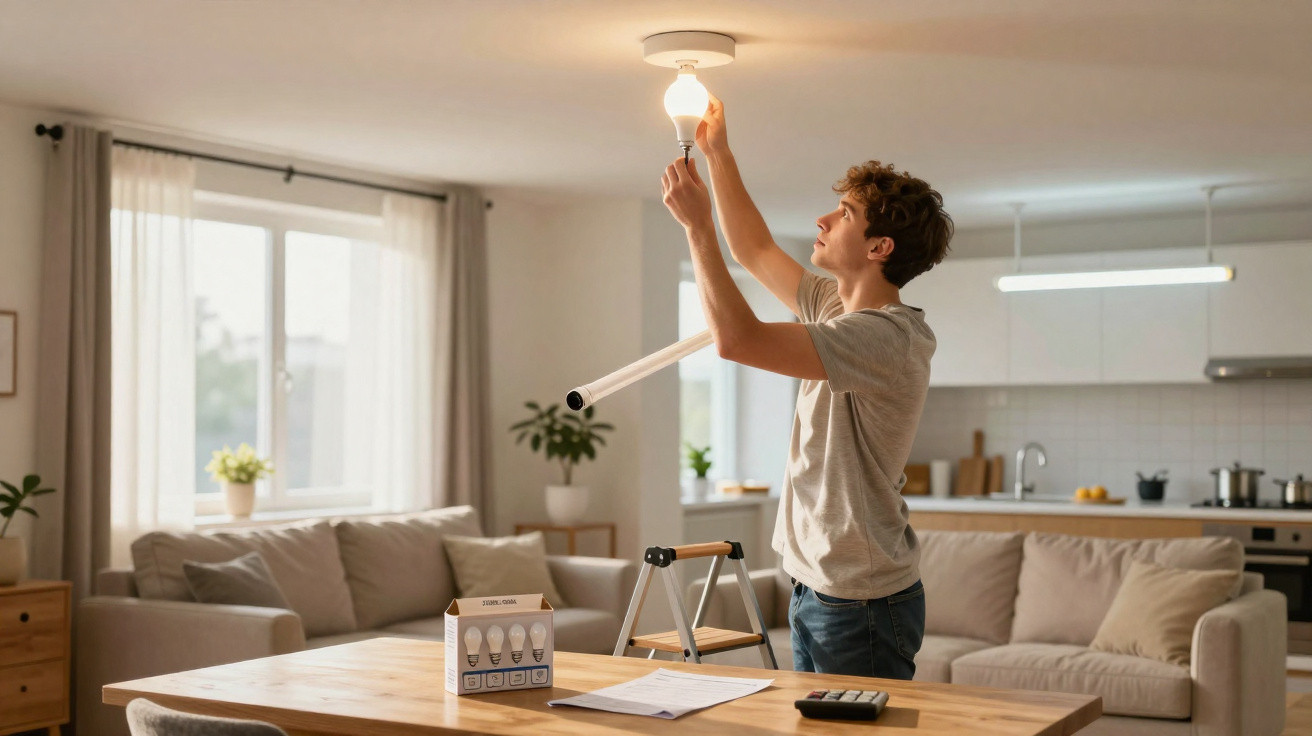
Residential lighting has changed considerably in recent years, with the conventional fluorescent lamp steadily losing ground. In 2026, the emphasis is on solutions that combine energy savings, durability and light quality. Within this landscape, the LED lamp has become the leading technology for replacing tubular and compact fluorescent lamps, setting a new standard for indoor lighting.
Is LED the leading lighting trend in 2026?
In 2026, the LED lamp leads residential and small-business lighting projects because it brings together low energy use, a long service life and versatility. LEDs use light-emitting diodes, which turn electrical energy into light far more efficiently than fluorescent lamps do.
Many fluorescent lamps lose some of their energy as heat and rely on gases and internal coatings. LEDs, by contrast, operate through solid electronic components, limiting energy losses and making the unit more durable. This also reduces faults caused by vibration and frequent switching, both common in heavily used spaces.
Why does LED replace the fluorescent lamp in everyday use?
Replacing the fluorescent lamp with LED lighting is driven by more than savings: it also concerns safety and sustainability. Unlike fluorescent lamps, LEDs contain no mercury, making disposal and recycling easier while reducing the risk posed by accidental breakage.
In everyday use, households quickly notice benefits that extend beyond electricity bills, affecting visual comfort and the maintenance of their rooms:
- Lower energy consumption: up to 60% to 80% less than a fluorescent lamp with equivalent luminous flux.
- Extended service life: typically 15,000 to 25,000 hours, requiring fewer replacements and producing less waste.
- Visual comfort: a CRI commonly between 80 and 90, more accurate colours and less visible flicker.
- Instant start-up and automation: immediate illumination, with dimmable and smart-model options.
How do you choose the best LED lamp for each room?
Choosing the right LED lamp depends on the room, the activity carried out there and the intended lighting effect. Rather than considering wattage alone, it is worth checking the light output in lumens and the colour temperature in kelvins (K), which determine how light feels within a space.
To make the choice easier, match the colour temperature to the room’s main purpose, while also checking the shape and cap type for compatibility with the existing fitting. When replacing fluorescent tubes, certain LED models may need the ballast modified or direct wiring, so it is important to follow the manufacturer’s instructions or use a qualified professional.
How quickly does switching to LED pay for itself financially?
The savings delivered by LED lighting usually offset the initial investment fairly quickly, especially in places where lights are used for many hours each day. Although the unit price remains, on average, higher than that of a fluorescent lamp, the overall cost over time is generally lower due to reduced consumption and greater durability.
In homes that make extensive use of artificial lighting, the switch to LED generally pays for itself in around 6 to 18 months, depending on local electricity tariffs and the number of lighting points replaced. In small businesses, where lamps remain on for longer, the return can be quicker still, making LED a financially strategic and more environmentally responsible choice.



Comments
No comments yet. Be the first to comment!
Leave a Comment