
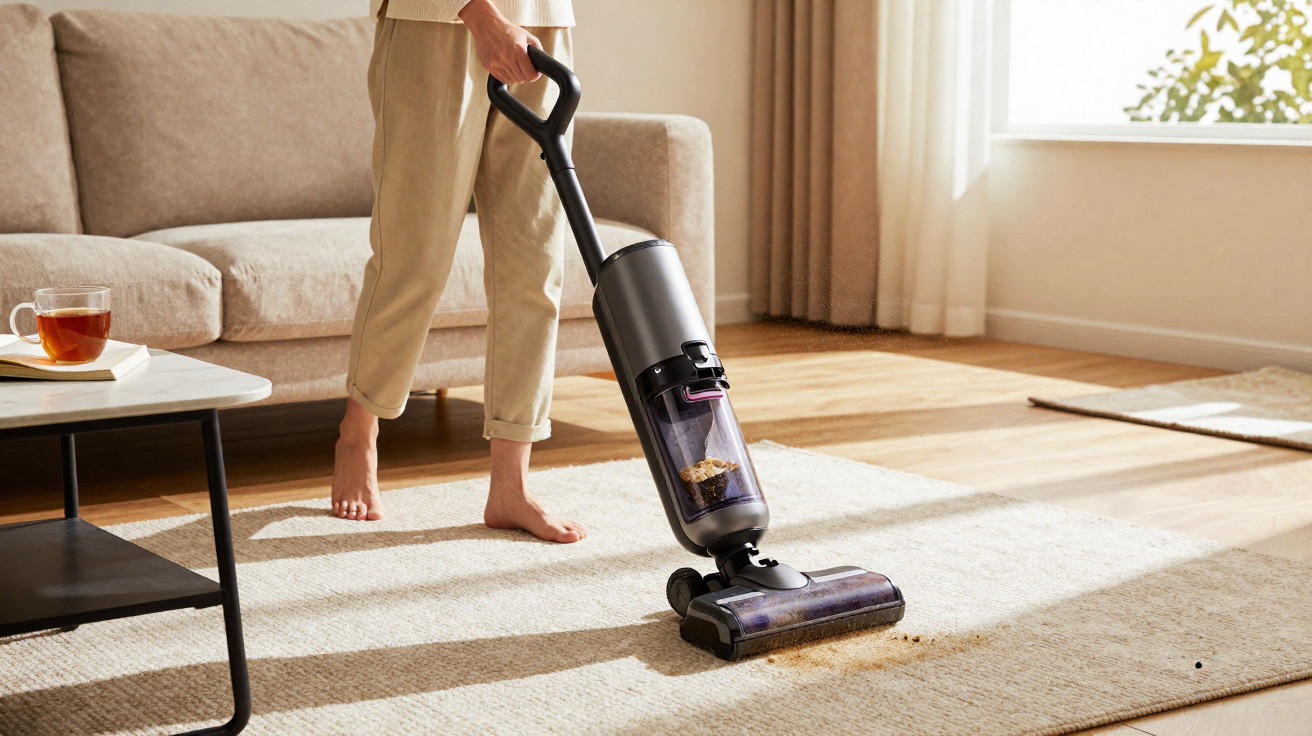
You know that faintly guilty moment when you glance at the living-room carpet and realise it is no longer beige, but some unidentifiable greyish shade? You fetch the vacuum, rush around the room as though an unseen timer is running, and then step back with a modest sense of achievement. It appears cleaner. The carpet stripes are orderly, the crumbs have vanished, and briefly you feel almost capable at domestic life. Yet, a week later, when you empty the bin, you may wonder: “Hang on, why is there barely anything in here? Where did all the dirt go?” Frustratingly, it has probably remained exactly where it was: in the carpet, the rugs and the fibres of the sofa you keep meaning to clean properly. The explanation is remarkably straightforward: you are vacuuming much too quickly.
The day I discovered my ‘quick tidy’ achieved almost nothing
I came across this rather obvious revelation one Saturday after deciding, unusually for me, to read the small fold-out booklet supplied with my vacuum. It was raining, the washing was on, and I was mildly avoiding other tasks. In tiny, courteous print, it said something along the lines of: “For best performance, move the vacuum slowly over each section of floor.” I remember looking at it in disbelief, as I had always vacuumed as if I were about to miss a train. Slowly? Who has time for that?
Nevertheless, I gave it a go. I chose a single square metre of carpet and moved the vacuum with deliberate slowness: a steady, slightly uncomfortable motion forwards and backwards while counting silently. Over particular areas, the motor note shifted subtly into a deeper hum, as though it had finally begun to work properly. Afterwards, I emptied the canister. The amount of dusty fluff collected from that small patch was gross. Satisfyingly gross, admittedly, but also a little disheartening, as it suggested I had been short-changing myself for years.
That was when it clicked: my normal speedy sweeps were more like dust flirting than actual dirt removal. Although the surface of the carpet looked improved, the embedded grime - the material that gives rooms a slightly “lived in” smell and brings on unexplained sniffles - was still there, quietly getting the better of me.
What your vacuum is actually trying to do when you switch it on
For all the advertising attention paid to brush bars and smart LED lights, those are not really the point of a vacuum. Its core purpose is straightforward: it needs to create sufficient suction and airflow to draw fine debris from between the fibres. As you push it forwards, the brush loosens debris while the suction pulls it into the appliance. That is the basic principle, but the process needs time.
Race a vacuum across the floor and its airflow has scarcely any opportunity to catch particles that are gripping the carpet. They are buried between twisted fibres, wrapped up in pet hair or stuck to faintly tacky areas left by spills that dried long ago. Dirt is persistent. It will not surrender its place merely because you speed over it once while feeling productive.
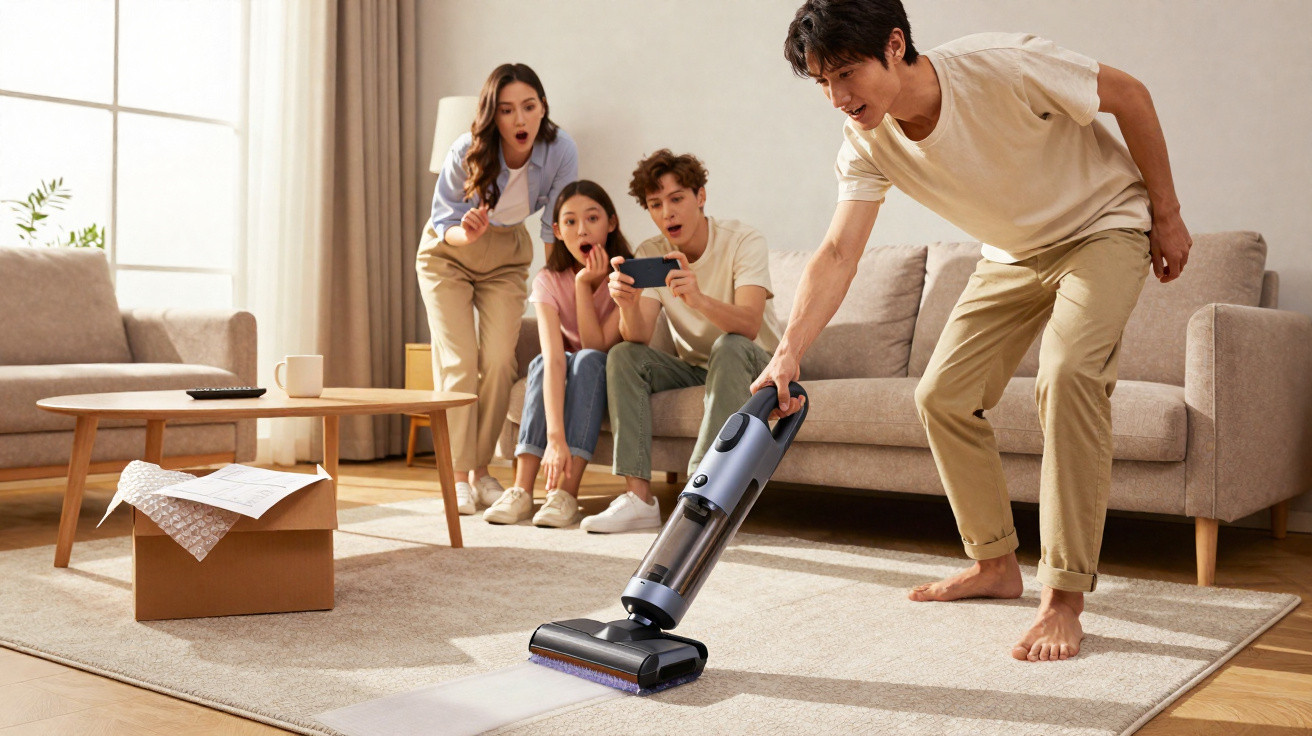
Slow down, however, and the process changes. The brush spends longer rolling over every section, agitating the fibres and bringing more debris into reach. Suction gets that vital additional half-second to draw particles into the airflow. That small interval separates “looks fine for now” from “wow, that’s where the smell was coming from”.
The science behind slow vacuuming: why speed reduces cleaning power
Airflow, friction and persistent grit
Beneath your feet, a carpet resembles a miniature forest. Every fibre is a tree, with dust, crumbs and grit resting in the undergrowth. Vacuum suction is not magic; it is simply rapidly moving air attempting to seize that debris and carry it away. Airflow does not work instantly, though. It requires a little time to travel through the fibres and reach dirt concealed at the bottom.
If you move too fast, the vacuum head barely agitates that undergrowth. You collect the large, visible pieces at the surface - cereal flakes and bits of paper - while leaving behind the fine dust that matters most. That fine dust causes stale-smelling rooms, gradually darkens pale carpets and wears away fibres whenever you walk over them. It is effectively invisible sandpaper.
When you guide the vacuum slowly, the brush has more friction against each part of the carpet. The fibres bend, separate and release the dirt they have been holding. The suction itself is no more powerful, but it works more efficiently on debris that has already been loosened. Rather than treating the floor as a circuit and the vacuum as a racing car, you are allowing physics to work.
Why two quick passes cannot match one slow pass
Many people rely on the “two quick passes” approach: speed forwards, speed back, task finished. It gives the impression of thoroughness, and the crisp parallel stripes certainly announce “clean”. However, if both passes are too quick, you are simply doing the same partly effective thing twice. You are brushing and suctioning over dirt that has remained largely undisturbed.
A single purposeful pass, including a pause at the end of each forward and backward movement, can lift dramatically more debris than several hurried sweeps. It gives the vacuum time to collect compacted dust and small grit from the base of the pile. Instead of merely grooming the carpet, you are excavating it.
This is why professional cleaners look painfully methodical when they vacuum. They are not being theatrical. They understand that speed works against extraction.
The irritating issue of time: why everyone vacuums in a hurry
In truth, hardly anyone puts a “luxuriously slow vacuum session” in their weekly diary. It gets squeezed between the school run and preparing dinner, or happens at 10 pm while you try not to wake the children. It is enormously tempting to rush because housework is endless and you would quite like ten minutes of your own time back.
We have all experienced the moment when somebody messages, “I’m outside, see you in five!”, and we become a frantic cleaning whirlwind. Cushions are plumped, candles lit and the vacuum sent flying across the carpet. The room may look presentable, but it is not a deep clean. It is performance: staging for visitors you like enough not to frighten off with the true condition of your hallway runner.
Taking your time can feel like accepting that cleaning will last longer than you would prefer. Oddly, though, if you select one area and vacuum it properly and slowly, you may need to vacuum less often altogether. The cleaner result stays that way for longer because you have removed material that would otherwise return to the surface with every footstep.
The one-room vacuum experiment that may slightly disgust you
To see that slow vacuuming works, try this just once. Choose the room that feels dirtiest in your home: perhaps the hallway, the lounge where everyone eats in front of the television, or the bedroom that the dog supposedly “never” enters despite the inexplicable hair. Empty the vacuum first, so you can see precisely what it gathers.
Clean one half of the room at your normal speed. Do not analyse it; simply vacuum as you usually would. Then tackle the other half at an almost embarrassingly slow pace. Move forwards slowly, pause, move back slowly, pause. It feels a little awkward and a little meditative. Once finished, switch off the machine, take it somewhere well lit and empty the bin into a bag.
You will very likely find more dust and fluff from the slowly cleaned side, sometimes startlingly more. It produces an unusual combination of satisfaction and horror: satisfaction that you have finally beaten the dirt, and horror at how much of it had been in your flooring all along. Once you have witnessed it, returning to frantic vacuuming can feel like knowingly leaving half the task undone.
Why both carpets and hard floors benefit from a slow pass
Carpets: the home’s dirt hoarders
Carpets are forgiving, which is both their appeal and their treachery. They conceal things. They swallow crumbs before you spot them, soften footsteps and gradually gather skin cells, pollen, hair, soil and the powdery remnants of countless snacks. They hold on to your secrets - along with your dust.
Slow vacuuming reverses that quiet accumulation. The fibres are lifted, fluffed and separated, allowing air to pass between them. The vacuum can then remove debris throughout the pile rather than from only the top few millimetres. This is why a carpet often appears fresher and sits more upright after a slow clean: it has not simply been brushed; it has been relieved.
Hard floors: more than visible crumbs
With hard floors, it is easy to assume that a quick sweep will do because dirt can be seen. You notice dust bunnies trembling in the corner and crumbs lined up beneath the dining table. A rapid pass catches these obvious pieces, making the floor look presentable at first glance. Finished, surely?
Not quite. On tile, wood and laminate, fine dust and lighter particles commonly settle in very small gaps, grooves and joins. Skim over them quickly and the airflow does not have enough time to get into those spaces and release them. Some debris is merely pushed along by small gusts of air, before settling again a few centimetres away.
Move the vacuum head steadily over a hard floor and you can hear the change: a slightly rougher sound as fine particles and grit are finally pulled up. That noise is proof that you have stopped chasing dust around and begun to capture it.
Why your allergies, lungs and nose notice vacuuming speed
There is a less glamorous reason to care, beyond carpets that look cleaner. Much of what settles deep in flooring is not simply dirt but possible irritants, including pollen, pet dander and dust mite droppings. When you only skim the surface, this material builds up until sunlight or central heating gently lifts it into the air. Your body then takes over with the sneezing, itchy eyes and unexplained “I only feel like this at home” headache.
Vacuuming slowly helps to remove more of these particles rather than merely redistribute them. You draw more from fibres and joins, containing it in a filter instead of leaving it to drift back towards your lungs later. People who favour slow vacuuming often quietly mention fewer sniffles, less “dog smell” and fewer mysterious odours when they collapse on the sofa in the evening.
It is hardly glamorous. Nobody writes love letters to a HEPA filter. Still, your body notices the difference, even if your conscious mind only thinks “the house feels nicer somehow”.
How slow is slow enough without sacrificing the entire day?
You do not need a stopwatch, and there is certainly no need to vacuum like a mourning Victorian butler. As a broad rule, aim for around half your usual pace. If pushing forwards normally takes one second and pulling back takes another, make each direction last roughly three seconds. It should feel gently ridiculous and relaxed, like walking behind a toddler who has just discovered their feet.
Reserve this method for places where it makes the greatest difference: busy routes through your home, the rug beneath the coffee table and the area around the bed. For most other areas, a regular pass will usually be enough. This is a long-term approach: spending a few extra minutes moving slowly over key spots can alter how clean the entire home feels.
The quiet pleasure of doing one dull task properly
There is something unexpectedly soothing in deciding to do this particularly unglamorous household chore well. There is no audience or Instagram transformation, only you, the low motor hum and the faint dusty scent becoming sharper over an especially grimy patch. As the canister gradually fills, you realise that all of this had been living alongside you - and now it is not.
In a life where so much is rushed, poorly juggled or left half-finished, slowly vacuuming becomes a small act of defiance. Quite literally, you refuse to skim the surface. You are saying that if you are going to spend time doing this, it should at least work properly.
The next time you take out the vacuum and feel inclined to drive it around like a Formula 1 racer, ease off. Allow the machine to perform the job it was designed for. Your carpets will last longer, the air will seem lighter, and you may even become attached to the modest but surprisingly powerful feeling that you have finally defeated the dirt you could not see.
Comments
No comments yet. Be the first to comment!
Leave a Comment