
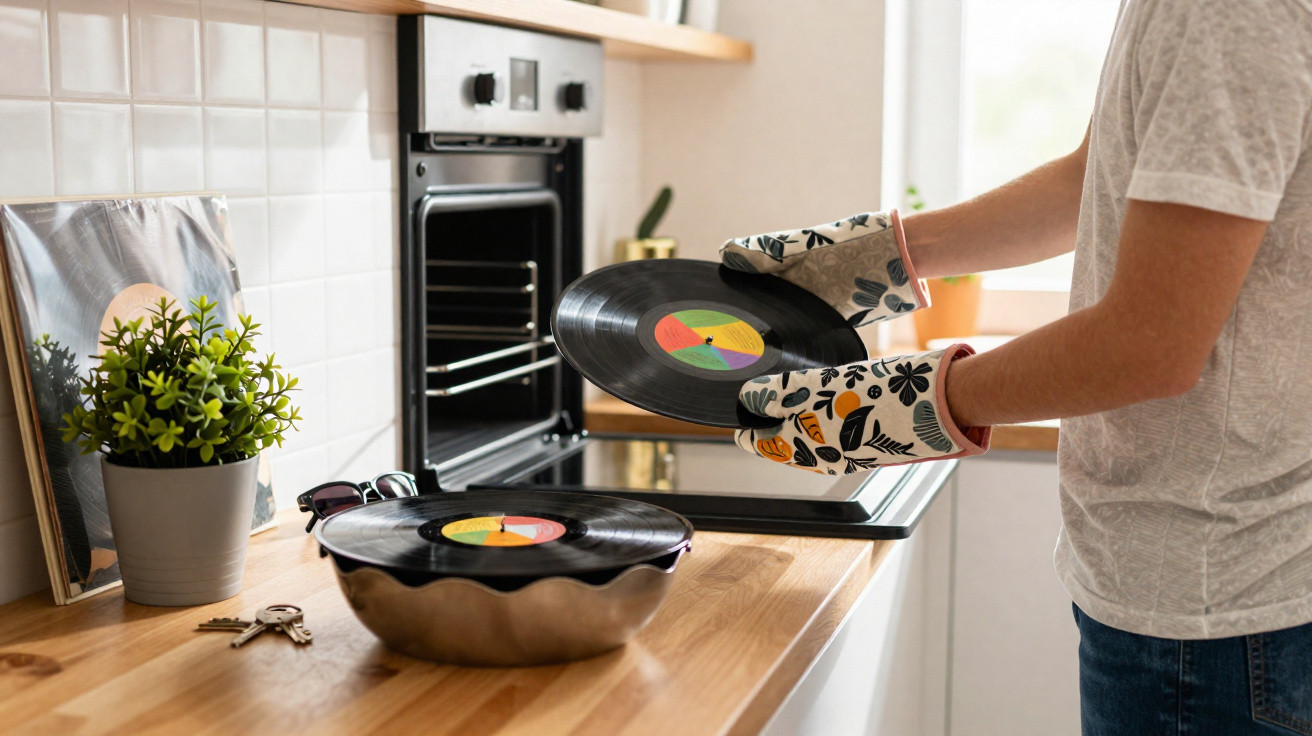
A simple oven trick can turn old vinyl records into fresh home décor in just a few minutes.
Many cellars still contain boxes of old records that crackle, skip or can no longer be played at all. Sooner or later, these leftovers often end up in the bin. Yet there is a remarkably easy alternative: a little heat and a few simple movements can transform an unusable record into a decorative one-off – with no specialist tools or crafting expertise required.
Why old vinyl records are ideal for upcycling
Vinyl records are made from PVC, a thermoplastic material. With moderate heat, it softens and becomes pliable without immediately melting. Once it has cooled down, it keeps its newly formed shape. That makes unwanted records particularly well suited to a quick upcycling project.
“At around 100 to 120 degrees in the oven, the record becomes as soft as modelling clay – and can be turned into a new object within minutes.”
The key point is that the material behaves fairly predictably within this temperature range. It bends evenly, does not tear and still retains enough strength to serve afterwards as a bowl, decorative object or wall accessory. A difficult item for waste sorting can therefore become a durable household piece.
Step by step: turn a vinyl record into a designer bowl
The best-known project is a rippled bowl with the appearance of an expensive designer item. It takes very little effort, but the visual impact is considerable.
Preparing everything in the kitchen
- Preheat the oven to roughly 110°C using conventional top and bottom heat.
- Line a baking tray with baking parchment so that the plastic does not stick.
- Place a heatproof bowl or dish base made from glass or ceramic upside down in the centre of the tray – this will act as the mould.
- Position the vinyl record centrally on top of the upturned bowl base.
It is important that the record sits as flat as possible so it develops even waves later on. Metal moulds are best avoided, as they become extremely hot and can make the vinyl soften too quickly.
Shaping the record in the oven: timing matters
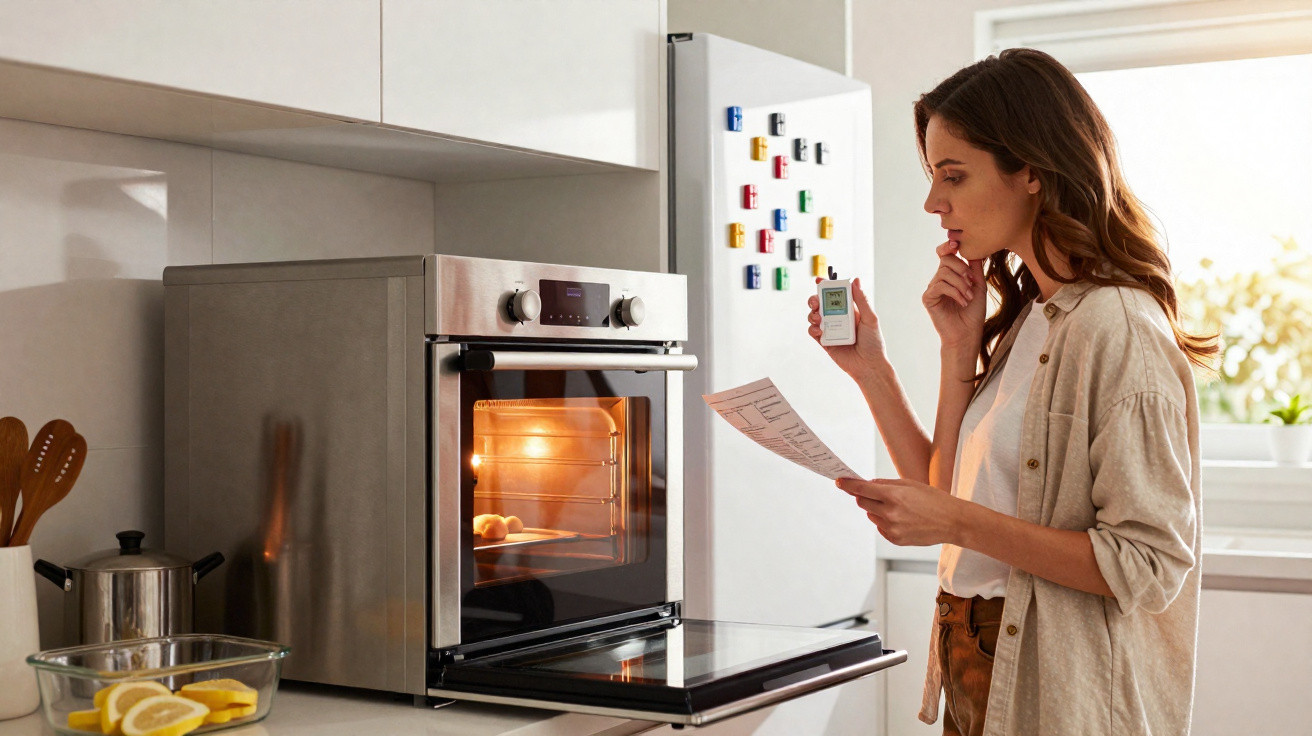
This is the crucial stage. Put the tray into the oven, stay nearby and keep watching it rather than leaving the kitchen.
- Slide the record and its mould into the oven.
- After around three minutes, check whether the edges are beginning to droop downwards.
- Once the record has visibly softened and starts to settle around the mould, remove the tray using oven gloves.
- Carefully reshape the soft edges with protected hands, pressing in small waves or smoothing them out according to your preference.
- Leave everything to cool completely for around ten minutes without moving the mould.
Once cool, the once-flat disc will have become a sturdy bowl. Every record turns out slightly differently depending on its thickness and pressing, which is exactly what gives these individual pieces their appeal.
Uses for a vinyl record bowl: from key tray to retro planter cover
Once you have tried it, it is easy to find countless uses for the newly shaped records. Typical options include:
- A tray for keys and small items in the hallway, holding keys, sunglasses or headphones.
- Storage for remote controls on the coffee table.
- A vintage fruit bowl, provided that a separate glass or ceramic plate sits inside and comes into contact with the food.
- A planter cover for houseplants: place an ordinary plant pot inside and seal the hole in the centre of the record with epoxy putty or a cut-to-size cork stopper.
- A jewellery or cosmetics dish in the bathroom or bedroom.
“Old records that nobody wants to listen to any more do not end up in the bin; they become unique pieces with a history.”
Heavily scratched and visibly worn copies are especially suitable. Their marks enhance the retro character and quietly tell the story of the record’s former musical life.
Kitchen safety: essential points to remember
Although this trick is simple, a few precautions will help ensure the process stays straightforward and safe.
Temperature limits and ventilation
The oven should not be set above 120°C. If vinyl gets too hot, it can release more fumes or develop unattractive bubbles. While it is heating, open a window slightly or switch on the extractor fan to direct odours outside.
The following basic rules have proved useful:
- Always use baking parchment underneath to keep the baking tray clean.
- Only handle the tray with oven gloves, as the mould will become very hot.
- Keep children and pets away from the oven and hot baking trays.
Food contact: use an insert instead
Vinyl record material is not intended for direct contact with food, particularly after it has been heated. If you want to use the new bowl for snacks or fruit, place a separate glass plate inside it or use packaged products. This keeps the creative decoration entirely uncomplicated in everyday use.
Which records are suitable – and which are best preserved
Before putting the first disc in the oven, it is worth checking its label and condition. Some pressings may have collector value even if they no longer look perfect.
| Suitable for upcycling | Better kept on the shelf |
|---|---|
| Heavily scratched records that skip | First pressings by well-known bands |
| Anonymous charity-shop finds with no demand | Limited special editions |
| Cheap mass pressings from inherited collections | Signed copies |
If you are unsure, consult catalogues or online marketplaces. In many cases, most of the records piled up in the cellar have no significant market value, making them ideal candidates for creative experiments.
More ideas: other things to make from vinyl
The oven bowl is only the beginning. With a few extra components, old records can become further retro pieces for the home.
A wall clock from a favourite record
For a clock, all that is needed is a simple quartz movement with hands, available from craft shops. The hole in the middle of the record can be used directly for the spindle. Attach the hands, screw or glue the movement to the back, fit a battery and the personalised record-design clock for the living room is ready.
Frames, collages and wall art
Anyone who would rather not use heat can display records as wall decorations instead: arrange them as a group on a wall, combine them with old sleeves in picture frames, or illuminate them from behind with LED strips. The result is a music gallery that conveys nostalgia without playing a single note.
Why the effort is worthwhile
Vinyl is difficult to recycle meaningfully through ordinary recycling systems, so it usually ends up in general waste. With the oven trick and other upcycling ideas, the discs are not simply thrown away but remain useful for years in a different role.
Those who regularly browse charity shops, flea markets or house-clearance sales can deliberately pick up scratched or unsellable records at low cost and turn them into sets of bowls, for example as gifts. In this way, an awkward waste-management item becomes a small, practical contribution to waste prevention – and a talking point on any living-room table.

Comments
No comments yet. Be the first to comment!
Leave a Comment