
The mirror was still clouded with steam when Emma noticed it: a chalky ring around the plughole, hazy marks across the glass and an odd film beneath her feet on the tiles. She had cleaned the shower only the weekend before, telling herself she would “stay on top of it” this time. Yet, only seven days on, the soap scum had returned as though it had never been removed.
She ran her thumb over the shower glass. It gave a muted squeak. There was no gleam, only the persistent greasy mist that seems to mock even costly cleaning products.
With a towel over her shoulders, Emma had the weary thought many of us know well: surely there must be an easier option than giving the shower a thorough clean every Sunday.
There is - and it requires under a minute each day.
The small habit that makes soap scum almost vanish
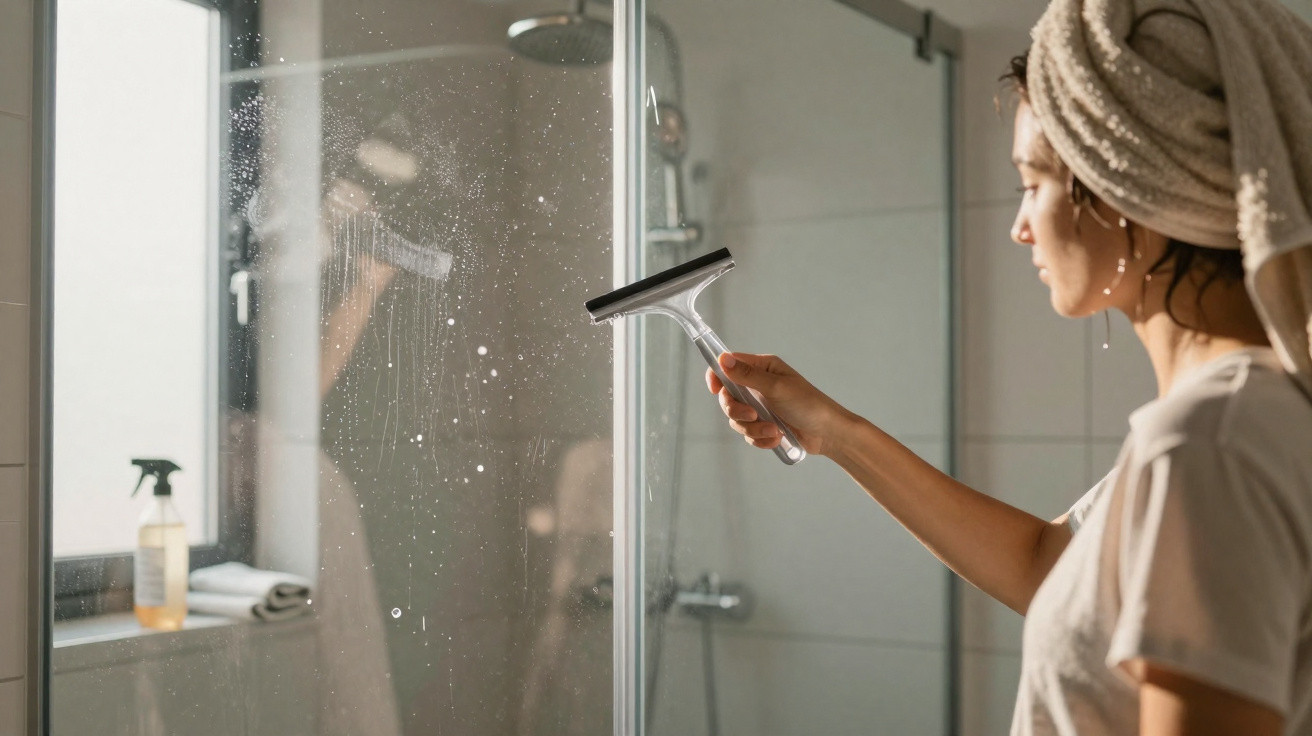
The unexciting secret behind most spotless bathrooms is not a miracle cleaner. It is one modest, routine habit: drying the shower glass and tiles after every use. Simply use a quick pass with a squeegee or towel while the water is still sitting on the surface, before soap and minerals can stick and set hard.
It is hardly glamorous, and it does not feel much like “cleaning”. It is merely a brief action at the end of a hot shower, when you would rather check your phone or get straight into your pyjamas. Still, this tiny ritual can transform the way your shower looks over time.
Imagine two nearly identical bathrooms in the same block of flats. They have the same hard water, the same inexpensive body wash and the same white tiles. Leo gets out of the shower, picks up a cheap squeegee and draws it down the glass and over the tiles. It takes 30 seconds, perhaps 40 on a bad day. Mia, meanwhile, turns off the tap and walks away.
Skip ahead six weeks. Leo’s shower remains largely clear, apart from a few small marks. Mia’s glass has become milky, her chrome fittings feel sticky and the grout around the soap dish is beginning to turn grey. She buys a powerful limescale remover and spends a whole Saturday afternoon scrubbing at what Leo barely needs to consider. One person is doing “more cleaning”; the other is practising a little prevention.
The explanation is almost painfully straightforward. Soap scum combines soap, body oils and hard-water minerals, which dry onto surfaces and bond there. If a surface remains wet, the minerals have time to crystallise and fix that layer in place. Remove most of the water immediately, and there is far less material for the grime to travel with.
Dry shower glass and tiles are simply less welcoming to soap scum. The choice, then, is between a brief daily routine while droplets are still beading, or lengthy, tiring scrubbing sessions with harsh products once the film is established. We often underestimate these tiny inconveniences, then repay them with hours of work later.
How to reset your shower in under one minute
The most basic approach is simple. Turn off the water, take the squeegee kept in the shower and make straight top-to-bottom strokes over the glass. Follow with a few swift passes over the tiles or acrylic panels, giving extra attention to corners and the areas around shelves. Use a small microfibre cloth kept on a hook to wipe any remaining drips from seals or taps.
That is the whole “reset”. The aim is not to make the bathroom gleam; it is to clear away pooled water before it can dry. When done routinely, this one-minute step slows soap scum accumulation enough that intensive cleaning may be needed only once a month rather than every week. That is where the real time saving lies.
If your first reaction is, “I’ll never do that every single day,” you are far from alone. In reality, nobody manages it without exception. People miss days, children forget and hectic mornings take over.
The answer is to make the habit feel almost too obvious to skip. Store the squeegee and cloth inside the shower at eye level, rather than beneath the basin. Pick a tool that is comfortable to hold, not a flimsy version that flexes and squeaks. Attach the action in your mind to something you already do, such as the last step before opening the door or while conditioner is sitting in your hair. Once it belongs to the shower routine rather than feeling like another task, you will start doing it automatically on most days. And most days is enough to make a noticeable difference.
“People think I’m obsessive about my bathroom,” laughs Sarah, a professional cleaner who manages several short-term rentals. “But my secret is boring. I just teach every guest and cleaner to dry the glass. No special sprays, nothing fancy. If you deal with the water, the scum barely shows up.”
- Keep a squeegee inside the shower
Place it on the glass or a nearby hook, where you will spot it as soon as you switch off the water. - Use a small microfibre cloth for corners
Residue and drips tend to collect there first, allowing build-up to begin. - Prioritise glass, grout lines and metal fittings
Soap scum becomes visible on these surfaces quickest, and they are the most difficult to restore once deposits have set. - Give surfaces a quick hot-water rinse after using products
Before using the squeegee, spray clean water over the walls to wash away surplus soap. - Allow yourself a “lazy pass” rule
On days when your energy is low, wipe only the glass. Even an incomplete routine still helps protect the shower.
Turning shower cleaning into a brief daily ritual
After you begin, a subtle change takes place. Your shower stops alternating between “Instagram clean” immediately after a scrub and “oh no, guests are coming” a week later. Instead, it simply remains reasonably presentable. The glass may not dazzle with brilliance, but it no longer confronts you with streaks. The tiles no longer feel slippery beneath your feet. You can expect tomorrow’s shower to look much like today’s.
This change achieves more than safeguarding grout. It also reduces mental pressure. Cleaning ceases to be an impending task that makes you feel guilty, becoming a small built-in pause after a warm rinse instead. It is a short, almost meditative action that says: I will spare my future self some effort.
| Key point | Detail | Value for the reader |
|---|---|---|
| Daily drying beats heavy scrubbing | Using a squeegee or cloth to remove water after every shower slows the build-up of minerals and soap | Less time spent deep cleaning, with fewer harsh chemicals needed in the bathroom |
| Tool placement shapes the habit | Keeping tools visible and close at hand makes drying a natural stage of the shower routine | You are more likely to do it, including on busy or tiring days |
| “Good enough” is enough | Regular imperfect effort works better than occasional intensive cleaning sessions | A cleaner shower, less guilt and more realistic expectations of yourself |
Frequently asked questions
- Question 1: Must I really dry the shower after every single use?
Answer 1: No. Consistency matters more than perfection. Drying it on most days still reduces soap scum dramatically compared with not doing it at all. - Question 2: What can I do if I have a shower curtain rather than a glass door?
Answer 2: You can still wipe the tiles, fittings and edge of the bath. Leave the curtain fully extended so it can air-dry, rather than allowing it to remain bunched up. - Question 3: Is a towel as effective as a squeegee?
Answer 3: A towel can work, particularly a microfibre one, although it will become damp quickly. Many people use a squeegee for larger areas and reserve a towel for corners. - Question 4: Does this routine remove the need for deep cleaning altogether?
Answer 4: No, occasional more thorough cleans will still be useful, but they will be much less frequent and require far less effort because the build-up will not get out of hand. - Question 5: Does the kind of soap used affect soap scum?
Answer 5: Yes. Bar soaps, particularly cheaper varieties, generally leave more residue. Liquid body washes usually create less scum, especially when combined with this drying routine.
Comments
No comments yet. Be the first to comment!
Leave a Comment