
On a Saturday evening in a compact Lyon flat, four friends crowd around a coffee table, eating from plates on their laps and trying not to knock over glasses wedged between scented candles and the remote. The television is muted, part of the kitchen can be seen from the sofa, and one person repeatedly slips away “just for a second” to stir the saucepan. That supposedly “welcoming and open” living-dining room feels less like a place to gather and more like a passageway.
Whenever someone stands up, the conversation is interrupted.
Growing numbers of French households have had enough of this uncomfortable compromise. A quieter new approach is beginning to take hold.
The gradual demise of the living-dining room
Estate agents throughout France keep hearing a familiar request: “If possible, we don’t want a living-dining room.” Buyers are after something different: a space that does not resemble a 2005 catalogue showroom. The large table left unused during the week, the sofa pressed against a wall and the television positioned as the household’s central altar all now seem dated.
A room intended to “do everything” frequently ends up doing no single thing particularly well. It becomes somewhere people walk through rather than somewhere they truly live.
In Bordeaux, Elise and Romain, a young couple, recently purchased a 70 m² flat. Their plan showed the traditional arrangement: “Living room / Dining room 26 m²”. They struck through the wording in pencil. “We don’t want that,” they told their architect. Their moodboard now formally calls the room a “shared living space”, with a distinct purpose assigned to every section.
The former dining spot beside the wall is now a long, raised table attached to the kitchen island. It serves partly as a bar, partly as a desk and partly as their daughter’s homework area. Meanwhile, the living section has been turned away from the television to face bookshelves and plants.
What is taking the place of the living-dining room is neither a new furniture item nor a catalogue-led trend. It reflects a changed way of sharing life at home. French households are looking for flexible, social spaces where cooking, working, playing and talking can happen without being confined to a “sofa zone” or an “eating zone”.
Homes are becoming more compact, remote working is increasingly widespread and meals are more informal. The former model of a large table used twice yearly and a sacred television corner no longer reflects everyday routines. People want rooms that adjust to their lives, rather than requiring their lives to fit the room.
The emergence of the shared living space
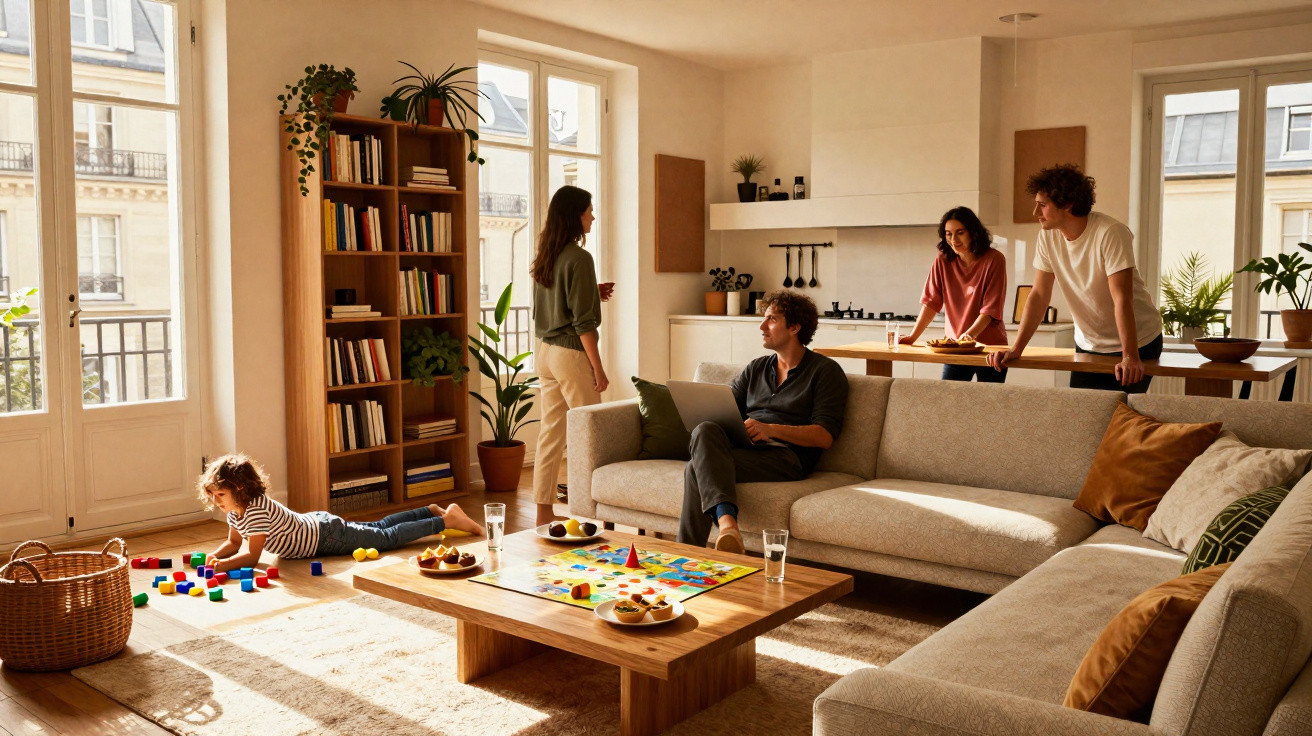
The direction is unmistakable: one sizeable communal area split into zones instead of formally designated “functions”. It is rather like a sociable studio within a larger home. The kitchen is opened up, tables are repositioned, sofas are turned around and sliding dividers are introduced when required.
A common arrangement includes a sociable kitchen with a central island, a substantial table at the centre for almost every purpose, and a comfortable, slightly more private spot for reading or conversation. The television is no longer in charge; it is simply another object in the room.
Interior designers say they are increasingly asked for a “sociable living space” rather than a “living room / dining room”. One Paris-based decorator described a family in Saint-Étienne with three children. They removed the wall separating the kitchen from the living area, then made a more radical change: they got rid of the permanent dining set.
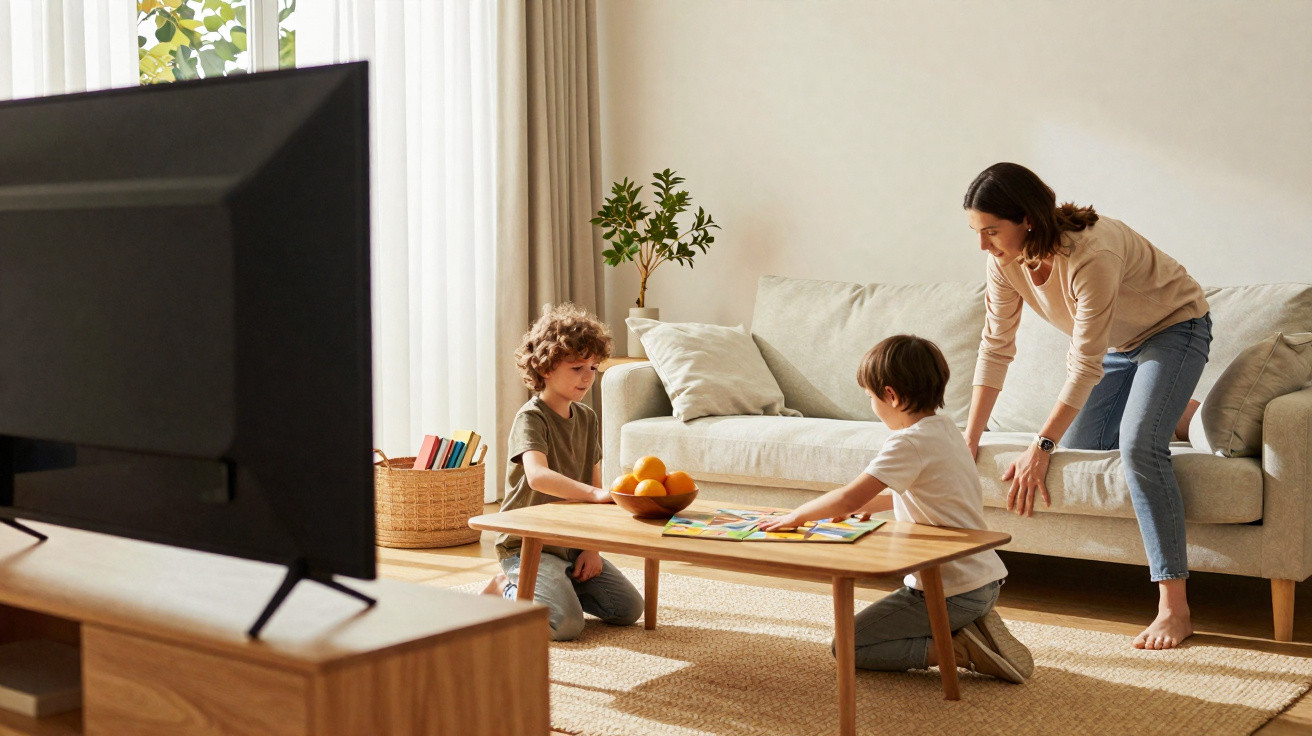
They replaced it with a large extendable table on castors. Throughout the week, it sits by the bay window as a place for homework and laptops. On Friday evenings, it is wheeled towards the kitchen, covered with a tablecloth and used for board games. On Sundays, it is folded away again, leaving a vast open area for the children to build Lego cities on the floor.
The principle is straightforward: people want sociable rooms, not museum exhibits. Several micro-zones allow everyone to get on with their own activity without being shut away in separate rooms. Parents can prepare supper while teenagers work at the same table. Friends can talk at the island while someone completes a presentation on a laptop.
The focus is shifting from “display” - a handsome dining table, matching chairs and an imposing sideboard - to “use”. Furniture must perform more than one job. A single table, two benches, several stools and perhaps a foldaway console can accommodate ten people on a Saturday while keeping the room airy by Monday morning.
Turning a living-dining room into a genuine social hub
The first practical move is drastic, yet freeing: stop arranging the room around the television or the large dining table. Instead, ask, “Where do we actually spend time together?” and plan the layout from that answer.
In many homes, the true centre is the kitchen end or a bright place beside a window. Position the main table there and make it the focal point for meals, crafts, laptops and long conversations that continue into the evening. Arrange everything else around it as though it were the centre of a solar system.
People often believe they need additional square footage before making any changes. A familiar mistake is retaining a huge table “just in case we’re ten at Christmas”, then lamenting the lack of room to play with children or unroll a yoga mat. In truth, nobody needs that setup every day.
A more effective option is adaptable furniture: an extendable table, stackable chairs, a bench that tucks beneath the table and nesting coffee tables. These choices create more breathing room and freedom of movement. They also prevent the home from feeling like a permanent banquet room that never quite comes to life.
“Once we removed the formal dining area, our evenings changed,” says Marion, 39, from Lille. “We talk more. People hang around the island, the kids draw next to us, and the sofa is just one option among others, not the only destination.”
- Favour one large, central table rather than several smaller ones.
- Include at least one wheeled, moveable item for immediate rearrangement.
- Create lighting zones: a pendant over the table, a floor lamp beside the sofa and warmer lighting near the kitchen.
- Define areas visually with rugs or different paint colours, without putting up walls.
- Reserve one low-tech corner with no screens, only books, games and cushions.
A different way to live together at home
The fading of the living-dining room is less about decoration than a social change. Home is no longer merely where people watch television and eat three meals a day. It is a shared workspace, a playroom, a retreat and, at weekends, sometimes a miniature restaurant for friends. The successful room is one that can accommodate every role without being fixed in a single position.
We’ve all been there, that moment when you realize your most “beautiful” room is also the one you use the least.
By adopting this more adaptable, shared living space, French households are quietly rewriting the rules. Having the ideal sofa matters less than being able to pull up another chair with ease. The status of a large table matters less than the number of genuine conversations held around it. The most successful rooms are slightly imperfect, somewhat messy and unmistakably lived in.
The simple reality is that a good room does not impress guests; it puts them at ease. That may be why the old living-dining room, with its rigid chairs and display cabinet, is disappearing. In its place comes something gentler, livelier and more human.
| Key point | Detail | Value for the reader |
|---|---|---|
| From “living-dining” to shared space | A move away from fixed, formal zones towards flexible, lived-in areas | Offers ideas for rethinking the main room without moving home |
| Furniture that adapts | Extendable tables, benches, moveable pieces and zoning through lighting | Makes it easier to host more people while keeping everyday life practical |
| Social centre of the home | Kitchen, table and a comfortable corner work together rather than competing | Creates a warmer, more relaxed setting for family and friends |
Frequently asked questions
- Is the TV really no longer central in French living rooms? Many households still own one, but it is often placed on a side wall, in a smaller corner or even in a bedroom, allowing the main area to prioritise conversation and shared activities.
- How do I host big dinners without a formal dining room? Choose an extendable table, folding tables or a combination of benches and chairs, then keep spare seating in a bedroom or hallway for the rest of the time.
- What if my space is very small, like a studio? Opt for one substantial central table, lightweight chairs and a compact sofa-bed, then use rugs and lighting to create different “moments” within the same room.
- Does this trend work with children? Yes, particularly well: children can do homework at the same table where adults cook or chat, and floor space can be cleared quickly for play.
- Do I need an interior designer to change my layout? No. Begin by moving one large item, such as the table or sofa, try the new arrangement for a week and then decide whether new furniture is worth investing in.


Comments
No comments yet. Be the first to comment!
Leave a Comment