
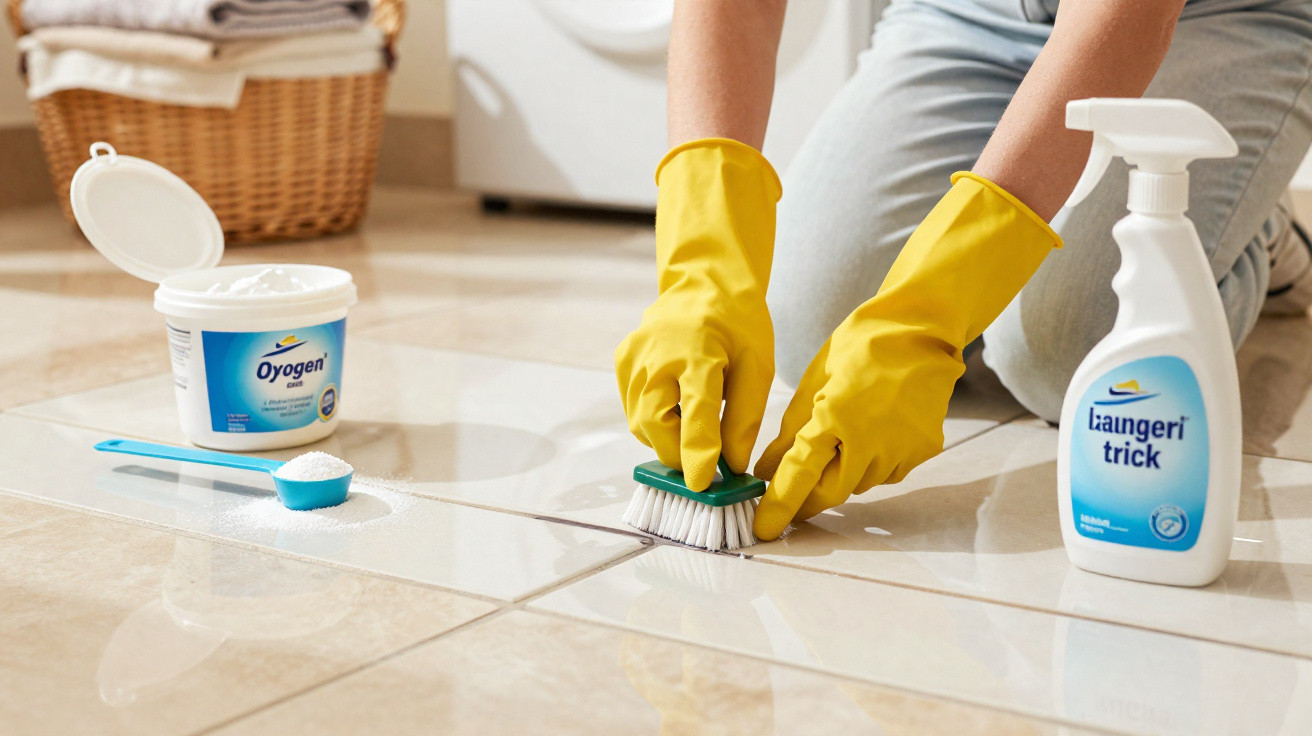
Thin black lines run through her kitchen floor as though somebody has drawn over it with permanent marker and never rubbed it out. She gives the faintly self-conscious laugh people make when sharing a “before” picture, then reaches for… not bleach. Not vinegar. Something unexpected. Minutes later, the grout looks suited to a show home rather than a busy family kitchen, where pasta water spills over and dogs bring mud indoors.
You look down at your own floor and, all at once, notice every dark join that escaped your attention five minutes earlier. Every mark that has outlasted mops, sprays and the best of intentions. It is the sort of grime that can make a room seem worn out, even just after you have cleaned it.
The remarkable part is that the solution may be sitting unobtrusively in half the bathrooms around the world.
Why blackened grout can make a clean home look dirty
Grout is the tiled floor equivalent of under-eye circles. The tiles might gleam and the room may smell of freshly washed laundry, but those slim lines can pull the whole appearance down. Because grout is porous, it takes in spills, soap and dust, gradually changing from pale grey to dark black while daily life carries on. Then, when you bend down to collect a crumb, you realise that what seemed to be “just old grout” is actually grime built up in layers.
That is what makes it so irritating: it does not become filthy in one obvious episode. Instead, it develops over months or even years. As the joints darken, they outline every tile and act like a grid that spotlights every previous spill. Before long, the full floor appears older than it really is. You can scrub the tiles until your back aches and still be beaten by the 3 mm strip separating them.
In a compact home or open-plan kitchen, this can carry real emotional significance. Bright grout alters the way you see the whole room. It can feel like the difference between “we try our best” and “we’ve got this place under control”, including on the most chaotic days.
Anyone who has tried conventional grout deep-cleaning will probably tell a familiar story: harsh bleach that catches in the nose and has you opening the windows in winter; vinegar and bicarbonate of soda volcanoes that fizz pleasingly yet do little to shift the oldest staining; miniature brushes, sore knees and the persistent sense of fighting time itself. Let’s be honest: nobody truly does that every day.
When online cleaning communities began posting grout before-and-after photographs, a shared fixation was almost visible. Some users championed steam cleaners, while others suggested costly grout pens - essentially make-up for the floor. A less vocal group, however, began posting results that looked rather as if professionals had visited. The same approach appeared repeatedly. The same tool. Neither bleach nor vinegar.
We have been taught to assume that grout demands either brute strength or unpleasant chemical fumes. That idea leaves two draining options: overlook it, or wage an annual marathon battle against it. A more effective method begins by recognising why grout turns dark. It is seldom “ruined”; it is saturated. That distinction matters.
Grout behaves like a sponge, absorbing anything thin enough to penetrate it: dirty mop water, spills left unwiped and detergent residue that settles before drying. In time, this mixture travels deeper, beyond the reach of surface scrubbing. Bleach often merely makes the upper layer appear lighter. Vinegar may etch or weaken certain grout varieties without removing embedded dirt. The result is repeated scrubbing of the same few millimetres with unsuitable products.
A more sensible approach uses something that adheres, softens and lifts rather than burns or strips. This is where an unlikely bathroom-cupboard staple becomes useful. It is neither acidic nor chlorinated, but it works quietly.
The whitening toothpaste and brush grout hack
The method now circulating on TikTok and cleaning forums is almost absurdly straightforward: whitening toothpaste and a small brush. Avoid gel and elaborate charcoal products; use a plain, white whitening toothpaste of the kind you would use on your teeth. Apply a line directly over the grout, as though icing an especially uninspiring cake, before working it in with an old toothbrush or slim grout brush.
The paste performs the job it was made for on enamel: it clings in place, gently loosens stains and brightens without damaging the surface. Let it sit for 5 to 10 minutes - enough time for the dirt to soften, but not so long that the task consumes an afternoon. Next, scrub gently rather than as if sanding timber, then remove it using a damp microfibre cloth or mop.
That first pass is the compelling bit. Beneath the fine layer of dirt, a paler, gentler grout shade emerges, much like uncovering old wood beneath yellowed varnish. Very dark joints may require a second treatment, but the difference should be visible immediately. There is no nose-stinging smell or vinegary haze - only a mild mint fragrance that makes the job feel unexpectedly… clean.
In practical terms, this grout hack fits everyday life in a way that intensive cleaning methods seldom do. You can tackle a single grout line while the coffee brews, or work on a small area beside the cooker when a cloth is already in your hand. There is no need to empty the room or prepare as though entering a laboratory. That is why it has spread so readily: it suits the untidy, interrupted pace of ordinary households.
People often go wrong by being too forceful too soon. It is tempting to grab the toughest brush available and scrub until your shoulders hurt. This may actually break down older grout, particularly in bathrooms where water has already weakened it. Several light passes are more effective than one fierce session. Allow the toothpaste to handle its slow, unglamorous chemistry; your role is simply to move it about.
Another frequent error is allowing the paste to remain for too long, then spreading residue over the tiles and leaving them with a dull coating. A brief contact period followed by a thorough wipe and a quick clean-water rinse will keep the tiles bright too. You do not need a whole tube for a single floor, either. Begin with a small amount: you are cleaning, not decorating a cake.
If your grout has ever made you feel slightly embarrassed, you are certainly not alone. On a difficult day, those black lines can seem like an unspoken verdict on your life rather than merely your flooring. A gentler perspective helps.
“Our homes are allowed to look lived in,” says one cleaning blogger who went viral with her grout transformation. “The goal isn’t perfection, it’s having small rituals that make you feel less overwhelmed in your own space.”
That is ultimately what this hack provides: a small ritual that feels achievable.
- Choose plain white whitening toothpaste rather than coloured gel.
- Try it first on a tiny concealed area, particularly if the grout is very old.
- Clean in sections: a 1m² area at a time is ideal.
- Pick a soft or medium toothbrush, not a wire brush or an exceptionally stiff one.
- End with a clean-water rinse and dry cloth to prevent residue.
After restoring the grout, you can adopt a mild upkeep routine: give high-traffic lines a quick toothpaste touch-up once a month. It takes five minutes and requires no fuss. There is something oddly pleasing about it, like wiping away the day’s footprints.
Living with grout you are happy to look at
When the grout no longer announces “I am older than I really am”, a subtle change takes place. You walk barefoot into the kitchen in the morning and interpret the whole room differently, even with breakfast dishes left on the worktop. Clean grout outlines tiles like a well-chosen picture frame: it fades from your conscious notice, which is precisely the aim. You no longer feel you must mentally apologise for the floor whenever visitors arrive.
The psychological effect of these minor home improvements is not discussed often enough. They do not, of course, solve your life or the larger problems within it. Yet they can release a tension you had not realised formed in your chest whenever you looked down. During a difficult week, spending twenty minutes brightening a few grout lines may feel like recovering a small area of control. During a good week, it can simply be rather enjoyable.
One reason this hack is so easy to share is its accessibility. It needs no specialist purchase, lengthy shopping list or “perfect cleaning schedule” that falls apart as soon as work finishes late or a child becomes ill. In a group chat, it is the sort of advice passed between tired people like a secret handshake. Before-and-after images offer instant satisfaction on social media, but the lasting thought is this: perhaps my home is not as “gone” as I believed.
After seeing how straightforward stain-lifting can be, you may begin to question other inherited cleaning routines. Perhaps it is the bottle you only partly trust because it smells like a swimming pool, or the fixation on scrubbing everything daily when your energy plainly cannot meet that ideal. At a human level, the toothpaste-on-grout hack encourages kinder, more intelligent effort: less “attack the dirt”, more “work with the materials you’ve actually got”. On a phone screen during a hurried scroll, that is the kind of thought that can prompt a pause and a quiet, hopeful share.
| Key point | Detail | Why it matters to you |
|---|---|---|
| Toothpaste beats harsh chemicals | Whitening toothpaste gently removes stains without fumes | Cleaner grout without headaches, masks or lengthy open-window sessions |
| Short, focused sessions win | Work in small sections for 5–10 minutes at a time | Fits easily into everyday life instead of creating dread over a huge cleaning day |
| Gentle tools protect grout | A soft/medium brush and light pressure help avoid damage | Whiter lines now, with fewer cracks and repairs later |
FAQ:
- Can I use any toothpaste on grout? Use plain white whitening toothpaste rather than coloured gels or elaborate charcoal formulas. These often include dyes that may tint grout or leave streaks, particularly on light tiles.
- Will this hack work on very old, almost black grout? It will usually make old grout noticeably lighter, although it may not restore the original factory colour in a single attempt. Test two or three short sessions in one area, then compare the result before deciding whether professional help is necessary.
- Is toothpaste safe on all types of tiles? Most ceramic and porcelain tiles cope well with this approach. With natural stone, such as marble or limestone, always test a tiny concealed spot first, because some finishes are more sensitive to abrasives.
- How often should I repeat the process? In a busy kitchen or hallway, a more thorough clean every few months should be sufficient, alongside quick touch-ups on the darkest lines whenever they begin to darken again. There is no need for a rigid timetable.
- What if my grout is crumbling or cracked? Where sections are missing or the grout feels sandy beneath your fingers, cleaning will not resolve the structural issue. A partial regrout or professional repair is the safer option before any cosmetic brightening.




Comments
No comments yet. Be the first to comment!
Leave a Comment