
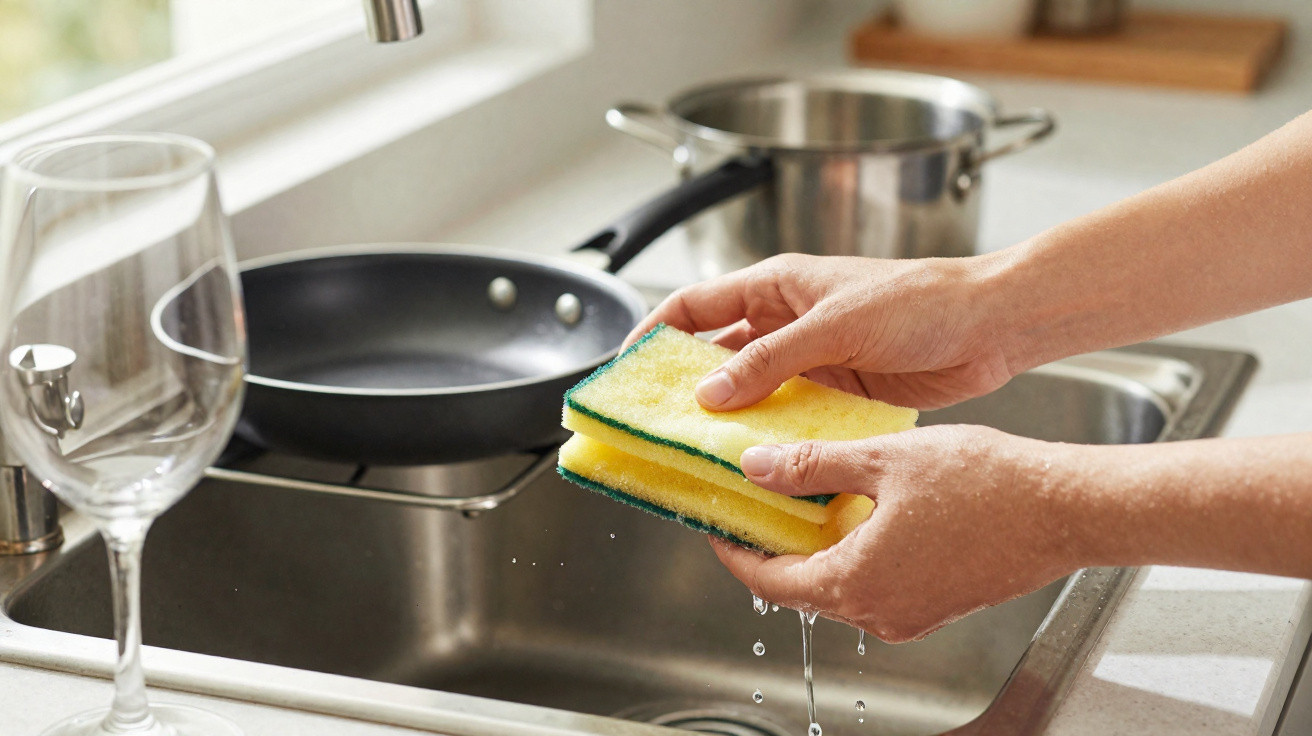
When looking at a washing-up sponge, many people notice that it has a soft yellow side and a firmer, rougher green side. This distinction is not merely cosmetic: each surface is designed to tackle particular types of dirt and materials, helping to protect pans, glasses, appliances and other utensils in everyday use.
Why does a washing-up sponge have a rough side and a soft side?
A washing-up sponge usually consists of two layers that perform very different jobs. The soft side, generally made from yellow foam, distributes washing-up liquid, creates lather and lifts light dirt without scratching. This makes it suitable for quick, regular cleaning.
The green side, by contrast, is the abrasive section. Made with stiffer synthetic fibres, it is intended for baked-on residue, dried food remnants and stubborn grease. Switching between the two sides lets you adjust the cleaning intensity, preventing surfaces from wearing out too soon and reducing the need for harsher chemical products.
Watch a video on the Radar Caseiro YouTube channel about the anatomy of household cleaning utensils and the common mistakes made when scrubbing pans and dishes:
https://www.youtube.com/watch?v=9jD8XbclF1A
How can you use the rough and soft sides of a washing-up sponge without damaging dishes?
Using a sponge properly means considering the material, how dirty the item is and how often it is washed. For glasses, stemware, smooth plates and delicate utensils, the yellow side is the best choice. More hard-wearing surfaces can cope with the green side on occasional occasions, provided it is used with controlled movements.
To make the choice easier, it helps to link each side of the sponge to particular groups of utensils. This lowers the risk of damage and helps items last longer.
- Soft side (yellow): glasses, stemware, smooth plates, cutlery, mugs, delicate plastics and non-stick pans without stuck-on residue.
- Rough side (green): metal grill racks, uncoated stainless-steel pans, baking trays, pan bases with adhered residue, and sturdy oven and hob utensils.
Which kitchen materials cannot withstand the rough side of a washing-up sponge?
Not every utensil copes well with the strong abrasion of a sponge’s green side. On certain materials, friction can cause scratches, strip protective coatings and even affect food safety by exposing the metal’s inner layers.
For more sensitive items, it is therefore best to use only the soft side, supported by warm water, soaking and mild washing-up liquid rather than persistent heavy scrubbing.
Which other household utensils have two sides with different functions?
The idea of having two sides for different uses appears in a range of cleaning and personal-care products. Typically, one side is intended for more intensive cleaning, while the other is designed for finishing, daily upkeep or delicate surfaces. This makes it easier to adapt cleaning to each situation.
Multi-purpose bathroom sponges, double-sided microfibre cloths, bath sponges with an exfoliating surface and accessories made specifically for non-stick pans all follow this principle. Being able to recognise these differences, reading the manufacturer’s instructions and adjusting the pressure applied makes household routines more efficient while better preserving items around the home.



Comments
No comments yet. Be the first to comment!
Leave a Comment