
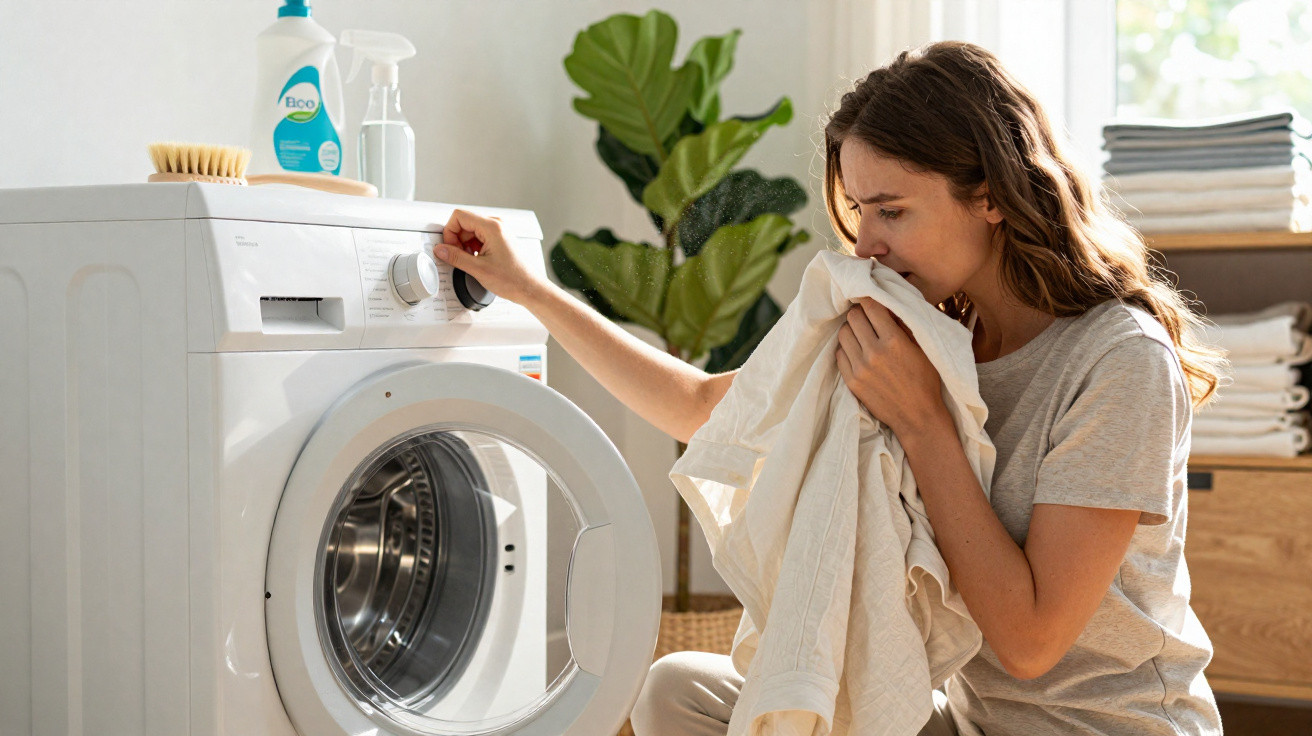
The Eco cycle is often presented as a climate-friendly option: it uses less water and electricity, while allowing a duvet cover, fitted sheet and pillowcases to be washed together. In principle, this sounds ideal, particularly when the drum is packed to capacity. In reality, service engineers in 2026 are seeing an unusually high number of dirty machines and foul-smelling loads. Linen bedding and other absorbent fabrics are especially vulnerable.
Why Eco mode can slowly foul your washing machine
Eco mode uses cooler temperatures, minimal water and very long programmes. Temperatures of 40 to 50 °C are typical, and laundry is often only lightly wetted. Although this cuts energy use, it can compromise hygiene inside the appliance.
“Below 60 °C, many bacteria, fungi and germs survive – and find their favourite place in the machine.”
Repair technicians now say that excessive use of “economy washes” is among the most frequent causes of:
- persistent odours inside the appliance;
- grey slime around the door seal;
- blocked hoses and pumps;
- unexplained marks on pale laundry.
The culprit is known as biofilm: a greasy layer made up of bacteria, fungi, detergent residue, skin particles and fibres. It coats the drum and hoses, but is particularly likely to collect on the rubber seal around the door. Tests show that millions of living germs can be present there on every square centimetre.
Biofilm can smell like rotten eggs, a damp cellar or stagnant pond water. Small pieces may break away, float in the rinse water and settle directly on your bedding. Pale linen and cotton readily absorb these deposits, leaving the fabrics stained and musty when they come out of the machine.
An overloaded drum turns bedding into a heavy load
A second issue is the instinct to put everything in at once. Many people wash an entire bedding set in one load: a duvet cover, fitted sheet, two to four pillowcases and, frequently, several towels as well. While dry, this amount may appear manageable. Once wet, it is a different matter.
Wet bedding weighs two to three times as much. A standard load can suddenly gain several extra kilograms, which become unevenly distributed during spinning. The machine has to work hard, rattles and hums, and some appliances even shift across the bathroom floor.
“Overloaded drums put strain on bearings, shock absorbers, the motor and the pump – while also making the laundry less clean.”
With the limited water used by Eco mode, wet bedding can stick in a dense mass to the side of the drum. Water and detergent can no longer reach every area. Common results include:
- grey or black streaks;
- white detergent lines;
- a stale smell despite supposedly “fresh” laundry;
- premature wear in linen and delicate materials.
Why linen bedding suffers so quickly
Linen is considered a luxurious bedding fabric: it is breathable, temperature-regulating and pleasantly weighty. However, this natural material is also highly absorbent. That is precisely why it is susceptible to every residue left inside the machine.
When biofilm or clumps of detergent come loose, they tend to lodge in the fine fibres. On light linen shades – beige, natural, white and pastel colours – even minor marks are immediately visible. Linen also takes longer to dry than lightweight cotton. If it remains damp in the drum after washing, or is left on a crowded drying rack, further odours can quickly develop.
This is how covers can end up blotchy and smelling stale, even when you think you have done everything correctly: Eco mode, a full machine and good detergent.
Keeping Eco mode useful and the washing machine clean
There is no need to abandon Eco mode altogether. Instead, experts advise changing a few habits. Three areas matter most: temperature, load size and appliance care.
Choose the right temperature for bedding
Bedding collects sweat, dead skin, body oils and traces of skincare products – and sometimes mites and their droppings. Using hotter washes from time to time is the only way to keep this build-up under control.
- Wash bedding at 60 °C regularly, especially if you sweat heavily or have allergies.
- Schedule a 60 °C wash after no more than three Eco washes.
- Check delicate materials before buying them: many linen and blended fabrics can tolerate 60 °C, even though they are often washed only on a “gentle” programme.
“One hot wash every few weeks drastically reduces the germ load in the machine – and extends the life of your laundry.”
How full the drum should really be
The “7 kg” or “9 kg” claim on an appliance label can be misleading. These maximum capacities are more applicable to straightforward cotton items than to thick, absorbent bedding.
Technicians recommend the “hand rule”:
- Put the bedding into the drum and spread it loosely.
- Place a flat hand on top of the laundry.
- If there is no room left for your hand, the machine is too full.
As a guide, aim for a drum that is 70 to 80 per cent full. Another useful tip is to shake out large items, such as duvet covers and sheets, beforehand and place them in the drum one at a time, rather than as a knot or roll. It is better to wash thick terry towels separately instead of mixing them with fine linen sheets.
A care routine to prevent biofilm and bad smells
A brief monthly cleaning routine is enough to keep the machine in good condition over the long term. It takes little time but can prevent costly repairs and ruined wash loads.
| Measure | Frequency | Benefit |
|---|---|---|
| Run an empty 90 °C wash with about 1 litre of household vinegar | Once a month | Loosens biofilm, kills many germs and helps prevent odours |
| Wipe the door seal and detergent drawer | Every 2–4 weeks | Removes slime, hair and detergent crusts |
| Leave the door and drawer open | After every wash | Allows the machine to dry out, giving mould fewer opportunities |
Anyone living in a hard-water area can occasionally use a specialist washing-machine cleaner or descaler. Otherwise, limescale and biofilm can form a particularly stubborn layer together.
Less detergent, better results – particularly for linen
Many people pour too much detergent into the drawer because they are unsure. In Eco mode, where water levels are low, powder may not dissolve properly, can form deposits in hoses or leave white streaks on bedding.
Follow the dosage guidance for your water hardness and load size, preferably staying towards the lower end of the recommended amount. Liquid detergent dissolves more quickly, but may encourage biofilm more strongly. For people with sensitive skin or for washing linen, a good-quality colour detergent used at the right dosage is often the best choice.
What the “washing-cycle myth” can teach you
The move towards Eco mode illustrates how well-intentioned habits can quickly create unintended consequences. The energy-saving programme itself does not cause the problem; it is the combination of temperatures that are too low, an overfilled drum, far too little water and inadequate machine care.
With a few straightforward rules – planning 60 °C washes, monitoring the load size and flushing the machine regularly on a hot cycle – electricity consumption remains reasonable and bedding becomes genuinely fresh. Linen sheets in particular will reward this care with colours that stay bright for longer, a supple texture and a scent that truly suggests “freshly washed” rather than a drain.
Paying attention to short drying times, removing laundry from the drum promptly and hanging it somewhere with good airflow will reduce additional sources of odour. The supposed economy programme can then return to what it should be: a useful part of a considered laundry routine, rather than a hidden saboteur of your washing machine and bedding.




Comments
No comments yet. Be the first to comment!
Leave a Comment