
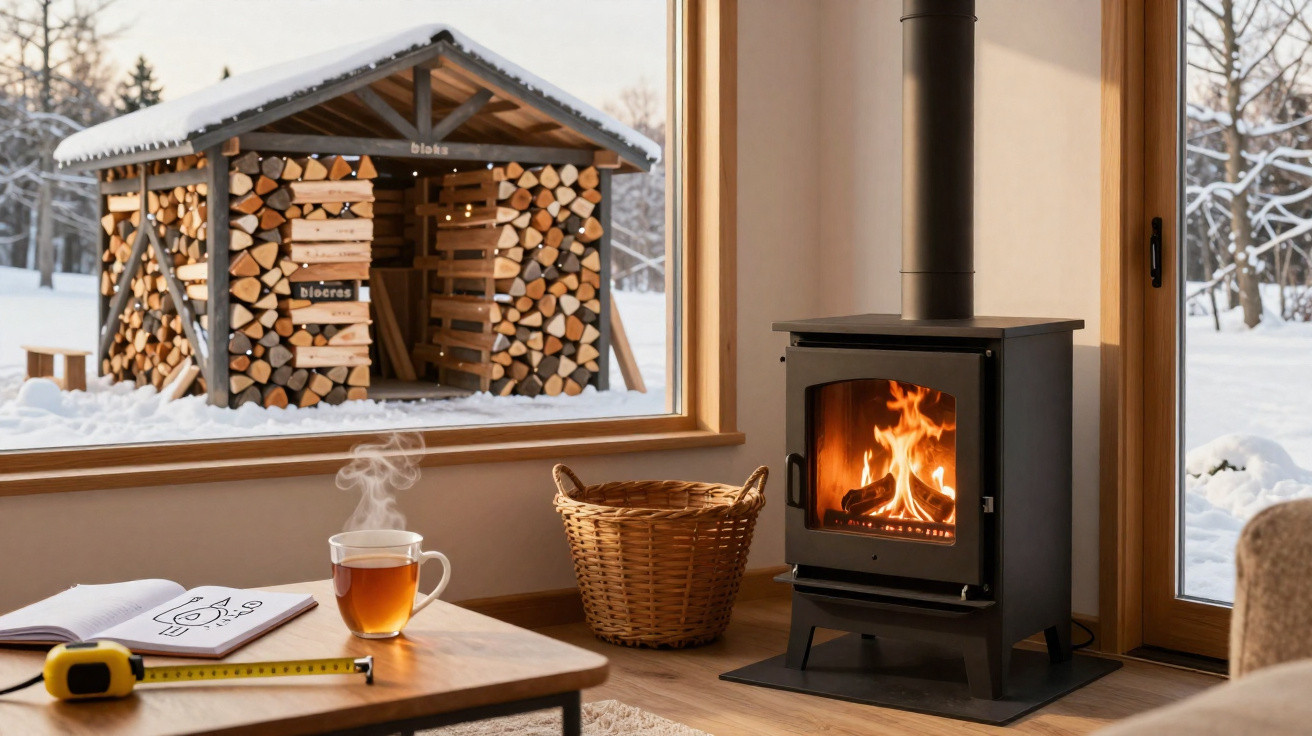
When the cold sets in, many people turn to firewood, yet few know exactly how much they will need.
Planning a firewood supply has become a sensitive issue for anyone who relies on a wood-burning stove or a fireplace insert. Getting the calculation wrong can mean running short in January, or being left with wood sitting in the garden, taking up both space and money. The central question is straightforward: how many steres are needed to get through a winter without unwelcome surprises?
What a stere of firewood actually means
It may sound straightforward when a supplier explains it, but this unit of measurement causes considerable confusion in practice. Originating in France, a stere theoretically equals one cubic metre of stacked firewood made up of logs measuring 1 metre long.
In reality, however, the calculation changes according to the length of the logs.
A stere is one cubic metre of stacked firewood, but the actual volume of wood varies according to the length and shape of the logs.
When logs are cut to 50, 40 or 30 cm to fit a stove or insert, they stack more tightly, leaving fewer air gaps between them. As a result, the same stere contains more actual wood, despite taking up a smaller apparent volume.
This is where many buyers become confused: they purchase “5 steres” without knowing whether the supplier is referring to 1-metre logs or shorter pieces. The difference affects the price, the actual quantity of firewood and the storage space required.
Why this changes your winter calculation
Comparing only the number of steres may make it seem as though you are paying more, or receiving less wood, than your neighbour. In fact, the important factors are the mass of the wood and its calorific value, rather than its apparent volume alone.
For larger purchases, a 10% to 20% variation in the real volume of wood per stere can amount to several more, or fewer, weeks of heating.
The factors that have the greatest effect on firewood quantities
There is no single, magic number of steres that suits everyone. Consumption depends on a combination of factors that determines whether a home has a high heat demand or is more economical to warm.
Floor area and internal volume
Two homes measuring 100 m² can have entirely different heating requirements. A compact single-storey home with standard ceiling heights needs far less firewood than an older property with high ceilings and long corridors.
Generally speaking, the greater the internal volume of air to be heated, measured in cubic metres, the larger the firewood stack needed to face the winter.
Insulation: walls, windows and roof
Well-insulated homes, with double glazing and particular attention paid to the roof and walls, can cut firewood consumption by 30% to 50% compared with older, poorly sealed buildings.
In practice, every investment in insulation directly lowers the number of steres required each winter.
Anyone living in an older property often notices this first-hand: the firewood disappears quickly, rooms take a long time to heat up and cool down again soon afterwards.
Type of appliance: stove, insert or open fireplace
The appliance’s efficiency is another decisive factor. Modern wood-burning stoves and closed inserts can easily achieve efficiency levels above 75% to 80%, using most of the energy contained in the firewood.
Open fireplaces, by contrast, can lose up to 70% of their heat through the chimney. In that situation, the sense of comfort comes more from watching the flames than from genuinely heating the home.
Wood species: hardwood or resinous wood
Not all firewood produces the same amount of heat. Broadly speaking, wood can be divided into:
- Hardwoods (such as oak, beech and some dense native species): these burn slowly, release steady heat and create long-lasting embers.
- Resinous woods (pine, young eucalyptus and conifers generally): these catch fire quickly and give off strong heat, but only briefly, so they need replenishing often.
For a full winter, many people choose a mixture: hardwoods for the base of the fire, alongside a few resinous pieces to relight it and raise the temperature quickly.
Local climate and usage habits
A harsh winter, with several days below freezing, calls for an almost continuous fire. Milder areas, on the other hand, allow long periods with the appliance switched off during the day. The number of operating hours each day matters just as much as the quality of the firewood.
How many steres are needed for each type of use
Based on the experience of users and wood-heating technicians, typical consumption ranges can help guide planning.
| Type of use | Usage profile | Average consumption per winter |
|---|---|---|
| Occasional | Weekends, occasional evenings | 1 to 3 steres |
| Regular supplementary heating | Supporting central heating on cold days | 3 to 6 steres |
| Main heat source | The home’s dominant heating source | 5 to 12 steres |
Occasional use: firewood for enjoyment, not necessity
For people who light a fire on only a few cold days, or simply to create an atmosphere when friends visit, 1 to 3 steres will usually be enough. In this case, the bigger risk is buying far more than needed and having firewood left unused for years.
Supplementary heating: sharing the load with another system
In homes with electric, gas or oil heating, a wood-burning stove is used to reduce bills and provide comfort on particular days. Households that use the appliance on most cold evenings generally consume between 3 and 6 steres per season.
Main heating source: when firewood takes the lead
For those who depend mainly on firewood, the range is 5 to 12 steres per winter. A well-insulated property with an efficient appliance can remain comfortable close to the lower end. Larger, older and colder homes, however, may approach or even exceed the upper end of this scale.
Before placing an order with a supplier, it is worth estimating the home’s area, the quality of its insulation, the appliance’s output and the household’s habit of staying at home.
Adjustments that reduce your firewood stack
Drying and wood quality
Damp firewood is a clear enemy of domestic heating. Moisture levels above 20% reduce the heat produced, generate a great deal of smoke, create creosote in the chimney and increase the risk of a flue fire.
- Choose firewood that has been cut at least one year in advance.
- Avoid very green logs or those with a strong sap smell.
- If possible, use a moisture meter to check your stock.
Maintaining the stove or insert
A dirty appliance loses efficiency. Excess ash, deposits on the glass and greasy flues all cause firewood to burn poorly. The chimney requires professional sweeping at least once a year, which is often required by insurers.
Gradual improvements to home insulation
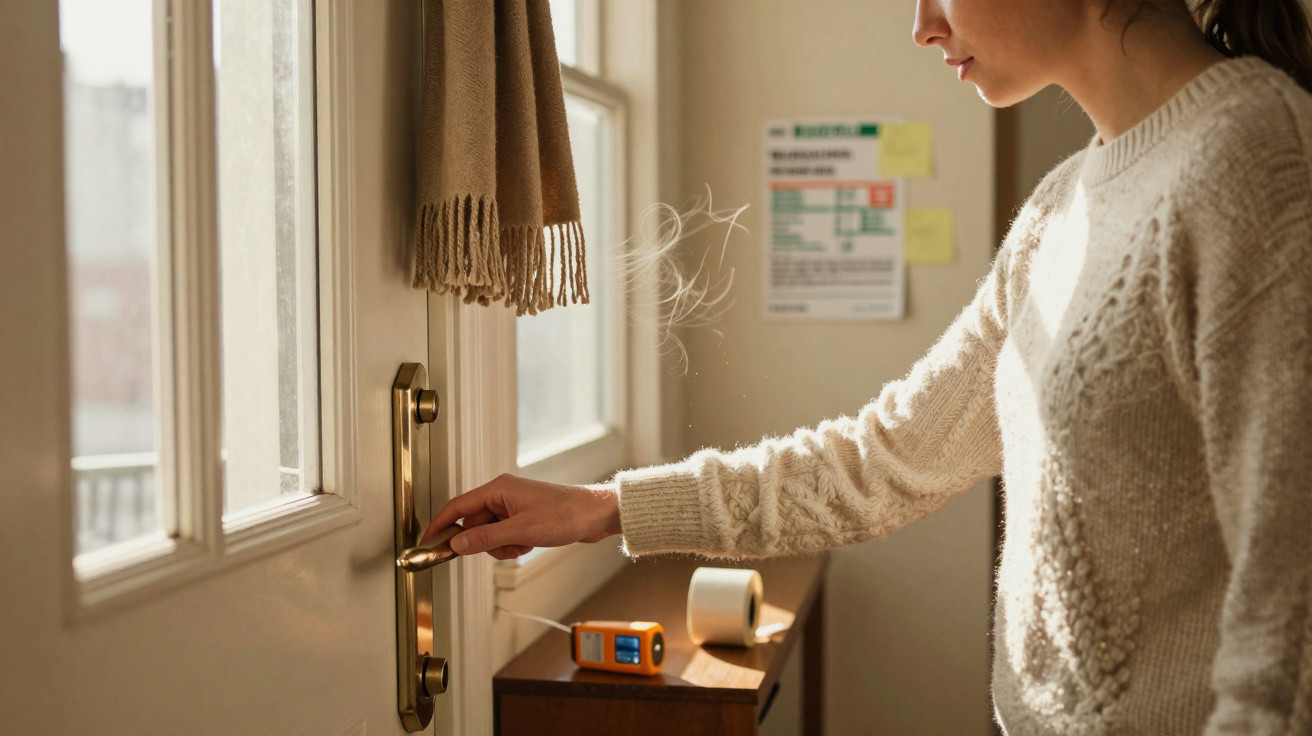
A full refurbishment is not always practical. Even so, smaller measures, such as sealing gaps, improving thermal curtains and insulating the roof space, reduce the daily need for a strong fire.
Storage: where and how to keep so many steres
Having enough firewood is not sufficient; it must also be stored properly. The best location is ventilated, protected from direct rain and kept off the ground.
- Use wooden pallets or raised supports to keep the logs away from the ground.
- Cover the top with a tarpaulin or roofing sheet, while leaving the sides open for air circulation.
- Avoid stacking wood against the house wall to prevent damp and pests.
Good storage turns firewood bought today into better fuel in a few months’ time, with lower moisture content and greater efficiency.
Practical examples to avoid getting the purchase wrong
Imagine a reasonably well-insulated 90 m² home in an area with a moderate winter, using a modern insert every evening. Typical consumption would be around 4 to 5 steres. If that same home were in a mountainous area, with intense cold and almost continuous use, the figure could rise to 7 or 8 steres.
Now consider an old, poorly insulated 140 m² home heated almost entirely by firewood, with a closed fireplace of average efficiency. The household could easily use 8 to 10 steres, particularly if people spend many hours at home, as is the case with remote workers.
Terms worth knowing
Two concepts appear frequently in this area:
- Calorific value: the amount of energy released when a given mass of firewood burns. Denser woods usually have a higher calorific value by volume.
- Appliance efficiency: the percentage of the firewood’s energy that becomes genuinely useful heat inside the home. The higher this figure, the fewer steres you need.
Understanding these ideas helps when negotiating with suppliers, comparing offers and, above all, setting realistic expectations: sometimes it is worthwhile paying slightly more for better-quality firewood and burning less over the course of winter.
For anyone just starting to use a wood-burning stove or insert, a sensible approach is to buy slightly more than the initial estimate in the first year, monitor actual consumption month by month, and adjust the quantity for following seasons. This “real-world calibration” usually prevents unpleasant surprises, both in the cold and in the bank balance.



Comments
No comments yet. Be the first to comment!
Leave a Comment