
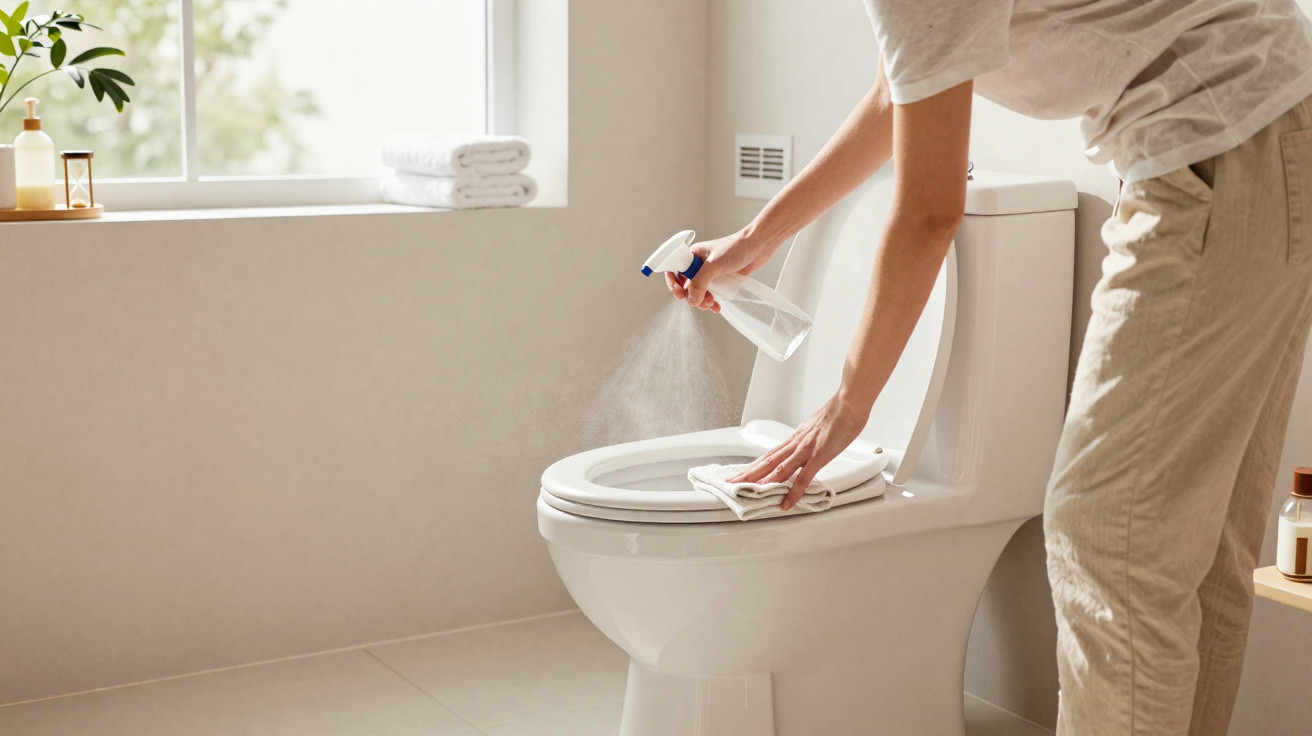
You get up in the middle of the night, still slightly groggy, switch on the bathroom light and get a shock.
The toilet you cleaned “yesterday” already has marks, dried splashes and a faintly odd smell in the air. It is such a familiar scene that we almost get used to it. Almost. Deep down, though, it is uncomfortable when visitors come round and you find yourself wondering whether the bathroom looks presentable. It is frustrating to know that, even when you clean regularly, dirt seems to arrive before your best intentions do. Then the unspoken question comes: am I doing something wrong? Or is there a trick nobody has told me? A routine so straightforward that it is easy to overlook. A kind of secret method used by people whose toilets always look spotless. One detail changes everything.
The issue is not cleaning, but the gap between cleans
Everyone knows someone whose bathroom always smells fresh, whose toilet is bright white and free from marks. It can seem as though they spend all day scrubbing, with gloves on and cleaning product in hand. Yet that is rarely the case. What really matters is what happens between one proper deep clean and the next. Small, almost automatic actions stop grime from taking hold. A toilet does not become dirty all at once; the build-up comes in layers. First there is a slight yellow mark, then biofilm, followed later by hardened limescale. By the time you notice, it can feel like a lost battle. The trick is to prevent it reaching that stage.
A household-habits survey conducted by major cleaning brands revealed an interesting finding: most Brazilians say they clean the toilet at least once a week, yet nearly half admit they “forget” the inside of the rim and the base. Those concealed areas are precisely where dirt clings quietly. This helps explain why some homes seem fresh even on ordinary days, while others wage war on the bathroom every Friday. In many households, the toilet receives attention only during the big clean. Until then, splashes, urine, bacteria and dust gradually combine. One homemaker from São Bernardo do Campo put it this way: “By the time I notice, my toilet already has that crust that will not come off even with prayers”. The issue is seldom a lack of effort. It is a lack of method.
When you look at it closely, it makes sense. The toilet is where moisture, organic residue and changing temperatures meet. It is practically an open invitation to fungi, bacteria and mineral marks from the water. Cleaning only when it “looks bad” is like waiting for a car to break down before remembering its service. Dirt acts like a magnet: the more material that is stuck on, the easier it is for fresh residue to attach itself. That is why the aim need not be to “clean harder”, but to “make it dirty more slowly”. The simple method for keeping the toilet clean for longer follows this principle: create a barrier, change a few habits and make interventions so quick that they do not burden your routine. Little by little, the bathroom becomes an ally rather than an enemy.
The simple method: a protective layer and micro-habits
At the centre of this method is a combination of two steps: invisible protection and daily micro-habits. There is no need for expensive products or elaborate equipment. The foundation is something most people already have at home: mild washing-up liquid and a little white spirit vinegar. The aim is to create a slippery “film” inside the ceramic, making it harder for dirt to stick. Here is how: after a more thorough clean, quickly dry the inside of the toilet with paper, then use a sponge reserved solely for the toilet to apply a thin mixture of diluted washing-up liquid and a few drops of vinegar. Rinse lightly, without removing every trace. The resulting film is almost unnoticeable, but highly effective.
The second part is even easier and, at the same time, more important. These are actions taking under 30 seconds that become habitual: flush with the lid closed every time, give the internal surfaces a quick brush at the end of the day, avoid leaving urine sitting for hours, and pour a little water mixed with washing-up liquid around the inner rim two or three times a week. It sounds like very little. And it is. However, these actions together prevent dirt from settling and drying out. Let us be honest: nobody deep-cleans the toilet every day. But almost everyone can fit half a minute of care into their routine if it provides visual and odour-related peace of mind.
A common mistake is to rely entirely on fragranced toilet blocks, assuming a pleasant scent means a clean toilet. Fragrance masks; it does not remove. Another misstep is repeatedly using very harsh products, which corrode the ceramic glaze and, over time, make the surface more porous. A porous surface holds more dirt. The outcome is the opposite of what you want. Smart cleaning is not the strongest cleaning; it is the most consistent. There is also the classic “I’ll do it later”: a splash today, a yellow mark tomorrow, a crust by the end of the month. Nobody wants to be monitored in their own bathroom, so this is not about blame. It is about relief. When the routine is easy, it does not become a mental burden. You do not need to become someone obsessed with the toilet. You simply need to stop being at the mercy of build-up.
As a cleaner who has worked for 20 years in small São Paulo flats said: “A bathroom stays clean when you do not let the dirt sleep”. Simple, direct, almost obvious – and that is exactly why it is so often ignored in everyday life.
- Make a mild mix of washing-up liquid and a little vinegar, then apply it after the deep clean.
- Always flush with the lid down to prevent dirty aerosols spreading around the room.
- Keep a dedicated toilet brush within reach for a quick daily pass.
- Avoid leaving urine standing in the toilet for extended periods, including overnight.
- Choose less aggressive products for everyday use to protect the ceramic glaze.
When the bathroom becomes an ally, the home feels different
Perhaps the greatest change is not in the porcelain, but in the feeling of entering the bathroom without fearing what you will find. A toilet that stays clean for longer removes an invisible weight from your shoulders. The automatic glance at the rim, the embarrassment before visitors arrive, the urge to shut the door quickly – all of this fades when the situation is no longer unpredictable. The simple method works almost like emotional insurance: even on busy days, you know the basics are under control. It is not perfection; it is consistency. And a stable home, clean “enough”, brings a quiet kind of calm that we often notice only when it disappears.
Ultimately, keeping the toilet clean for longer is less about buying the latest product and more about negotiating with your own routine. It means adjusting small actions, changing how the family uses the bathroom and turning cleaning from something demanding into something spread out over time. Sharing this kind of trick with friends, neighbours and relatives is almost an act of kindness. Everyone has experienced that moment when you open the bathroom door and think: “it should not be like this”. Perhaps the next step is different: opening the same door and feeling that, for some simple reason, things are under control. And wanting to tell others how you got there.
| Key point | Detail | Value for the reader |
|---|---|---|
| Protective film | Mild washing-up liquid with a little vinegar creates a layer that makes dirt less able to adhere | The toilet stays clean for longer, with less effort needed for later deep cleans |
| Daily micro-habits | Quick brushing, flushing with the lid closed and no urine left standing | Reduces unpleasant odours, marks and the need for frequent intensive cleans |
| Less aggressive products | Moderate use of strong chemicals prevents damage to the ceramic glaze | A smoother, more durable surface that collects less dirt over the long term |
FAQ:
- Question 1 How often should I do a “deep clean” of the toilet if I follow this method? For most homes, every 7 to 10 days is enough, as long as the daily micro-habits are kept up.
- Question 2 Does vinegar damage the toilet ceramic? When used in a small diluted amount and without scrubbing with abrasive materials, vinegar does not damage porcelain.
- Question 3 Can I replace mild washing-up liquid with washing powder? It is better not to. Washing powder tends to leave residue and may even cause marks, whereas washing-up liquid is gentler and easier to rinse away.
- Question 4 Does a toilet block help or hinder this simple method? It can complement a pleasant smell, but it does not replace the washing-up liquid film or daily habits.
- Question 5 Does anyone with children at home need to adapt any part of the method? Yes: reinforce flushing with the lid closed, teach them not to leave “wee sleeping”, and always keep cleaning products out of reach.




Comments
No comments yet. Be the first to comment!
Leave a Comment