
Saturday mornings often begin with a modest plan: “I’ll just tidy up a bit.” Then an hour vanishes between crumbs beneath the toaster, washing left on a chair and the bathroom you meant to “do quickly”. By lunchtime, the house is not exactly spotless, the coffee has gone cold, and the feeling of having rushed about is very real. We all know that point when cleaning takes up far too much of the day. The issue is not always the mess itself. It is often the way we tackle it. A few habits can make all the difference.
The real trap: cleaning without a method wastes unseen minutes
Much of the time spent cleaning disappears in back-and-forth journeys. You go upstairs for a cloth, return downstairs because the cleaning product is still in the kitchen, then spot a laundry basket and start something else before finishing the first task. This routine may seem harmless, but it quickly becomes tiring. Fragmented cleaning creates the impression that you are busy, while scattering your focus and making every job take longer.
Picture the kitchen after dinner: a plate in the sink, marks on the worktop, a bin that needs taking out and a floor to sweep. Many people begin by sorting a drawer that does not close properly, reply to a message, then return to the worktop twenty minutes later. According to several studies on household organisation, interruptions can greatly increase how long a task feels. Your brain has to pick up the thread again and again.
Time is also lost through the belief that every detail must be dealt with the moment it is noticed. Yet a lived-in home is not a showroom. It is lived in, it gets messy, and it needs doing again. Chasing perfection turns a thirty-minute routine into an endless mission. Let us be honest: nobody really does that every day. The aim is a clean, hygienic and pleasant result, not a catalogue photograph.
Halving your cleaning time starts with very simple habits
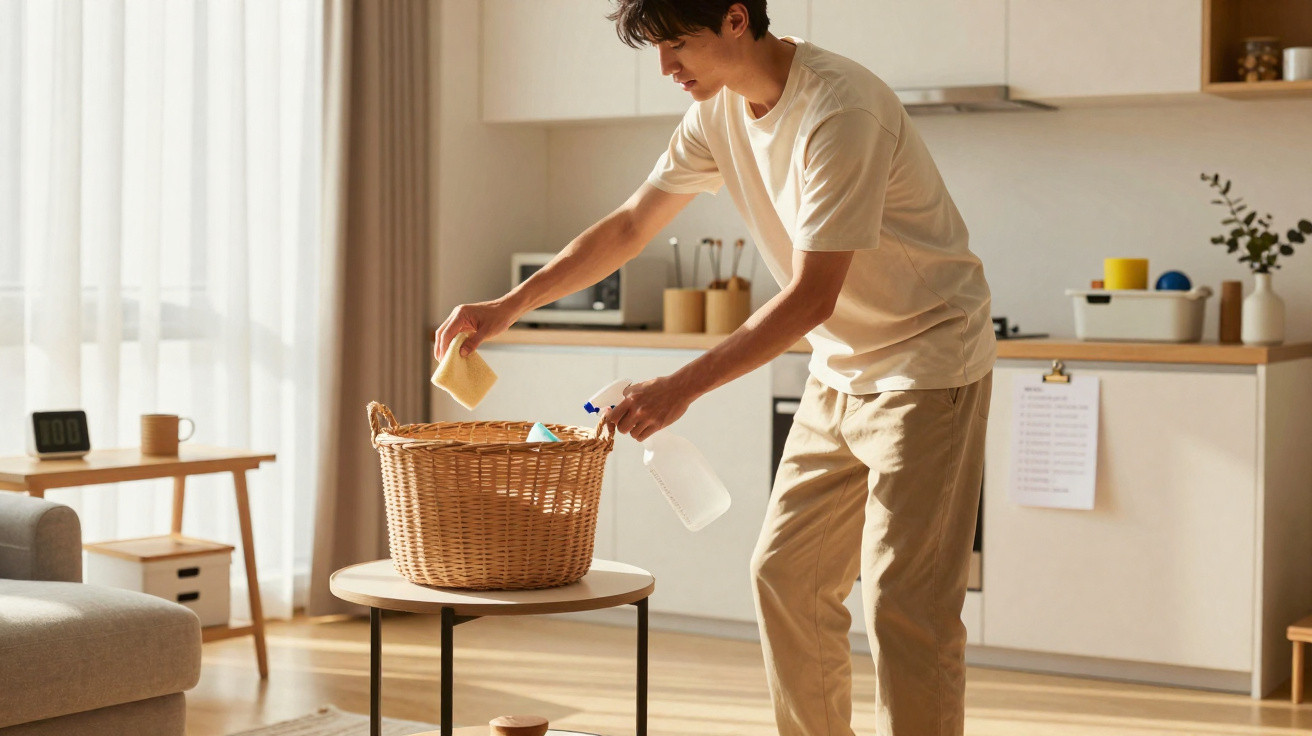
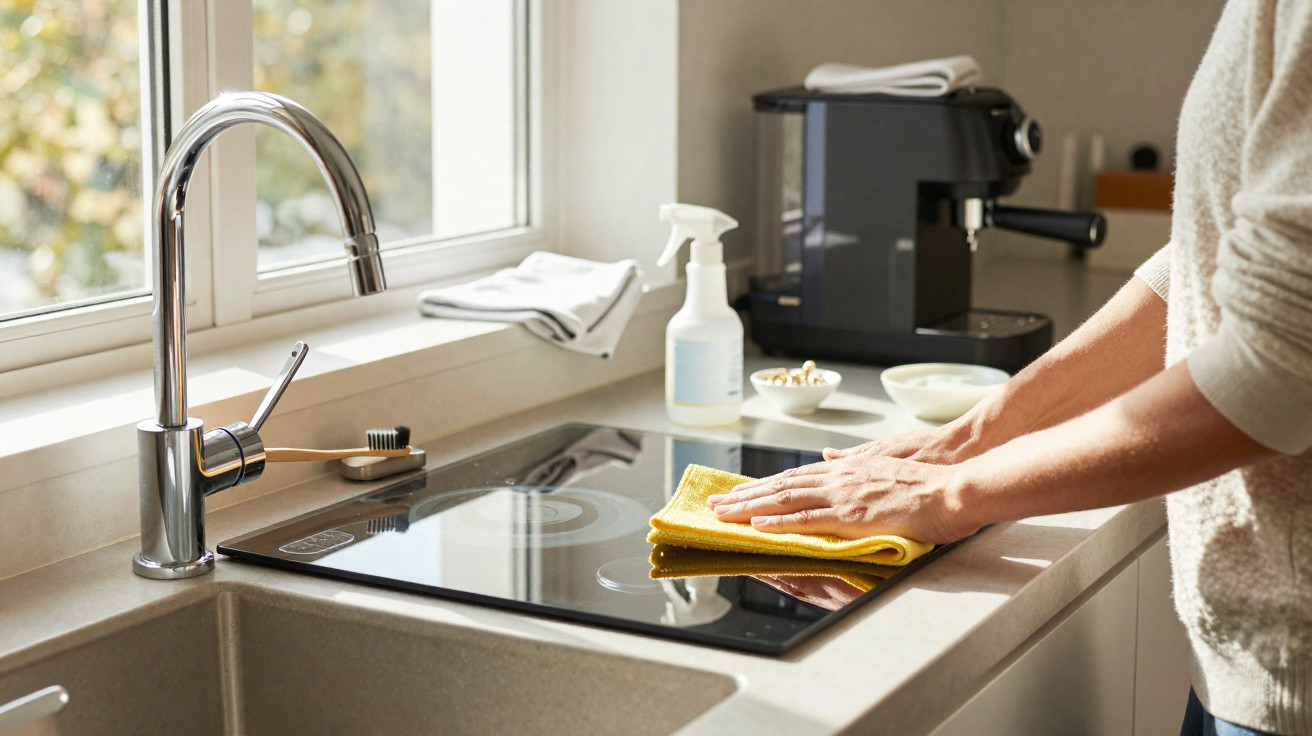
The most effective approach is to prepare a small portable cleaning caddy. Put a microfibre cloth, a sponge, an all-purpose cleaner, bin bags, a squeegee and gloves inside it. Before you begin, choose just one area: the bathroom, living room or kitchen. This stops you crossing the home ten times. Fifteen focused minutes in one room are often more worthwhile than an hour flitting between them all.
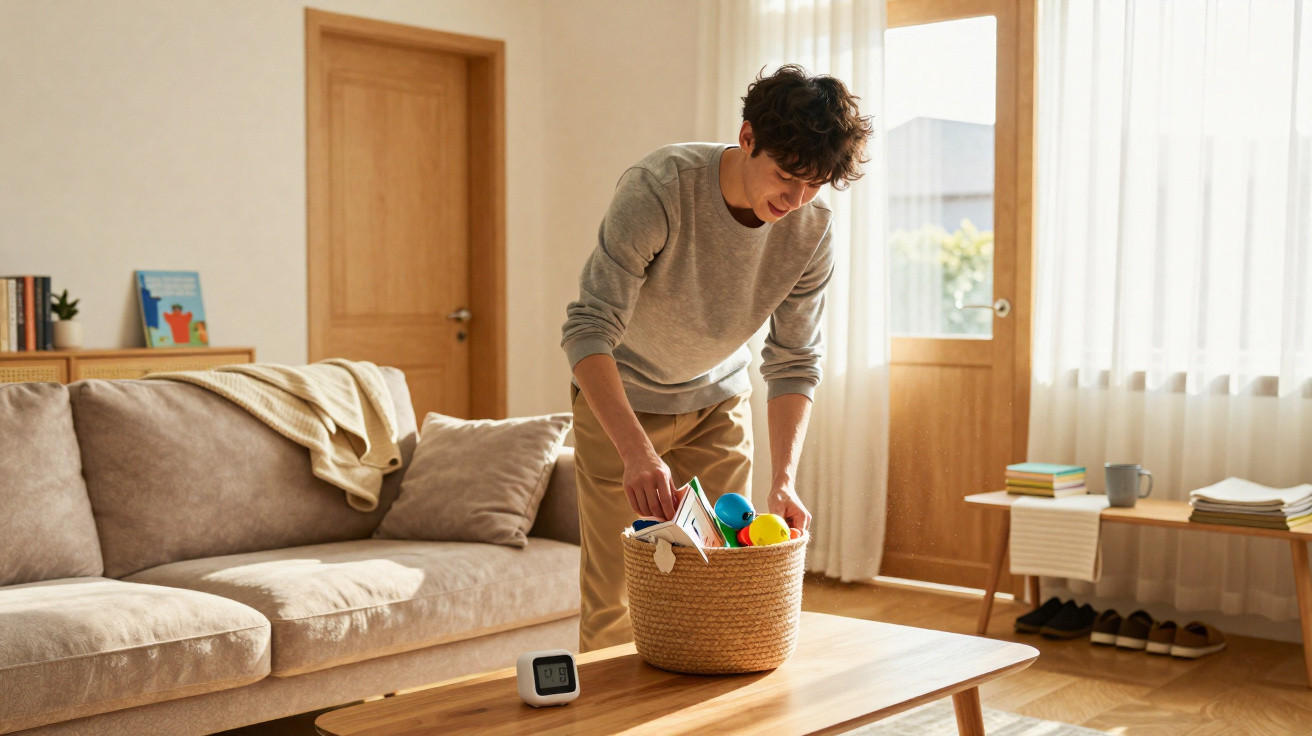
A common mistake is cleaning a surface before clearing it. You wipe the table, then move papers, glasses and toys one at a time, meaning you have to start again. The best order is more straightforward than it sounds: throw away, put away, dust, wash. It is not a military rule, merely a very useful shortcut. If you live with children, housemates or a pet, adapt it without guilt: every household has its own kind of mess.
A timer can also be a surprisingly effective ally. Set it for ten minutes, tackle what stands out most, then stop when it rings: the limit prevents you from getting swallowed up by details that can wait until tomorrow.
“A well-kept home is not one that never gets dirty, but one that can be put back in order without giving up your weekend.”
Keep these pointers in sight:
- clean from top to bottom, so you do not make the same area dirty twice;
- leave cleaning product to work while completing another short task;
- group similar tasks together, such as mirrors or door handles;
- focus on the areas that are used, rather than corners nobody looks at.
Fast cleaning depends above all on a less cluttered home
An empty surface can be cleaned in seconds; a surface covered with belongings requires you to move, sort, hesitate and put things back. This is where decluttering becomes useful, without demanding a minimalist lifestyle. Keeping fewer ornaments in the hallway, fewer bottles around the basin or fewer papers on the living-room cabinet immediately reduces mental load. Fewer items, fewer actions: the calculation is almost too simple, but it works.
It is also important to accept that not every task is equally urgent. The toilet, worktop, handles and food-preparation areas deserve regular attention. The top of a cupboard or the inside of a cabinet can wait. This order of priority removes unnecessary pressure, especially after a busy week. A clean home does not require you to treat every centimetre with the same effort.
The time saved becomes even clearer when everyone helps, however modestly. Putting a glass in the dishwasher, returning a jumper to its place or wiping up a splash as soon as it happens: these small actions stop mess quietly building up. It is not about living with a checklist stuck to the fridge. It is about making the home easier to live in, and making cleaning less of a burden for one person to carry.
What if the best cleaning routine is the one you no longer let build up?
Halving your cleaning time requires neither miracle products nor perfect discipline. It begins with a very practical question: what wastes my time here every week? For some, it will be laundry moving from chair to chair. For others, it is scattered cleaning products, items with no fixed place or the habit of trying to do everything at once. Identifying that point of friction makes it possible to change one habit, without turning the entire home upside down.
Above all, this new rhythm gives you more than saved minutes. It makes room to eat lunch without looking at the vacuum cleaner, welcome someone unexpectedly or simply sit in a living room that feels uncluttered. The home will never be perfectly still, and that is rather reassuring. It shows that people cook, sleep, play and live there. Perhaps your next cleaning session can begin with only ten minutes, followed by the decision to do better, not more.
| Key point | Detail | Added value for the reader |
|---|---|---|
| Limit unnecessary trips | Prepare a caddy with everyday cleaning products and tools. | Fewer back-and-forth journeys, steadier focus and a shorter cleaning routine. |
| Follow a simple order | Throw away, put away, dust, then wash surfaces. | Prevents you from doing the same work twice. |
| Deal with what matters | Prioritise rooms and areas genuinely used each day. | A pleasant home without sacrificing all your free time. |
Comments
No comments yet. Be the first to comment!
Leave a Comment