
In the kitchen, bathroom or when cleaning windows, a few straightforward habits can make daily cleaning easier without filling cupboards with bottles.
Family cleaning tips often rely on everyday staples: hot water, white vinegar, bicarbonate of soda, Marseille soap or lemon. Their value is not that they provide a supposedly universal answer, but that they can tackle certain everyday marks when used correctly. Here are ten practical ideas to adapt to each surface and to the actual condition of your home.
An old toothbrush for awkward corners
A used toothbrush is especially useful for grooves in worktops, around taps, in grouting and beside the hob. Its bristles can reach places that a sponge tends to pass over without properly cleaning.
For ingrained grime, make a paste from a little bicarbonate of soda and a few drops of water. Rub gently, then rinse using a damp sponge. Avoid abrasive powders and acids on marble, varnished wood or limestone. Diluted mild soap in water is usually the safer option.
On delicate materials, it is better to leave a gentle product to work for a few minutes than scrub hard and risk a permanent scratch.
Hot water before tackling a slow-draining sink
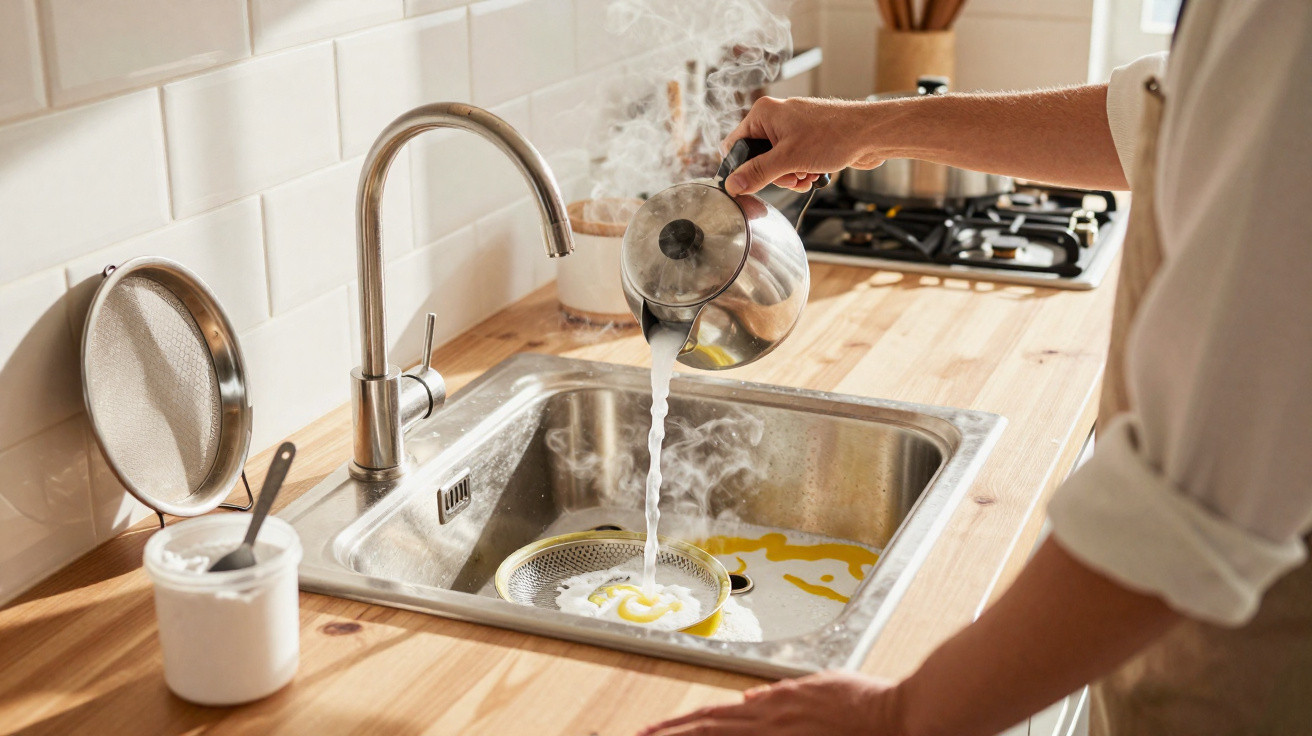
A sink that drains slowly is not necessarily blocked deep inside the pipework. Cooled grease and soap residue can create a build-up near the plughole. Pouring a saucepan of very hot water in slowly may then help improve the flow.
If this does not work, place a bowl underneath before taking apart and cleaning the trap. Hair, food scraps and small objects often collect there. Do not mix commercial household cleaning products together, as some combinations can release irritating fumes.
Habits that help prevent blockages
- Remove hair from the basin after styling your hair.
- Never pour cooking oil down the sink.
- Fit a small strainer over plugholes.
- Rinse the sink with hot water after washing up.
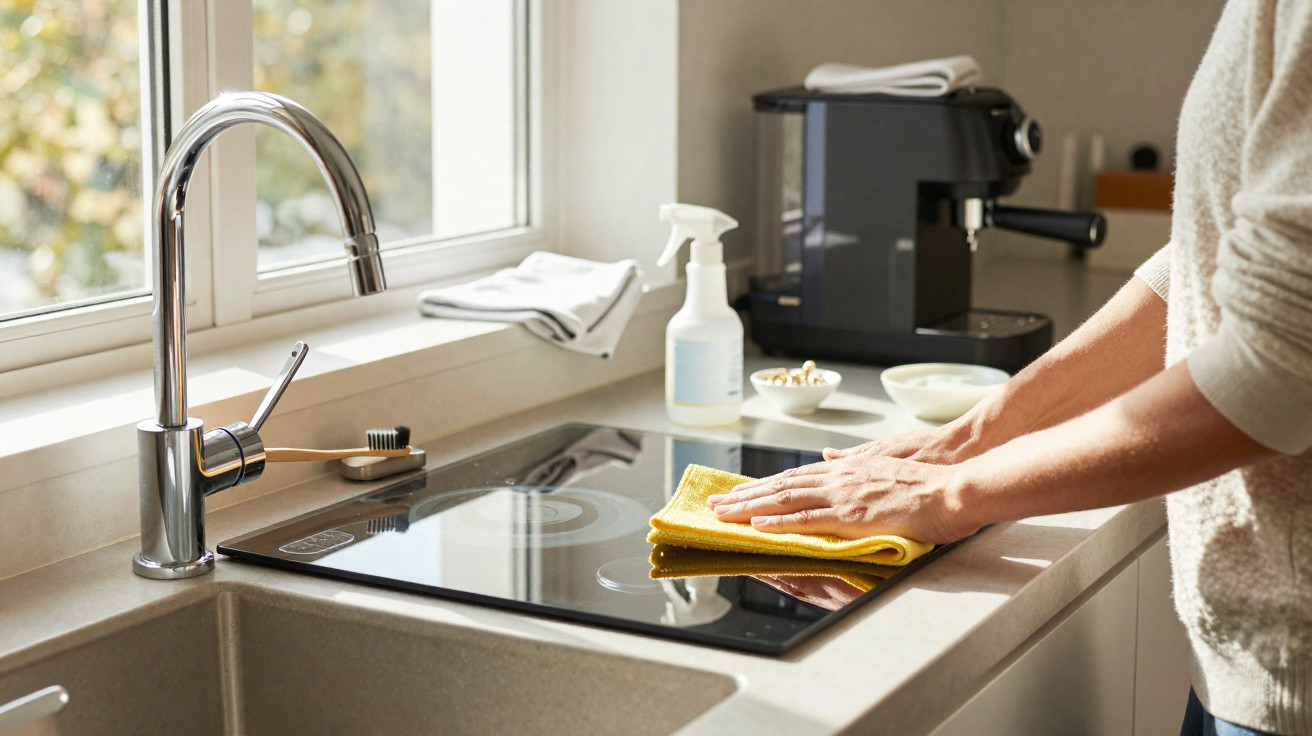
Clean the hob as soon as the meal is over
The most effective habit is also the least dramatic: clean up promptly. Fresh splashes of sauce or grease will often come away with a damp sponge and a little hot water. Leaving them for several days turns them into a crust, particularly on the hob and around the controls.
On stainless steel, a very diluted mixture of water and white vinegar can remove dull marks. Rinse thoroughly afterwards and dry with a clean cloth, since too much vinegar can leave a lingering smell. Bicarbonate of soda is better suited to stubborn deposits, provided it is not used as a scouring powder on a delicate surface.
Maintaining a coffee maker without a detergent smell
Mineral deposits can affect the flavour of coffee and slow the water flow. For a moka pot, take the parts apart once they have cooled, rinse them and dry them fully. A worn seal or blocked filter may need replacing rather than being endlessly scrubbed.
Vinegar can occasionally be used to tackle limescale, but it must be followed by plenty of rinsing. Run several cycles with clean water afterwards. Strongly scented washing-up liquids are not always suitable for appliances used to make drinks, as they may leave a residual taste.
Streak-free windows without washing them in direct sun
Marks on windows are often caused less by the product than by the time of day. In direct sunlight, water dries too quickly and leaves streaks. An overcast day or a cooler time makes the task easier.
Start by dusting the frame. Then wash the glass with a light solution of lukewarm water and white vinegar, before drying it with a clean squeegee or microfibre cloth. Keep a separate cloth for the frames: the dust and grease they hold can quickly dirty glass that has already been cleaned.
The right approach for windows: clean the frame before the glass, then dry it before the water has time to evaporate.
The oven needs warmth and time
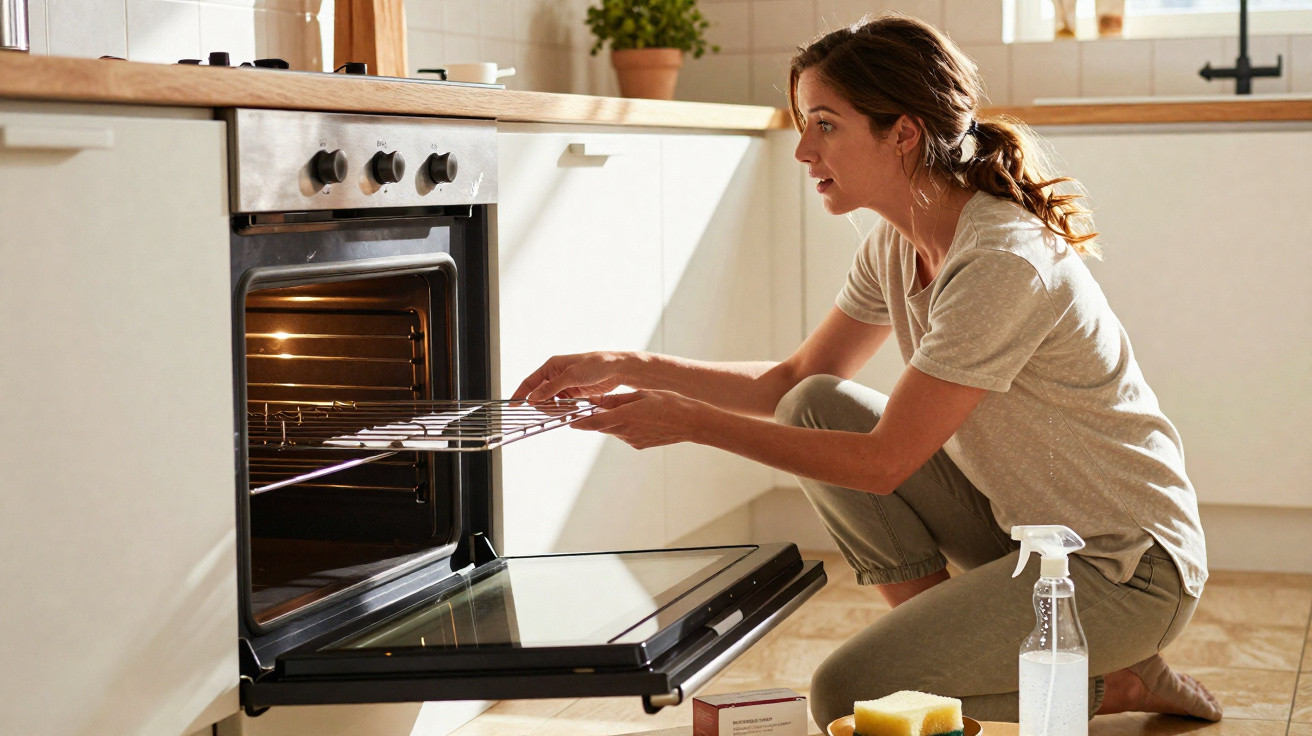
After several uses, greasy splatters become fixed to the oven walls. While the appliance is still slightly warm, but switched off and safe to handle, wipe it with a damp sponge. For older residue, apply a paste of bicarbonate of soda and water to the affected areas, avoiding the heating elements and fan.
Leave it to work, then remove it with a non-abrasive sponge. Lemon juice may help reduce odours after cooking fish or a gratin. Never use harsh products on a hot surface, and ventilate the room well if using a specialist cleaner.
Jewellery needs a gentle approach
A gold ring without a delicate stone can be washed in lukewarm water with a small amount of mild soap. After a brief soak, use a very soft brush to remove deposits from raised details. Rinse it in a container, never directly over a plughole.
This method is not automatically suitable for pearls, glued stones, antique jewellery or fragile settings. When in doubt, a jeweller remains the best person to ask. Heat, acidic products and abrasive powders can irreversibly damage some pieces.
In the bathroom, fewer items make cleaning easier
A basin crowded with bottles and accessories takes longer to clean. Putting away items that are not used every day clears the surfaces and reduces water marks. Wiping the taps with a cloth after washing also helps limit limescale build-up.
Bicarbonate of soda can deodorise the toilet bowl or help lift certain marks. White vinegar works on limescale, but it must never be mixed with bleach. This rule applies throughout the home: combining chlorinated products with acids can produce a dangerous gas.
Choosing the right mixture for floors
| Type of floor | Recommended care | Avoid |
|---|---|---|
| Tiles | Lukewarm water and a lightly dosed mild cleaner | Too much product, which leaves a sticky film |
| Wood flooring | A thoroughly wrung mop and suitable soap | Standing water and overly hot steam |
| Marble | Clean water or neutral soap | Vinegar, lemon and abrasive powders |
The amount used matters as much as the cleaner itself. Extra soap does not clean more effectively: it attracts dust, leaves marks and often means going over the floor again with clean water. For wood flooring, prolonged dampness is the main problem, as it can make the wood swell or lose its sheen.
Treating a stain on fabric before washing
A fresh grease stain is easier to deal with before it goes into the washing machine. Blot it without spreading it, then apply a small amount of washing-up liquid to the affected area. Leave it for a few minutes before rinsing or washing according to the garment's care label.
Do not iron stained fabric, as heat often sets the dirt into the fibres. Always test a product on an inconspicuous area, particularly on wool, silk, bright colours or delicate fabrics. Acting quickly, using a small amount of product and rinsing thoroughly will often give better results than a series of harsh treatments.



Comments
No comments yet. Be the first to comment!
Leave a Comment