
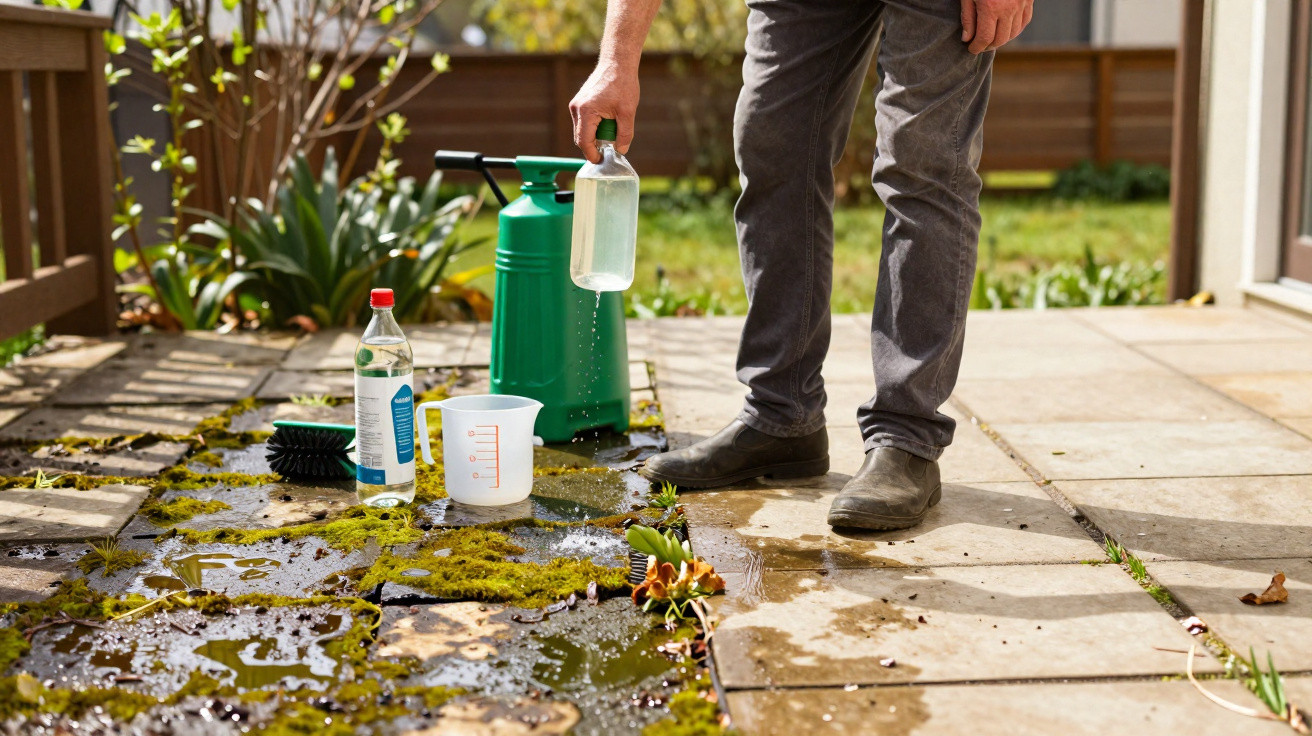
Across the UK and large parts of Europe, homeowners often emerge from winter to a very different-looking terrace: paving slabs have lost their brightness, joints are packed with moss, and a greasy algae coating has made each step hazardous. The usual reaction is to use aggressive chemicals or get out the pressure washer. However, a very inexpensive liquid found in most kitchen cupboards can tackle the build-up in around an hour, with very little work.
From cosy winter to hazardous spring patio
Persistent rain, limited daylight and weak winter sunshine offer ideal growing conditions for algae and moss. Water remains on exterior surfaces for longer, shade stops them drying rapidly, and fallen leaves provide nourishment for organic growth.
On patios, these factors create a green layer that is more than an aesthetic issue: it changes how the paving feels underfoot. Concrete, stone flags and ageing tiles can become slick and slimy.
After winter, a green patio is not just ugly; it can significantly raise the risk of slips and falls, especially for children and older relatives.
Simply waiting for a spell of dry weather seldom solves it. Moss generally becomes denser, and dark marks work further into the surface. By the beginning of spring, a patio can feel less like somewhere to place deckchairs and enjoy a coffee than an ice rink.
The most effective time to clean is often early in the season, when temperatures are beginning to rise but the slabs still retain winter damp. At this point, the growth is active and more susceptible to treatment, allowing it to come away more easily.
The 30p ingredient that does the heavy lifting
The unlikely solution is ordinary white vinegar: the clear, alcohol-based variety available in supermarket cleaning sections. A standard bottle from a discount retailer in the UK may cost roughly 30p, while an average patio requires only some of the bottle.
White vinegar contains acetic acid. Once diluted, this acid disrupts the fine organic coating on which moss and algae “feed”. It also changes conditions at the slab surface, making it more difficult for the organisms to hold on firmly.
When mixed with water and left to sit, white vinegar attacks the film that helps moss and algae stick, so they release with minimal brushing.
A method attributed to a British homeowner and reported by several lifestyle publications is intentionally uncomplicated: sweep, soak, wait and rinse. Once the reaction has done the main work, the notably low amount of scrubbing required is what surprises many people.
How to clean a green patio in roughly one hour
For most concrete patios, exterior tiles and paving blocks, a basic process can produce a noticeable improvement within one afternoon.
Step-by-step method
- Clear loose leaves, soil and grit from the patio with a broom.
- Combine one part white vinegar and one part hot water in a bucket or watering can.
- Apply the mixture liberally by pouring or spraying it onto green or moss-covered sections.
- Keep off the surface and allow the solution to act for around 60 minutes.
- Use a stiff broom to brush lightly, then rinse the patio well with clean water.
A further application can help on patios under heavy shade or those with substantial moss growth. The initial treatment disrupts the growth structure, while a second can remove remaining material lodged in joints and the surface’s tiny pores.
Some people anticipate conspicuous fizzing similar to that produced by commercial patio cleaners, yet the vinegar method usually looks unremarkable while it is working. The clearest difference commonly comes at the rinsing stage, as the released green layer is washed away.
Materials that do not get along with vinegar
Although it may seem mild when used in salad dressing, white vinegar remains an acid. Repeated use on certain surfaces may etch, weaken or leave them looking dull.
Always check what your patio is made from: some natural stones and untreated timbers can react badly to acidic solutions.
Materials that are generally not appropriate for vinegar include:
- limestone paving slabs
- marble
- travertine
- some lime-containing reconstituted stone products
- untreated decking, or decking made from very soft timber
For these surfaces, pH-neutral cleaners or patio products designed specifically for stone are more suitable, even where they are more expensive. Testing a hidden corner first may prevent an expensive replacement job.
Quick comparison of common patio surfaces
| Surface type | Vinegar suitability | Notes |
|---|---|---|
| Concrete slabs | Generally suitable | Rinse thoroughly to clear any residue. |
| Ceramic or porcelain tiles | Often suitable | Inspect the grout; do not use on decorative cement tiles. |
| Clay pavers / bricks | Usually suitable | Try a small patch first; certain bricks may undergo a slight colour change. |
| Limestone, marble, travertine | Not recommended | May cause etching and dull areas. |
| Wood decking | Use with care | More suitable for treated timber; do not soak untreated boards. |
Side benefits: weeds and joints get a clean too
The gaps between paving slabs offer weeds the same things that favour moss: dampness, a small amount of soil and some light. The vinegar mixture may scorch small weeds and young seedlings in these joints, especially on hot, dry days following treatment.
It is not a replacement for removing well-established, deep-rooted weeds properly, but it may slow their return and make them easier to pull out manually. The solution can also loosen hardened dirt in gaps, where trapped moisture often promotes later moss growth.
Plants in beds and lawn edges near the patio should be shielded. Use plastic sheeting or old towels, or distribute the mixture precisely with a narrow-spouted watering can. A splash landing directly on foliage can scorch it in the same way it affects moss.
Why winter makes patios so slippery
Shade, consistent moisture and temperatures that are low without freezing are the three conditions in which algae and many mosses flourish. Winters in Britain and northern Europe supply all three.
Algae don’t need thick soil: a thin film of organic dust and pollution on a damp slab is enough for them to spread.
Run-off from roofs, decomposing leaves and airborne pollution leave minute particles on outside surfaces. Rain then spreads these particles into a thin coating. Where sunshine is weak and paving does not dry completely, algae establish themselves in this film and create a green, slippery finish.
Patios facing south often remain cleaner because even brief sunny intervals allow them to dry quickly. In contrast, shaded sections beside fences with very little airflow usually become the main problem areas, sometimes requiring treatment twice yearly.
Reducing future moss and algae growth
A 30p bottle of vinegar can deal with the existing mess, while several regular habits can help delay the return of the green film.
- Sweep away soil and leaves from the patio periodically during autumn.
- Clear gutters and downpipes to prevent continual water flow over the slabs.
- Cut back low branches and shrubs that leave the patio in dense shade.
- Following prolonged wet weather, move pots so that the same areas are not constantly covered and can dry out.
At the end of autumn, some homeowners use a weak vinegar mixture or a dedicated patio protector as a preventive treatment. The intention is to interrupt the earliest stage of colonisation through the darkest part of the year.
Safety, limits and when to choose another method
Kitchen vinegar may seem gentler than a pressure washer or powerful biocide, but sensible precautions are still needed. Gloves can prevent dry, irritated skin, while older shoes avoid vinegar splashes damaging leather or metal detailing.
On entrance paths and outdoor steps with a slope, avoid walking across the treated area until the full reaction period has passed to reduce the chance of slipping. Green water running off during rinsing can also be unexpectedly slippery, so it is helpful to direct it away from drains and doorways.
There are limitations to the approach. Deep black staining on old slabs may result from mould or pollution that has built up over many years. Vinegar can improve the look of these areas without removing every mark. Where appearance matters greatly, a specialist patio cleaner or professional treatment may be necessary.
For people with respiratory conditions, vinegar’s sharp odour can be unpleasantly strong, particularly in enclosed courtyards. Working when there is a breeze, or selecting a more neutral cleaner, may be a more comfortable option.
Eco impact and realistic expectations
White vinegar appeals to many people because they wish to avoid chlorine-based patio treatments and quaternary ammonium compounds, both of which may affect aquatic life if they enter drains or waterways.
Vinegar is less persistent in the environment than many commercial biocides, but it still alters soil pH and can stress nearby plants when overused.
When used in moderation, the liquid breaks down fairly quickly after dilution by rain and rinse water. Conversely, applying large quantities of concentrated vinegar repeatedly to one soil area can damage beneficial organisms living in that small zone.
Realistic expectations make this technique more rewarding. One 60-minute application followed by light brushing will normally remove the visible green coating and leave the patio much less slippery. It is unlikely to bring decades-old slabs back to a brand-new colour, and faint discolouration may persist in especially porous surfaces. If heavy rain and shade return, many homeowners carry out a shorter repeat treatment partway through the season.




Comments
No comments yet. Be the first to comment!
Leave a Comment