
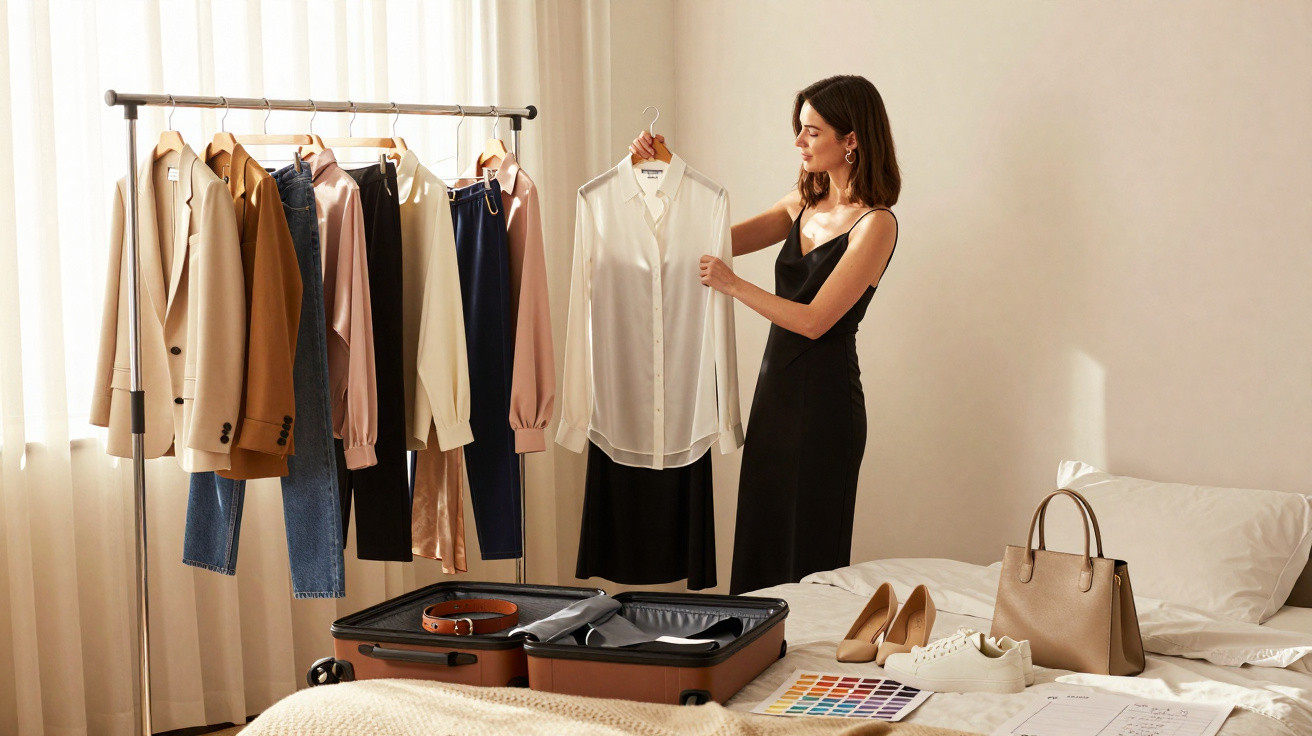
Sarah stood in front of her bursting wardrobe, close to tears with frustration. Three outfits were screwed up on the bed, and none suited the night she had planned. A work presentation was scheduled for 2 pm, drinks with friends for 6 pm, and a dinner date for 8 pm. Despite owning hundreds of garments, she still had “nothing to wear” on an otherwise unremarkable Tuesday. Most of us know the feeling: frozen in front of a mountain of clothes that never seem to go together. The contradiction is striking-the more we possess, the less properly dressed we feel. But what if the answer is not purchasing more, but keeping less?
The Science Behind Wardrobe Paralysis
Fashion psychologists describe this as “choice overload”, and it ruins mornings through one outfit dilemma after another. Presented with an excessive number of options, our brains can effectively stall, sending us back to the same worn-out combinations or into total indecision. The average person uses only 20% of their wardrobe regularly, leaving 80% as expensive closet decoration.
Consider Maya, a marketing executive in Portland, who counted 247 pieces in her wardrobe last spring. After recording what she wore for three months, she made a surprising discovery: only 31 items appeared in regular rotation. Everything else remained hanging there as costly reminders of impulse buys and “someday” visions that never became wearable looks.
A capsule wardrobe turns that formula on its head. Deliberately narrowing your selection to 30 adaptable pieces reduces decision fatigue while increasing the number of potential outfits. The maths works in your favour: when selected thoughtfully, 30 items can produce more than 400 combinations. It is not about deprivation; it is about smart editing.
Building Your Foundation: The 30-Piece Formula
Begin with this useful balance: 60% basics, 30% statement pieces and 10% trend-led accents. Basics are your wardrobe’s framework-such as jeans that fit perfectly, sharp white shirts and the blazer that makes every outfit seem more luxurious. These reliable items will feature in 80% of what you wear, so they are worth spending on without apology.
Realistically, hardly anyone wants to devote a Saturday morning to working out garment percentages. A more straightforward method is an “occasion audit”: write down every situation you typically dress for during a month. Think work meetings, relaxed weekends, date nights, gym visits and formal occasions. Allow each group 2–3 designated pieces that can also work alongside items from the other groups.
“I used to think having options meant having everything. Now I realize having options means having pieces that work together effortlessly,” says Marie Claire’s former fashion director, who famously downsized to 28 pieces.
Your core categories should cover:
- 5 tops suitable for both casual and professional environments
- 3 bottoms that work from daytime through to evening
- 2 dresses appropriate for more than one occasion
- 4 layering pieces to accommodate seasonal changes
- 6 pairs of shoes for every circumstance
- 10 accessories that can reinvent simple outfits
The Art of Strategic Selection
A capsule wardrobe should reflect the life you really lead, rather than the one you hope to live one day. That sequin mini dress gathering dust does not deserve a place if it has not been worn for eight months-regardless of its price or how brilliant you looked in it once. Genuine capsule wardrobe curation requires uncompromising honesty about your lifestyle.
Colour is your hidden tool for creating a cohesive wardrobe. Pick three neutral shades as a base-black, navy and cream, for example. Then introduce two accent colours that flatter your complexion and fit your personal style. Every piece in the capsule wardrobe should work well with the others, allowing plenty of combinations without clashing looks that appear as though you are “trying too hard”.
Quality will always beat quantity, though quality does not necessarily mean a high price. A £40 white T-shirt that keeps its shape through twenty washes is more valuable than a £120 designer alternative that pills after three. Prioritise fabric, fit and construction over labels and price tags. Both your bank balance and wardrobe will benefit.
| Key point | Detail | Value for the reader |
|---|---|---|
| Colour coordination | A maximum of 3 neutrals + 2 accent colours | Everything works together, removing outfit anxiety |
| Quality over quantity | Prioritise fabric and construction rather than brand names | Longer-lasting garments and better cost per wear |
| Lifestyle alignment | Select items that suit your real day-to-day activities | No more unworn clothes and maximum usefulness |
FAQ:
- How do I handle seasonal changes with only 30 pieces? Create seasonless foundations, then rotate in 5–7 seasonal items. Keep out-of-season clothing stored separately so that the 30-piece limit remains active in your wardrobe.
- What if I have a job that requires formal business attire? Change the proportions-give more room to professional clothing and less to casual pieces. The same principle applies; it simply needs to suit your lifestyle requirements.
- Can accessories count toward the 30 pieces? Most capsule wardrobe experts exclude basic accessories, including belts, jewellery and scarves, from the 30-piece total. Keep the restriction focused on clothing and shoes.
- How often should I update my capsule wardrobe? Reassess it each season and replace worn-out items straight away. Only bring in something new when something else leaves, preserving the 30-piece limit and preventing capsule creep.
- What’s the biggest mistake people make when starting a capsule wardrobe? Attempting to build the ideal capsule overnight. Begin by identifying the pieces you wear most, then develop it gradually while learning what fits your own lifestyle and preferences.
Building a capsule wardrobe is not about going without-it is about freeing yourself from the burden of endless choice. Once every item in your wardrobe works with every other, getting dressed becomes easy rather than draining. The woman who once felt immobilised by her overflowing wardrobe can now be ready within minutes, assured that whichever pieces she selects will look considered and polished. Some people fear that fewer choices will become boring, yet most find the reverse: limits encourage creativity. Without an overload of options, you begin to notice the finer points-how a scarf can alter an outfit’s whole mood, or how rolled-up sleeves can turn a formal shirt into effortlessly casual perfection.





Comments
No comments yet. Be the first to comment!
Leave a Comment