
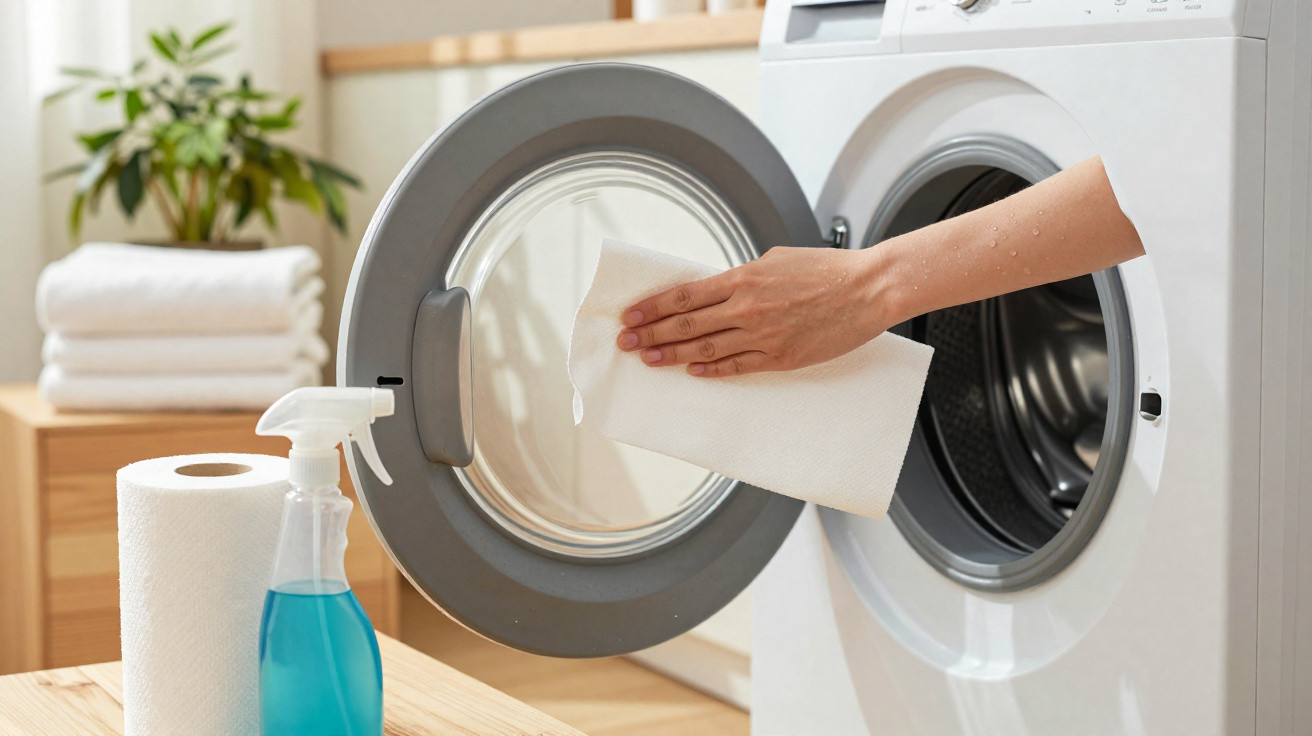
A washing machine is one of the household appliances people most often forget to clean. Constant contact with water, detergent and dirty laundry causes moisture to build up in particular areas, creating breeding grounds for mould and fungi-especially around the door seal. Worse still, if the mould is not removed, it can transfer fungal spores to the clothes you have just washed. Fortunately, a simple trick using paper towels and bleach tackles the problem with minimal effort and no specialist products.
Why does the washing machine door seal collect so much mould?
The rubber gasket that seals the washing machine door is designed to prevent leaks, but its folds and recesses provide the ideal place for moisture, hair, detergent residue and organic dirt to collect. After every wash cycle, some water remains trapped in these folds. When the door is shut straight away, rather than allowing the interior to dry, this stagnant moisture can encourage fungal growth within just a few days.
Mould on the seal creates problems beyond its unpleasant appearance. Fungal spores established in the gasket can transfer to clothes during wash cycles, potentially leaving dark marks on white fabrics, causing a lingering smell on garments even after washing, and triggering allergic reactions in sensitive people. Cleaning this part of the machine each month is therefore not merely cosmetic; it is a basic hygiene measure.
- Double-ply paper towels: their thickness and wet strength allow them to remain attached to the rubber with bleach for hours without breaking apart, ensuring lengthy contact with the fungus.
- Bleach gel: its thicker texture sticks more effectively to the vertical rubber seal and does not run off like liquid bleach, keeping the product directly against the mould for the required time.
- Protective gloves: essential throughout the process, as prolonged contact between bleach and skin can cause irritation and dryness.
- A damp cloth and a bucket of water: these are needed at the end to remove every trace of bleach from the rubber before running the rinse cycle.
- ⏰ Contact time: at least two hours, ideally overnight: the longer the bleach remains in contact with the rubber, the more effectively it eliminates established fungus.
Complete step-by-step method for using the trick and removing mould
Begin with the machine switched off and empty. Put on gloves before handling any product. Fold the paper towels into strips, then soak each one generously in bleach, preferably bleach gel. Open out the folds in the door seal and press the soaked paper towel strips over every mould-stained section. Pay particular attention to the darkest areas and the deepest recesses, where moisture tends to remain for longer.
Leave the bleach-soaked paper towels against the rubber for at least two hours. The best time to do this is before going to bed, so that they can work overnight. The extended action of the sodium hypochlorite in the bleach destroys the fungal structures thoroughly, rather than simply lightening the visible mould on the surface.
How to remove the paper towels and finish cleaning without leaving residue
Once the contact time has passed, remove the paper towels by carefully drawing them along the folds of the seal, lifting away mould residue caught in the fibres. Do not scrub: this pulling motion works better and helps prevent spores from spreading to other areas of the machine. Dispose of the paper towels straight into the bin while you are still wearing the gloves.
After removing the paper, wipe the entire rubber seal with a damp cloth to clear away any remaining bleach residue. Go over it again with a clean cloth and water until you are certain that no product is left on the seal. Then run an empty cycle with no laundry inside, using the shortest programme available, to remove any traces of hypochlorite that may have entered the drum. The machine is only ready for normal laundry after this final cycle.
How to stop mould returning after cleaning
Five simple habits that prevent mould from appearing again
Leave the washing machine door slightly open after every wash so the interior can dry naturally. After each cycle, wipe the folds of the rubber seal with a dry cloth, removing trapped moisture before fungi have the conditions they need to grow. Run a monthly cleaning cycle with the machine empty by adding two cups of white vinegar to the detergent drawer and selecting the hottest programme available. Clean the detergent and fabric conditioner drawer regularly, as built-up residue there also encourages fungal growth. Avoid leaving wet laundry in the machine for more than one hour after the cycle ends.
When these habits are followed consistently, the need to use the paper towel and bleach trick becomes occasional rather than monthly. The rubber seal stays clean for much longer, and the machine operates more efficiently, as biological residue also gradually affects the performance of wash cycles.
How often should this cleaning be done?
It is advisable to inspect the door seal at least once a month. In homes with several washes each week, pets, or a very humid climate, the ideal interval may be every two weeks. The clearest indication that cleaning is due is a mouldy smell lingering on clothes even after they have been washed; this is usually the first symptom to appear before any visible marks develop on the rubber.
Older machines, those with more porous rubber seals, or those that have undergone many cold wash cycles usually develop mould more quickly than newer models. In these cases, alongside cleaning the rubber, consider replacing the gasket if it has cracks or distortions that make it difficult to clean the recesses fully.
Other washing machine parts that also need regular attention
The door seal is where most mould collects, but it is not the only critical area. The detergent and fabric conditioner drawer gathers damp product residue and is another frequent source of fungi with a characteristic smell. Most machines allow the drawer to be removed completely and washed under running water using an old brush. The lint filter, usually found at the lower front of the machine, also needs regular cleaning to prevent faults and moisture build-up.
Looking after the washing machine means looking after your clothes. Share this with anyone who complains that their laundry comes out of the wash smelling of mould and does not know why.

Comments
No comments yet. Be the first to comment!
Leave a Comment