
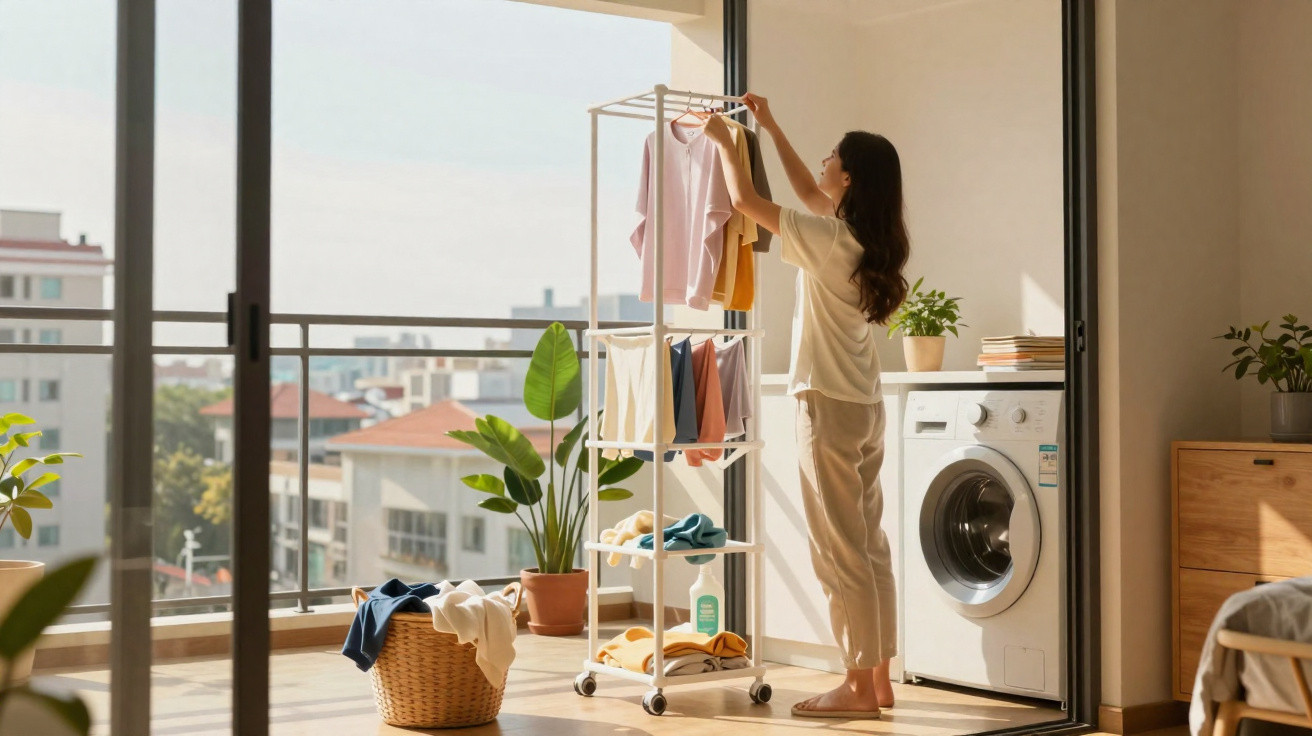
In many urban flats, drying laundry can quickly become frustrating: there is hardly any room, damp towels are always in the way, and a bulky clothes airer occupies half the room. A new model in Lidl’s current range tackles precisely this issue with a shape that resembles shelving more than a conventional folding airer.
Vertical Lidl clothes airer uses height rather than floor space
Lidl’s new tower clothes airer has a vertical layout. Rather than taking up the whole floor, it makes use of the room’s height. This makes it particularly suitable for studio flats, compact bathrooms and narrow hallways.
At approximately 74 cm wide, 59.5 cm deep and around 155 cm high, the tower airer fits into tight corners while still offering ample room for laundry.
Its usable drying length is roughly 16 metres. That is broadly enough for a well-filled wash containing everyday clothes, towels and underwear. The three levels can each be folded down or raised at the sides. This means users can decide at short notice how much drying area they need and how compact the airer should be.
For a small wash load or a home with limited space, simply fold in some of the wings. Anyone drying bedding, sportswear and towels at the same time can use all three levels to their full extent. Thanks to the vertical design, laundry can be hung across several tiers, both above and beside each other, leaving most of the floor clear.
Priced below €20 with a 12 kg load capacity
Lidl lists the model at €19.99. This puts the tower airer in the same price bracket as basic standard clothes airers, while providing considerably more drying space within a smaller footprint.
According to the manufacturer, the airer holds up to 12 kilograms of laundry – enough for heavy jeans, duvet covers or thick jumpers.
The frame is made mainly from steel. This gives it noticeably greater stability than many ultra-light wire models, which often start to wobble once loaded. Cheaper airers can quickly lean to one side, particularly when towels or jeans are hung unevenly.
The drying bars are slightly sturdier than those found on typical budget versions. As laundry is not resting on thin wires, this helps reduce pressure marks and allows air to circulate more freely. In practice, this may shorten drying times, especially in homes without an electric tumble dryer.
There is another useful feature at the top: holders allow up to twelve clothes hangers to be attached. Shirts, blouses and suits can therefore dry directly on their hangers, helping to minimise creases and making ironing easier afterwards.
Flexible for daily use: half-open design and wheels
The airer is designed not only to carry plenty of laundry but also to be straightforward in everyday use. One feature stands out in particular: the tower can be opened on just one side. In this position, it can sit flat against a wall or in front of a cupboard instead of protruding into the middle of the room.
In narrow bathrooms, tiny hallways or small kitchens, this “half mode” can determine whether there is still enough room to walk past comfortably. For single people or couples with smaller wash loads, one side of the drying levels will often be entirely sufficient.
Four wheels at the base mean the clothes airer can be moved even when loaded, without any heavy lifting.
Anyone without a permanent drying spot can simply roll the frame to wherever space is available: into the bedroom in the morning, in front of an open window later on, or close to a radiator. If visitors are unexpectedly announced, the airer can also be moved quickly into a bedroom or storage room.
Who benefits most from the Lidl tower clothes airer
Not every home has the same requirements for a clothes airer. The Lidl tower model is especially useful in the following situations:
- Small urban flats: Anyone with very little floor space can reclaim valuable room through the vertical construction.
- Families without a tumble dryer: Several wash loads in succession are easier to manage with 16 metres of drying length.
- House shares: The airer can be rolled between rooms without needing to unload and reload it each time.
- Transitional seasons and winter: When laundry cannot dry on a balcony or terrace, the tower airer serves as an alternative without blocking the entire living room.
- People with limited mobility: The wheels remove the need to lift a fully loaded airer.
Tips for drying laundry faster on the tower clothes airer
Anyone who regularly dries washing indoors will know the issue: humidity rises, clothes take ages to dry and the room starts to feel damp. A few simple measures can help reduce these effects.
- Leave gaps between garments: Do not cover every bar completely. Air needs room to circulate.
- Make use of airflow: Leave a window slightly open, keep an internal door open, or aim a small fan at the airer on a low setting.
- Put heavier items at the top and lighter ones below: Warm air rises, so duvet covers and thick towels can benefit from the upper levels.
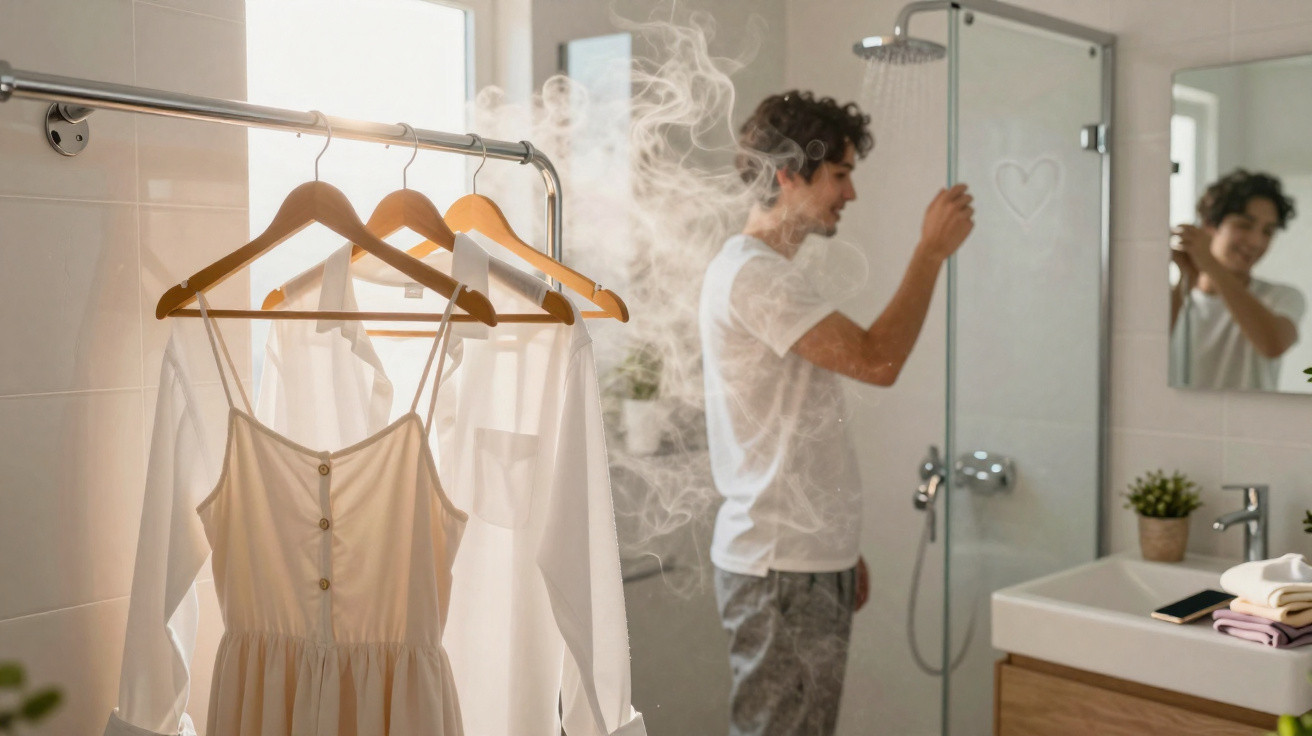
- Use clothes hangers effectively: Shirts, blouses and dresses dry faster on hangers than when folded over a bar.
- Ventilate regularly: Opening windows fully for short periods lowers humidity more effectively than leaving them tilted open all the time.
Anyone living in a well-insulated new-build property should be mindful of mould risks when drying laundry. A tower airer concentrates a large amount of damp washing in a small area. If the air remains still, moisture can condense on cold external walls. Regular, thorough ventilation and, where necessary, a small dehumidifier in tight rooms can significantly reduce this risk.
Alternative options and useful combinations
An electric condenser tumble dryer saves time, but consumes energy. Many households therefore choose a middle course: everyday laundry goes on the airer, while towels or bedding go in the dryer. A tower airer makes this arrangement easier to organise because washing takes up less space in the room.
Anyone who already owns a conventional folding airer does not necessarily need to replace it. In larger households, the tower can be an addition: the existing airer for the balcony or terrace, and the new tower for the bathroom or utility room. This keeps options flexible when all sportswear or work clothes suddenly need washing at once in autumn.
The tower airer may also appeal to people who deliberately buy fewer clothes and take greater care of them. Air drying is much gentler on fibres, prints and elastic than a hot tumble dryer. Technical clothing, wool and delicate fabrics in particular benefit from a stable, well-ventilated clothes airer. Used with clothes hangers, these items can be hung in a fabric-friendly way without being crushed or stretched out of shape.
Overall, the Lidl model is aimed at anyone who needs to make the most of limited space but does not want to keep tripping over a clothes airer. Its comparatively low price, high load capacity and wheels make this tower airer an unassuming yet highly useful everyday helper – precisely where laundry would otherwise get in the way.


Comments
No comments yet. Be the first to comment!
Leave a Comment