
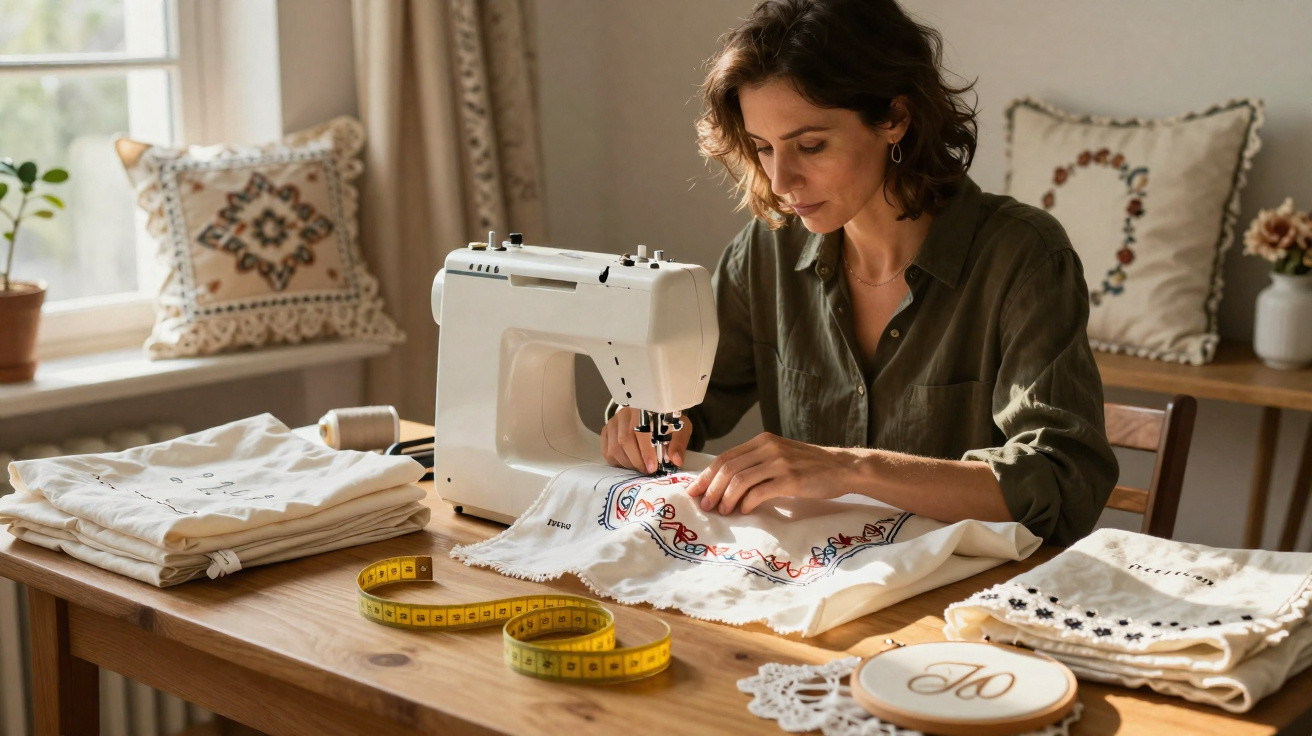
Many households still have old bed sheets inherited from grandparents. Beautifully embroidered, yet too delicate for everyday use. Rather than allowing them to gather dust in a cupboard, they can be transformed into distinctive clothing or elegant home accessories – provided you work methodically and treat the embroidery as the small treasure it is.
Why old embroidered sheets are fabric treasures
What was once stored in a linen cupboard as part of a trousseau now represents sustainable luxury. These old bed sheets are often made from pure linen or a cotton-and-linen blend. They are remarkably hard-wearing, can withstand high washing temperatures and become softer over time.
Textile and clothing specialists point out that fabrics of this kind often have a high fabric weight and were woven from particularly long fibres. In practice, this means:
- they are less prone to pilling and retain a well-kept appearance for longer;
- they become more pleasant to the touch after every wash;
- they regulate temperature and moisture more effectively.
“Anyone who owns an old embroidered linen sheet is essentially holding a piece of premium fabric – it simply has not been cut yet.”
Then there are the carefully made details: monograms, openwork embroidery, delicate eyelet embroidery and scalloped edges. Buying these features by the metre today would be expensive. The trick is to position them so that they appear to be intentional designer details in the finished item.
Before using the scissors: how to prepare the sheet properly
Before marking out the first line, the fabric needs a little restorative treatment. The process is straightforward, but it makes all the difference to the final result.
Wash, brighten and inspect
Start by putting the sheet through the washing machine. A high temperature removes dust, odours and signs of long-term storage. It also reveals the fabric’s real condition and final dimensions, as many old natural fibres still shrink slightly during their first hot wash.
If the material looks yellowed, gentle household solutions can help:
- very hot water with plenty of lemon juice for mild yellowing;
- an oxygen-based bleach in hot water for more pronounced discolouration.
Chlorine-based products are too harsh on linen and cotton, eventually leaving them brittle. Once dry, press the sheet until smooth again – it can now be assessed just like a fresh length of fabric from a specialist shop.
Mark the treasures and identify weak areas
Examine the pressed sheet closely. Interesting features may include:
- fine openwork bands;
- Broderie Anglaise embroidery;
- scalloped, decorative edges;
- monogrammed sections.
It is best to mark these areas with tailor’s chalk. At the same time, note any thinning fabric, small holes or discolouration. These sections will later be suitable only for small pieces, linings, or may no longer be usable at all.
“The most important rule is: design first, cut second. Cutting without a plan means losing the real value – the embroidery.”
The clever sewing technique: use embroidery as an insert, not a problem area
The difference between a craft project and a designer piece comes down to one simple change in perspective: do not merely work the embroidery in somehow; plan it deliberately as an insert.
Make monograms and borders the focal point
The placement of the pattern pieces determines the impact of the finished item. Practical yet elegant options include:
- placing a monogram precisely on a breast pocket or back pocket;
- using openwork panels along a sleeve hem;
- turning an embroidered edge into a collar or cuff finish;
- setting a wide embroidered band into the back or along a button placket.
Cut generously around these areas, leaving plenty of seam allowance so you retain flexibility later. Delicate sections can be reinforced from the reverse with lightweight interfacing to prevent tearing or distortion.
Clothing projects using old embroidered sheets
A typical example shows how this works in practice: a 3-metre sheet has a large monogram in its centre. Rather than destroying the motif while cutting, it is cut out and shaped to fit exactly onto the pocket of a lightweight jacket. The remaining sheet still provides enough fabric for the front and back pieces.
Other possibilities include:
- a summer blouse, with the bodice made from the plain areas and the sleeve hems created from the border;
- an airy kimono with a richly embroidered panel highlighting the centre back;
- a sleeveless top finished at the hem with an openwork embroidered edge.
“The look feels like it came from a boutique, while the story remains a family heirloom – that combination is what makes it so appealing.”
Home ideas: turning a sheet into luxurious décor
Not everyone wants to sew clothing. Old embroidered sheets also offer countless possibilities for the home, even without dressmaking knowledge.
Bed linen with a story
Two large sheets can be made into a high-quality duvet cover. Place the fabrics right sides together, sew three sides with a straight seam and leave an opening on the fourth side. Sew a short section at each corner of that opening too, then add buttons or ties in the middle. Monograms or borders work best at the foot of the bed or along the button fastening.
The effect is especially attractive when the pillowcases and duvet cover coordinate visually. Small monograms can be cut precisely so they sit in the middle of each pillow.
Table, window and headboard projects with great impact
Other classic projects include:
- Tablecloth: embroidered edges form the finish, while smaller motifs sit at the corners.
- Fabric napkins: made from the plain sections, with a small embroidered detail in one corner.
- Tea towels: durable and attractive, particularly when made from linen sheets.
- Curtains: the existing hem often works perfectly as a rod pocket.
- Upholstered headboard: stretch the sheet over a board padded with wadding, positioning the embroidery centrally above the bed.
For a quick and satisfying project, make simple cushion covers. A single monogram, neatly centred, is enough to create a very high-end impression. These one-off pieces are particularly effective on sofas or benches.
A sustainable alternative to disposable goods
Reusing old sheets fits perfectly with the desire to conserve resources while still owning beautiful things. The fabric already exists and is often of surprisingly high quality. Careful cutting reduces waste and turns a forgotten heirloom into a favourite piece with a story.
If larger projects still feel daunting, start with smaller accessories: make-up bags, pouches, book covers or simple shopping bags from the plain sections. The embroidered pieces can be added like labels, creating a recognisable style.
For sewing beginners, it is worth making a test version from plain cotton before cutting into the valuable sheet. This lets you perfect the pattern and technique without losing anything irretrievably. More experienced sewists can use patterns intended for new fabric and transfer them systematically onto the sheet.
“The basic principle always remains the same: do not adapt the embroidery to the pattern; adapt the pattern to the embroidery.”
Once you embrace this approach, you will never see old sheets as unwanted textiles again. They become raw material for personal, long-lasting pieces that sit somewhere between fashion, craftsmanship and family history.



Comments
No comments yet. Be the first to comment!
Leave a Comment