
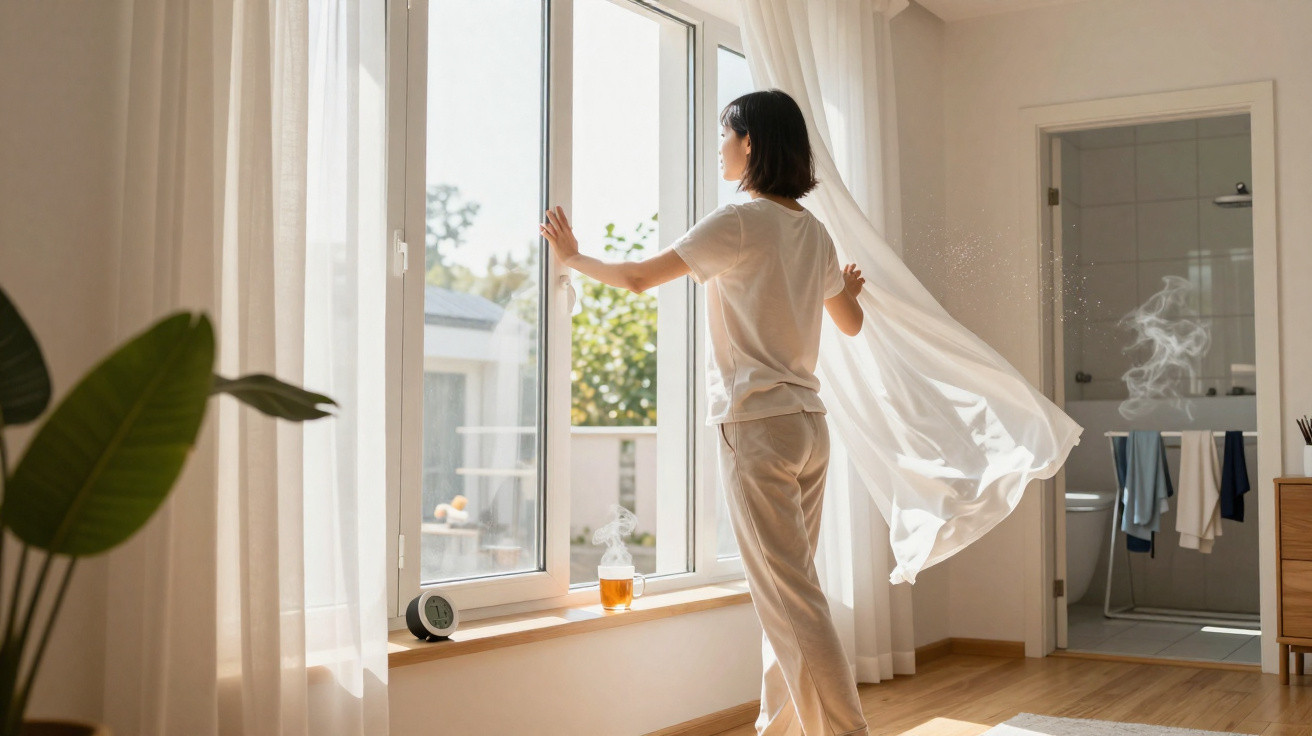
Fresh air at home feels pleasant, reduces the risk of mould and may ease headaches or tiredness. But how long should windows stay open without letting the home become cold and heating bills soar? Updated guidance from energy and indoor-climate specialists provides clear benchmarks and challenges long-standing habits.
Why regular ventilation matters
In most homes, the air quality is worse than many people realise. A wide range of sources can release pollutants into enclosed rooms:
- Cleaning products, fragranced sprays and air fresheners
- Cooking and frying in the kitchen
- Showering, bathing and drying laundry
- Furniture, carpets, paints and varnishes
- People and pets through breathing and bodily emissions
As a result, the air becomes more humid, odours linger and pollutants and fine particulate matter build up. Many people only notice this when they wake with a foggy head or their own home starts to feel “heavy”.
Regular burst ventilation removes pollutants, lowers humidity and prevents mould – requiring only a few minutes each day.
Those who rarely ventilate, or do not ventilate enough, risk mould patches on cold walls over time, a musty indoor environment and, in the worst cases, health issues such as irritated airways, allergies or headaches.
How many minutes should windows remain open?
A common misconception is that leaving a window slightly ajar for hours provides gentle, continuous ventilation. Specialists take a critical view of this approach. Their clear advice is to ventilate briefly and intensively rather than leave windows on tilt for long periods.
For a typical heated home, the following rule of thumb applies:
- Burst ventilate twice a day in most cases
- Open windows fully for 5 to 10 minutes, rather than merely tilting them
- The colder and windier it is outside, the shorter the ventilation period can be
For burst ventilation, open windows fully, ideally in several rooms at the same time. Cross-ventilation – opening windows on opposite sides of the home – replaces the air even more quickly.
5 to 10 minutes with windows fully open brings in more fresh air than an hour with windows tilted – and cools the home down less.
The reason is that walls, furniture and floors retain heat. Brief but intensive ventilation mainly replaces the air, while the heat stored in these materials remains. A window left tilted open continuously, however, gradually cools walls and building components. The heating then has to work harder later, increasing energy costs.
What are the best times of day to ventilate?
Timing matters as well as duration. A few regular habits can make ventilation easier to build into the day while also improving air quality.
Best times: morning and evening
- In the morning after getting up: Fully air the bedroom and bathroom to remove moisture-laden overnight air.
- In the evening: Briefly open all key rooms again, especially living rooms and children’s bedrooms.
Anyone living in a city centre or beside a busy road should preferably use burst ventilation at quieter times of day, when traffic – and therefore exhaust pollution in the air – is lower.
Ventilate additionally after showering, cooking and drying laundry
Some activities cause humidity levels to rise sharply, and the usual routine is rarely enough in these situations.
- After showering: Open the bathroom window fully to direct humid air outside as quickly as possible.
- After cooking: Frying, in particular, and cooking without an extractor hood increase moisture and grease in the air. Open the window shortly after food preparation has finished.
- Drying laundry: Anyone drying clothes indoors should burst ventilate more often to prevent mould growth.
Basic rule: Ventilate additionally whenever substantial moisture is produced – starting with the bathroom, kitchen and laundry room.
How can you ventilate properly without wasting energy?
A few simple measures can balance comfort, health and heating costs effectively. The crucial factor is how windows are opened.
Burst ventilation instead of permanently tilted windows
The following steps help save energy while maintaining good indoor air:
- Open windows fully, not just by a narrow gap
- Create a cross-draught where possible by opening windows in rooms opposite each other
- Turn radiators down briefly while ventilating
- Close the windows again after 5–10 minutes and return the heating to its usual setting
In highly insulated modern buildings, air quality can deteriorate quickly despite low heating costs if there is little natural ventilation. In such homes, it may be worth considering a mechanical ventilation system with heat recovery.
Recommended ventilation times at a glance
| Situation | Recommended ventilation duration |
|---|---|
| Typical home in winter | 2–3 times daily for 5–10 minutes |
| After showering | 5–10 minutes directly in the bathroom |
| After intensive cooking | 5–10 minutes in the kitchen |
| Laundry drying in the room | An additional 1–2 burst ventilation sessions a day |
| Summer heat | Longer in the morning and evening, ideally not at all at midday |
How can you tell whether you have ventilated enough?
As well as following set times, a few simple signs can help you judge your household’s ventilation needs more accurately.
- Condensation on window panes in the morning indicates that indoor humidity is too high.
- A musty smell in corners or behind furniture may warn of insufficient air exchange.
- Anyone who often feels tired, sluggish or develops headaches indoors should review their ventilation habits.
Hygrometers can also be useful. These small devices measure humidity levels. Around 40–60 per cent is ideal for living spaces. If readings remain above this range, the risk of mould rises. Levels significantly below it can irritate mucous membranes and dry out the airways.
Special situations: allergies, urban air and pollen
People with allergies or respiratory conditions often need to pay closer attention to outdoor air. In cities, pollutant levels are higher during peak traffic periods, while pollen can be a problem in rural areas.
Several strategies can help manage both:
- In city centres, ventilate early in the morning or late in the evening, when traffic is lighter.
- During high pollen levels, open windows only briefly and preferably at times when pollen counts are lower, which vary by region.
- Use pollen or fine-particle filters for windows where appropriate.
Even when outdoor air is polluted, avoiding ventilation altogether is not the answer. Indoor spaces may otherwise become more polluted than the air outside, for example because of emissions from furniture or excess moisture.
Why ventilation is also an energy issue
As heating costs rise, energy use is becoming an increasingly important concern. Ventilating correctly can improve the balance rather than make it worse. Leaving windows tilted open for hours means literally heating out through the window, as the heating system works against constant heat loss.
Short, targeted ventilation periods produce a different result: the air is replaced while the building structure stays warm. Once the windows are closed, the fresh air quickly warms back up to the previous temperature. This keeps the home comfortable and prevents heating costs from becoming completely unmanageable.
Making burst ventilation a regular habit protects health, the building fabric and your wallet at the same time.
Proper ventilation may sound simple, but it has a major effect on comfort and the indoor climate. Anyone following the rule of thumb of “twice a day for 5 to 10 minutes, with windows fully open” and adding extra ventilation after moisture spikes such as showering or cooking will generally be very close to what specialists recommend in everyday life.




Comments
No comments yet. Be the first to comment!
Leave a Comment