
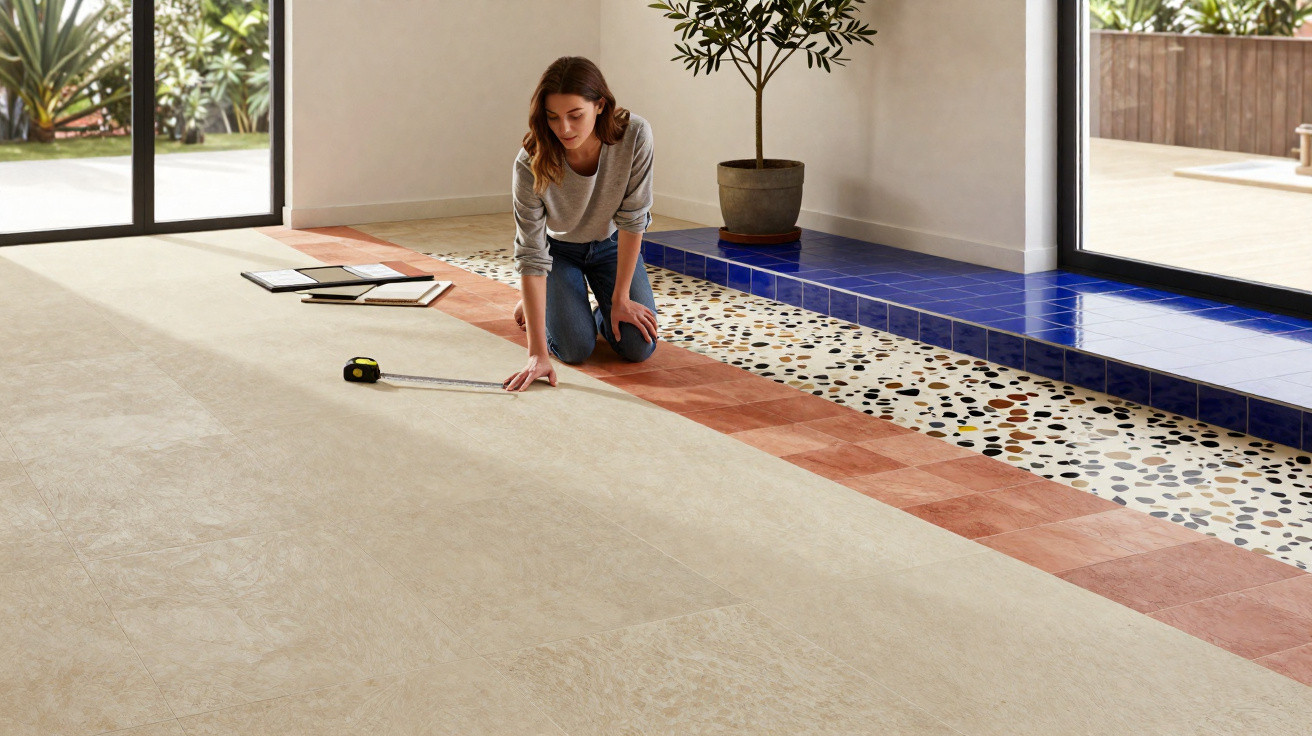
Anyone renovating their bathroom, kitchen or even terrace in 2026 should abandon one idea: tiles that look like parquet are now considered a relic of interior design. Instead, genuine materials, bold colours and intriguing textures are taking centre stage. What is currently gaining traction in showrooms, architectural schemes and Instagram lofts is noticeably braver – and surprisingly timeless.
Why wood-effect tiles are losing their appeal
Tiles with a wood grain enjoyed an enormous boom: as easy to maintain as ceramic, yet as warm-looking as timber boards. Many of these floors now feel interchangeable, however. They are more reminiscent of a show home than a loft with character. Interior designers refer to a “false naturalness” that often fails to deliver visually on its promise.
“In 2026, the trend is clearly moving away from imitation and towards honest materials with visible depth, texture and history.”
The demand is for surfaces with an identity of their own rather than ones that simply mimic timber: stone, terrazzo, handmade tiles, XXL formats, rich colours and tactile finishes. These are precisely the directions guiding those renovating now.
Characterful stone-effect tiles: a natural feel instead of decorative imitation
Tiles inspired by natural stone are becoming increasingly popular, especially travertine-effect designs. They introduce a raw, Mediterranean atmosphere into the home without being as delicate as genuine limestone.
- Travertine look: warm beige and sandy shades, with irregular veining
- Suitable areas: bathroom, kitchen, living space, terrace
- Effect: calm, high-quality and subtly evocative of a southern holiday
Paired with pale timber, linen fabrics and black metal details, they create an understated yet luxurious style. For a more contemporary result, choose large-format stone tiles with minimal grout lines – giving the impression of a continuous natural stone slab.
The return of terracotta: warm floors with soul
What was long dismissed as “old-fashioned” is making a powerful comeback: terracotta flooring. This is not country-house kitsch, but terracotta used in contemporary settings with clean lines and minimalist furnishings. Typical choices include so-called tomette tiles: small, generally hexagonal or rectangular pieces in red, brick and orange hues.
They work particularly well in:
- open-plan kitchens with an island
- cosy living rooms
- covered terraces and conservatories
“Its particular charm comes from the slight colour variations between individual tiles – no two floors look exactly alike.”
The matt finish absorbs light, creating a warm, homely feel. Anyone wary of “Tuscan romance” can balance terracotta with crisp, modern furniture and restrained decoration. The result feels urban rather than whimsical.
Terrazzo reimagined: from Italian classic to design statement
Terrazzo has enjoyed a major revival for several years, and by 2026 it has firmly entered the standard repertoire of trend-conscious interior design. It is defined by chips of stone or glass set into a binding material to form a speckled pattern.
Modern versions favour:
- understated base shades such as greige, sand or cream
- coloured inclusions in ochre, petrol blue, sage green or black
- coarse or fine chips, depending on the desired effect
Terrazzo is especially popular in bathrooms and kitchens, sometimes continuing from the floor up the walls or used for worktops. This looks crisp and graphic while still feeling unexpectedly homely. It also has a practical advantage: the flecked appearance disguises small marks far more effectively than smooth, plain-coloured tiles.
Handmade ceramics: Zellige style for distinctive accents
Craft-inspired glazed ceramic tiles with deliberately uneven edges and gently undulating surfaces are in strong demand. Manufacturers often take their cue from the style of Moroccan zellige tiles, without reproducing them exactly.
“Glossy, lively surfaces can turn kitchen splashbacks and shower walls into small works of art – moving away from the sterile ‘bathroom tile’ look.”
Typical locations include:
- splashbacks behind hobs and sinks
- shower niches and vanity areas
- alcoves in living spaces, such as around fireplaces
Rich shades such as emerald green, ink blue or deep bottle green are all possible. On smaller surfaces, only a little material is needed to make a strong visual impact.
XXL tiles: minimal grout lines, maximum impact
Large-format tiles remain a key trend. Edge lengths of 100 x 100 or 120 x 120 centimetres have now become standard in the premium segment. The fewer grout lines on display, the calmer and more generous a room appears.
| Format | Effect | Suitable for |
|---|---|---|
| 60 x 60 cm | modern, classic, versatile | almost every room |
| 100 x 100 cm | crisp, restrained, makes spaces appear larger | bathrooms, living areas, hallways |
| 120 x 120 cm and larger | almost seamless appearance, very high-end | open-plan layouts, lofts, showrooms |
Particularly in compact bathrooms, a large-format floor makes the room feel less fragmented. Careful installation is essential to ensure that no tiles cup or rock. Many tilers charge slightly higher laying costs for XXL tiles, but the visual effect still persuades many homeowners.
Embracing colour: from soft red to midnight blue
After years dominated by grey and greige, many people are becoming confident with colour again. This is not about glaring brights, but shades with depth.
Popular choices include:
- soft reds with a subtle pink undertone for hallways or living rooms
- light-filled yellows for kitchens and work areas
- dark midnight blue for bedrooms and elegant dining spaces
- combinations such as brown with dusty pink or beige with petrol blue
“Coloured porcelain stoneware is replacing conventional wall paint in many projects – particularly where durability and easy maintenance matter.”
Those not ready to commit to an entirely coloured floor can use borders, inserts or coloured skirting tiles instead. The main tone remains neutral while the space gains an individual touch.
Texture and relief: tiles you can feel
A major trend is towards finishes that feel as different as they look. Relief tiles, 3D patterns and gently grainy matt surfaces add interest to otherwise calm rooms.
Typical applications include:
- feature walls in showers
- wall areas behind a sofa
- stairways and entrance spaces
Matt, slightly rough finishes recall untreated earth or stone and work especially well with warm, natural colours. Geometrically patterned 3D tiles can resemble wall reliefs and require very little additional decoration.
How to combine the new tile trends effectively
The new materials become particularly interesting when they are mixed thoughtfully. A few examples from current projects are:
- travertine-effect flooring with handmade ceramic tiles in vivid green on the wall
- terrazzo tiles on the bathroom floor alongside smooth, plain XXL wall tiles
- a terracotta kitchen floor combined with simple white units and stainless steel
A clear visual direction is essential: either the floor takes the leading role while the walls stay understated, or the reverse. Too many competing patterns in one room create a restless result.
Practical planning tips for 2026
Anyone building or renovating now should ask a few questions before being dazzled by a showroom:
- Which areas need to be especially easy to maintain, such as the hallway, kitchen or children’s bathroom?
- How much daylight enters the room? Dark tiles can quickly feel heavy where light is limited.
- Should the space feel cool and minimalist, or warm and cosy?
- Which colours dominate the furniture and textiles?
For families or pet owners, matt, lightly textured finishes are particularly suitable. They show fewer scratches and water marks than high-gloss tiles. In very small spaces, a consistent floor covering that runs through with as few stark transitions as possible is advisable – it makes everything appear larger.
Risks and opportunities in the latest tile trends
Choosing intense colours or highly distinctive patterns always involves a small risk: in a few years, the look may feel “too much”. On the other hand, these are exactly the choices that create rooms with personality and set them apart from the crowd.
A clear strategy can reduce the risk: keep long-lasting surfaces such as floors and shower areas relatively restrained, and use more striking tiles in places that are easier to replace, such as a kitchen splashback or a small alcove. This keeps the home adaptable without turning it into a building site time and again.
One thing is clear: wood-effect tiles will not disappear from DIY shops overnight. But anyone aiming to create a home with a contemporary edge in 2026 will choose authentic materials, generous formats, confident colours and tangible textures. That is where the real trend lies – far removed from mere imitations.


Comments
No comments yet. Be the first to comment!
Leave a Comment