
What looks like an odd gardening fad actually conceals a remarkably effective way to protect plants.
At first glance, it may seem like an internet joke, yet this season it is becoming a talking point on balconies, patios and vegetable plots. Influencers, amateur gardeners and even some professionals recommend saving empty toilet roll tubes rather than binning them, then placing them around young plants. At the stage when delicate seedlings are most vulnerable, these modest cardboard cylinders can stop a single night from undoing all your hard work.
Why toilet roll tubes can save spring in the vegetable garden
For gardeners, spring brings hope and anticipation – but also pressure. Newly planted tomatoes, lettuces, peas and flowers are fragile. A temperature drop to just above 0°C, combined with a few hungry slugs, can wipe out entire rows overnight.
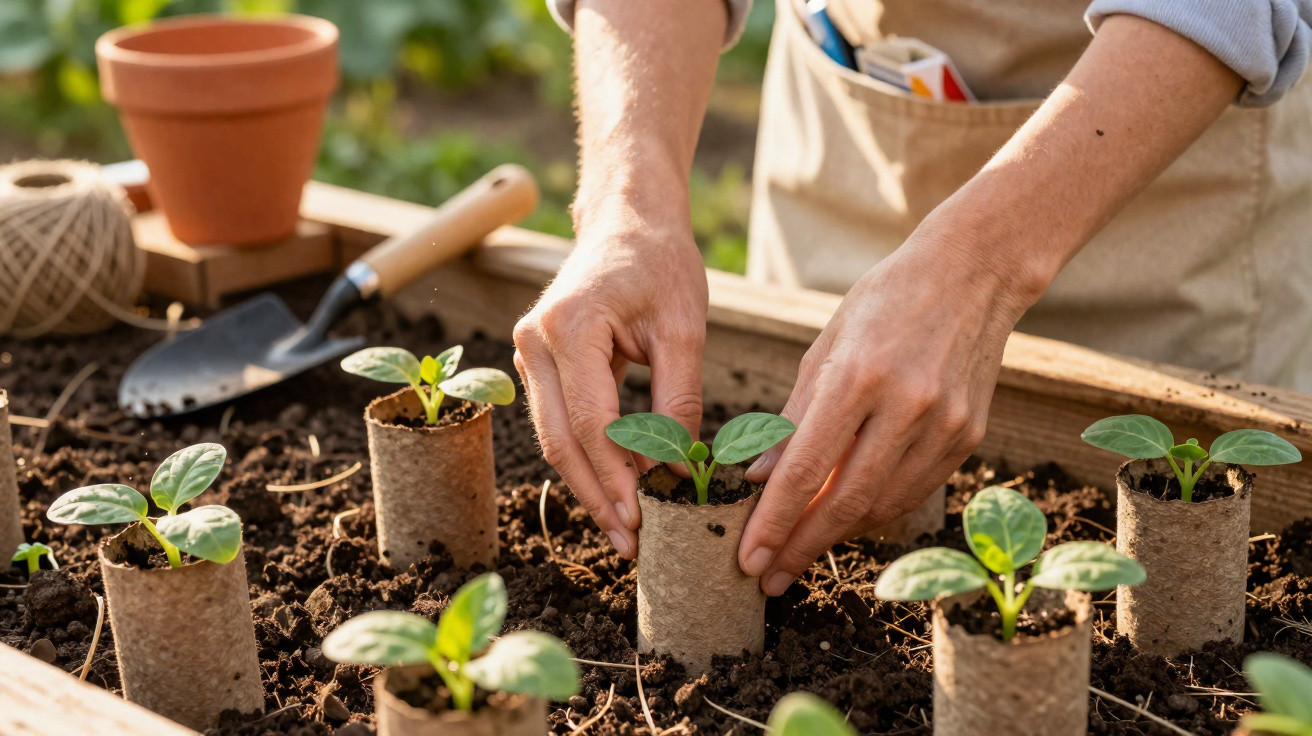
This is where toilet roll tubes can help. The cardboard creates a small enclosed ring around each plant, and that simple shape has several benefits:
- It reduces cold draughts close to the soil surface.
- It makes it harder for slugs to reach the stem.
- It keeps the area around the root collar slightly drier and more stable.
- It creates a marginally warmer microclimate around the new shoot.
The key advantage is that cardboard remains permeable. Water can still reach the soil freely, so waterlogging is avoided. At the same time, the tube acts as a small windbreak, softening the most severe temperature fluctuations.
“An old toilet roll tube becomes a straightforward yet highly effective life insurance policy for sensitive young plants.”
At a time when gardening equipment is becoming more expensive, this approach is appealing from a financial perspective too. Plant cloches, polytunnels and heated mini greenhouses can quickly become costly, whereas empty cardboard tubes are already produced in most homes and often go straight into the bin.
How to use toilet roll tubes around lettuce, tomatoes and other plants
The method is easy, although a few small practical mistakes are common. Fortunately, they can be avoided with only a little care.
Step-by-step: making a protective collar in the bed
- Plant as usual in the bed and water thoroughly.
- Place a toilet roll tube upright over the plant without crushing its leaves.
- Gently press the tube 2–3 centimetres into the soil so that it remains secure.
- The top edge of the tube should extend slightly above the leaves.
This creates a firm collar around the stem. Slugs must first climb over the cardboard barrier before reaching the tender plant. In light ground frosts, the tube cushions cold snaps, especially on exposed beds or in windy positions.
If a frosty night is forecast, the protection can be upgraded easily. A loose circle of straw or leaves around the tube helps insulate the soil from the cold. Where a late frost is expected, you can also place horticultural fleece over the row in the evening. The cardboard rings then prevent the fleece from flattening the plants.
More than frost protection: other uses in the garden
Once you start using cardboard tubes in the garden, further possibilities soon become apparent:
- Marking direct-sown rows: Cut tubes in half and place them as small “towers” over newly sown spots.
- A barrier against birds: Especially for peas and beans, the tube protects young shoots from pecking beaks.
- A mini windbreak for window boxes: In container gardens, tubes can be cut open and used as half arches around vulnerable young plants.
- Providing shade in south-facing positions: On very sunny balconies, cardboard lightly shades the stem during the first few days.
A single tube can therefore often be used for several weeks in different parts of the garden before it finally breaks down in the soil or is added to the compost.
Toilet roll tubes as low-cost seedling pots for strong roots
Many problems in the vegetable bed start indoors. Raising plants on a windowsill often results in leggy, weak seedlings with sensitive roots. Cardboard tubes can prove useful again here, this time as small biodegradable growing pots.
Turning cardboard tubes into seedling containers
You can make them in just a few steps:
- Keep the tube at its existing height or cut it shorter; around 6–8 cm is usually enough.
- Cut one end into four equally sized tabs.
- Fold the tabs inwards to form a base.
- Fill with loose seed compost and press it down lightly.
- Sow one or two seeds and water gently.
After three to four weeks, when the seedlings look sturdy and have developed their first pair of true leaves, plant the whole unit – tube included – in the bed. In time, the roots grow through the cardboard, which gradually decomposes. This removes the need for pricking out and repotting, both of which can often stress the roots.
“Those who plant young plants in cardboard pots reduce root damage and gain a few crucial days of growth.”
This technique is also engaging for children. They can follow the entire journey from seed to plant and see how an apparent waste product becomes a valuable part of the cycle.
From protective collar to humus: using tubes cleverly in the compost
At the end of their gardening life, the tubes have one final use in the compost heap. Cardboard counts as “brown material” in composting: it adds carbon to the mixture and balances damp, nitrogen-rich kitchen waste.
| Use in the compost | Effect of the cardboard tubes |
|---|---|
| In thin layers between grass cuttings | Prevents compaction and keeps air in the heap |
| Cut into small pieces and mixed with kitchen waste | Absorbs moisture, reducing smells and rotting |
| Loosely crumpled as an intermediate layer | Creates habitat for compost worms and microorganisms |
To speed up decomposition, tear the tubes by hand or cut them roughly into pieces. Combined with coffee grounds, vegetable peelings and garden waste, they help create nutrients to feed your beds the following year.
Common mistakes and the limits of this method
Useful as toilet roll tubes are, they cannot solve every problem. Understanding their limits makes it easier to use them effectively.
- A cardboard collar that is too tall: If the tube projects too far above the plant, it receives less light and air. Cut it down instead.
- Permanently waterlogged sites: In very wet corners, cardboard can become mouldy. Use other protection methods in these areas.
- Choose untreated cardboard: Avoid printed, coated or heavily coloured tubes, as they may introduce unwanted substances into the soil and compost.
- Underestimating a slug infestation: Where slug pressure is extremely high, a cardboard barrier alone will not be enough; extra measures such as slug fences or beer traps may be necessary.
In particularly exposed, windy locations, it is advisable to firm the soil around the cardboard slightly. Otherwise, gusts can knock the tube over and the protection is lost. If you water frequently, also make sure that the soil inside the ring has a chance to dry briefly after watering.
How to incorporate the tube into everyday life
Within just a few weeks, many households can collect enough tubes to protect an entire bed. It helps to create a small collection point indoors or in a utility room, such as a box or bucket where empty tubes can be kept dry.
A possible seasonal plan might work like this: use the first tubes as seedling pots in late winter. In April and May, move them into the bed along with the young plants, while fresh tubes are used for frost and slug protection. By midsummer, worn or damaged tubes can gradually be added to the compost, where they give their final contribution back to the system.
This technique is particularly useful in small gardens and on balconies. Where there is no room for large polytunnels or permanent raised beds, cardboard rings make it possible to work with great precision: shield vulnerable spots, protect high-risk varieties and stabilise troublesome corners.
Why this simple trick changes many amateur gardeners for the long term
Anyone who has seen an entire row of tomatoes survive a late frost while unprotected neighbouring plants perish will view cardboard tubes differently. The clear contrast after a few cold nights is often more persuasive than any theory.
Regularly checking the cardboard collars also sharpens your awareness of the garden’s microclimate: where does the soil remain damp for longer? Where does the wind hit directly? Where do the first slugs appear? These observations can help you plan beds more effectively the following year, position varieties differently or even change the direction of entire rows.
The outcome is not merely a clever upcycling trick, but a different way of gardening: making the most of available resources, supporting plants precisely and treating the soil as a living system. An empty toilet roll tube may seem insignificant, but in spring it can often determine whether carefully raised young plants survive the night or leave only a bare patch in the bed by morning.

Comments
No comments yet. Be the first to comment!
Leave a Comment