
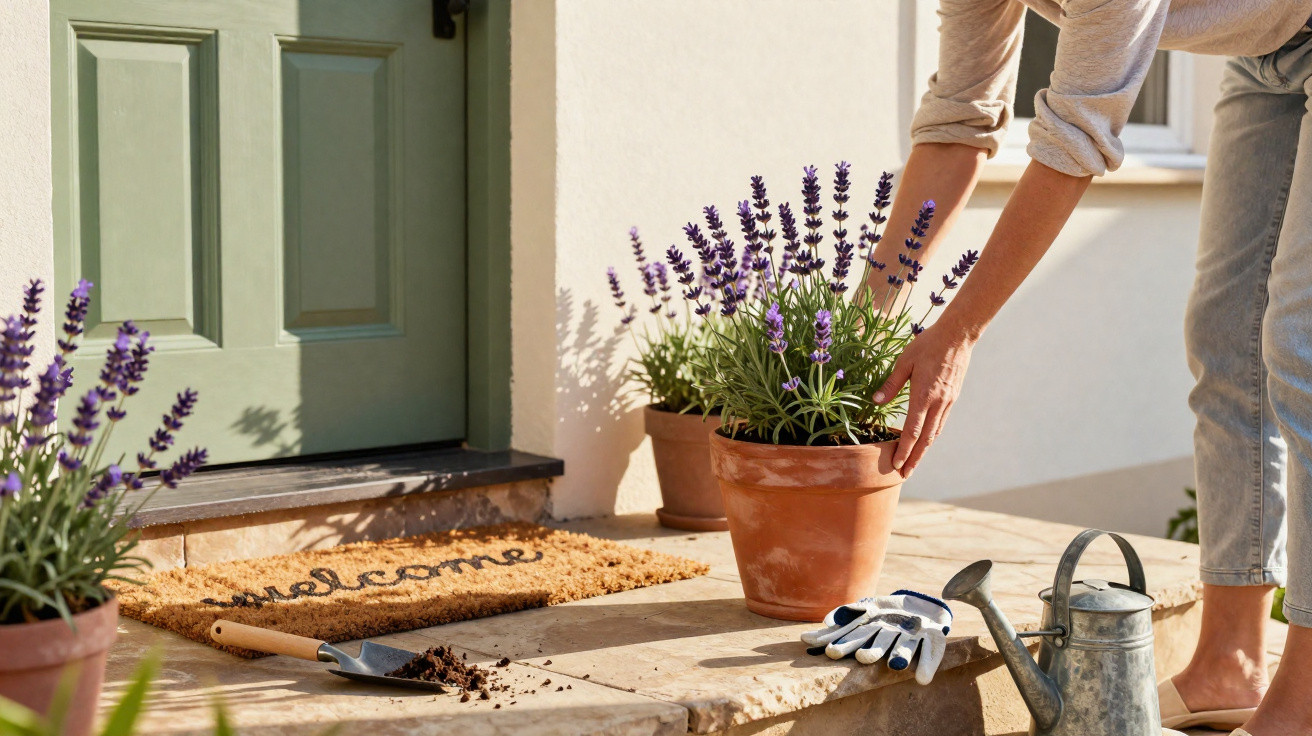
Turning a home’s main entrance into a more inviting space calls for carefully chosen plant species. The presence of lavender creates a memorable welcome, pairing hardiness with natural elegance and an unmistakably relaxing aroma for everyone visiting the house.
Why is Lavandula dentata ideal for the frontage?
This Mediterranean variety stands out for its compact growth habit and serrated leaves, which cope easily with changing weather conditions in the garden. Growing Lavandula dentata in front beds provides excellent longevity, keeping its foliage evergreen and resilient throughout every season.
As well as enhancing the gate, this species naturally deters unwanted insects because of the essential oils contained in its tissues. Its outstanding adaptation to tropical climates makes it possible to create flowering paths that enhance the exterior architecture with plenty of beauty and everyday practicality.
Can lavender be grown on a windowsill?
The secret to keeping a pot flowering in this compact spot depends directly on the number of hours of… Read more
What are its light and sun requirements?
To reach its full potential, the plant needs uninterrupted direct sunlight for several hours each day. Placing it in full sun supports the production of aromatic compounds and speeds up the growth of new flowering stems in the bed.
Shaded locations weaken the branches and noticeably reduce the production of colourful buds over the months. Providing abundant light at the entrance ensures a dense, healthy shrub with a particularly intense fragrance on the hottest afternoons of the year.
Below is a video from the Spagnhol Plantas YouTube channel that explores the essential growing guidance in more detail:
How should the soil be prepared and drainage ensured?
The best planting medium should reflect the stony, calcareous conditions typical of its original natural habitat. Good drainage prevents early root rot and delivers the right aeration for a vigorous root system.
Combining coarse sand and balanced organic matter with the soil produces a light, highly permeable structure for the young plant. This mineral blend prevents excessive rainwater build-up and protects plant health at any time of year.
Preparing the growing medium
Items for perfect planting
Use the following components to prepare the pot or planting bed:
- Coarse builders’ sand to ensure fast drainage;
- Light organic compost to nourish the plant without compacting the soil;
- A layer of gravel or expanded clay at the base of the container.
What care encourages continuous flowering?
Moderate watering is one of the main secrets to encouraging the steady appearance of new, fragrant flower clusters on the shrub. Too much moisture can damage the root structure, while widely spaced watering keeps the plant stimulated and healthy.
Regularly carrying out maintenance pruning just after flowering cycles refreshes the branches and promotes plentiful side shoots. This periodic care prevents premature ageing of the stems and ensures vigorous flowering during the brightest parts of the year.
Key measures for boosting the renewal of flowers:
- Remove dried flower stems every week;
- Apply a light organic feed at the beginning of spring;
- Control watering carefully to avoid waterlogging.
How can lavender cultivation be incorporated into residential landscaping?
Placing decorative ceramic pots beside the front door creates a visually harmonious and welcoming focal point. The visual contrast between purple flowers and neutral walls elevates the frontage with refinement and architectural elegance.
Creating borders along the pedestrian path spreads the pleasant fragrance as residents walk around the property each day. This functional arrangement adds value to the home, establishing a balanced connection between the built structure and the surrounding nature.



Comments
No comments yet. Be the first to comment!
Leave a Comment