
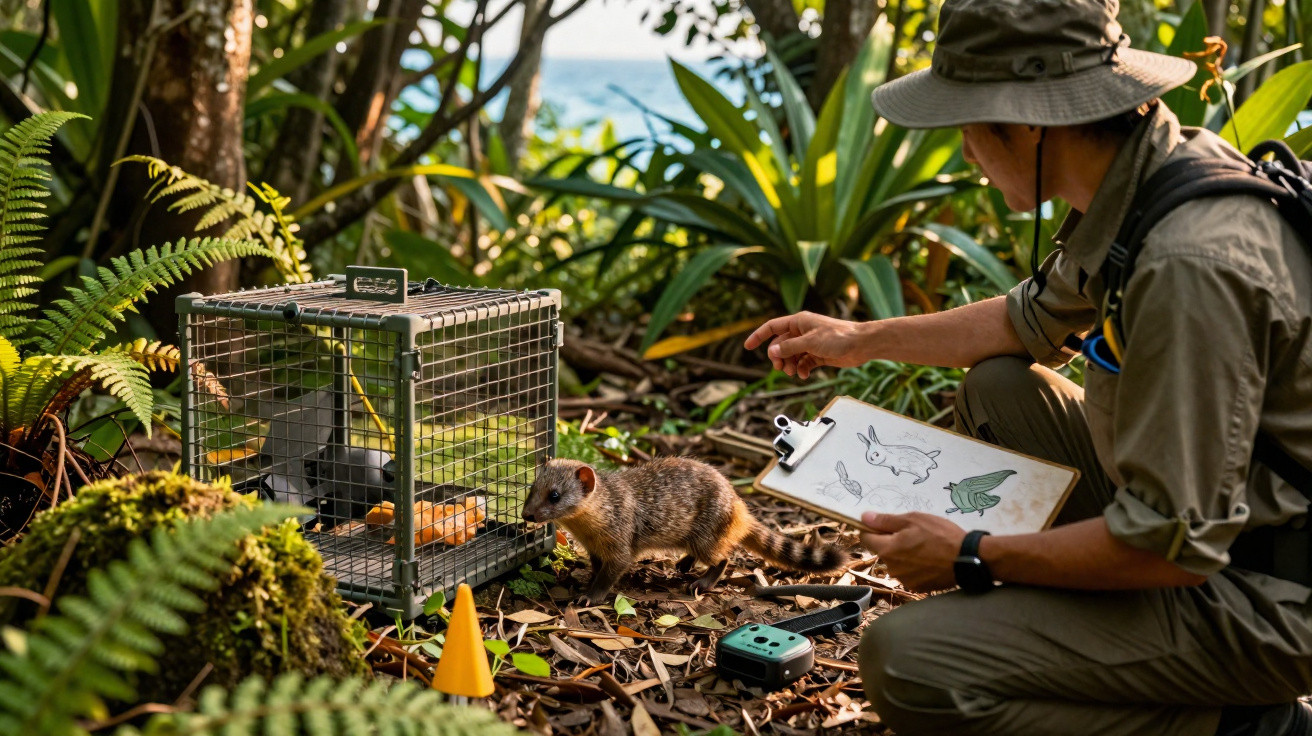
Introducing exotic predators to tackle pests frequently results in unforeseen ecological disasters. In Japan, an effort to control dangerous snakes using the mongoose instead created a serious threat to the native wildlife that had evolved in isolation across the archipelago.
Why were the animals introduced to the island?
In the late 1970s, local residents faced repeated attacks by venomous snakes. In an attempt to reduce these incidents, authorities released around thirty specimens of the small mammal, hoping to lower the risks to the human population.
The imported animal was expected to serve as an effective natural predator of venomous vipers. However, this hasty decision was made without thorough ecological assessments and completely overlooked the potential environmental impacts on the fragile food chain of this isolated region.
How did goats help save entire islands from invaders?
Experts used animals fitted with trackers to find herds concealed in dense vegetation and then… Read more
Why did the biological control attempt fail?
The central reason for the failure was the mismatch between the biological habits of the two species. The carnivore hunted actively by day, whereas the feared snake was strictly nocturnal, preventing direct encounters in the natural environment.
Rather than confronting vipers, the invaders found easy, defenceless prey among the forest undergrowth. This plentiful food supply led to rapid, unchecked reproduction, causing their numbers to rise into the thousands within just a few decades.
Below is a video from the Daily Discoveries YouTube channel explaining how this introduction caused a major disaster:
Which native species were most affected by the mongoose?
Local wildlife had evolved in geographical isolation for centuries and had not developed defences against fast, ground-dwelling predators. Rare small mammals and ground-nesting birds became easy targets, experiencing a dramatic population decline as this voracious predator spread through the territory.
The island’s well-known native rabbit was among the animals hit hardest by the spread of carnivorous mammals. Beyond vertebrates, entire populations of amphibians and lizards underwent drastic reductions, profoundly disrupting the insect balance within the dense forest.
Most threatened animals
Affected species
Main native groups harmed by the invasive predator:
- Amami primitive rabbit;
- Ground birds and eggs in nests;
- Endemic frog and lizard species.
How did the Japanese government manage to contain the invasion?
With environmental collapse approaching, the environmental authorities organised a broad task force to eradicate the invasive population. Thousands of traps were placed throughout the woodland, while specialist teams using sniffer dogs carried out continuous searches to capture the remaining animals in the ecosystem.
Eliminating them required decades of sustained work and substantial government investment. Only after years without either a sighting or a capture could the country formally declare eradication, based on strict scientific monitoring.
The main measures behind the successful containment combined strategic methods:
- Installing tens of thousands of traps checked every day;
- Using trained sniffer dogs to identify hidden dens;
- Carrying out rigorous camera monitoring for years before the official declaration.
What lesson does this experience offer for conservation?
The crisis on the island territory is a global warning about the risks of introducing exotic species without planning. Seemingly straightforward answers to complex ecological problems can trigger unpredictable consequences, damaging biodiversity and threatening the survival of species living across the planet.
Restoring environmental balance requires respect for natural cycles and caution in every form of wildlife management. The gradual recovery of native animals shows that coordinated scientific action can remedy human mistakes, ensuring the lasting protection of local nature.






Comments
No comments yet. Be the first to comment!
Leave a Comment