
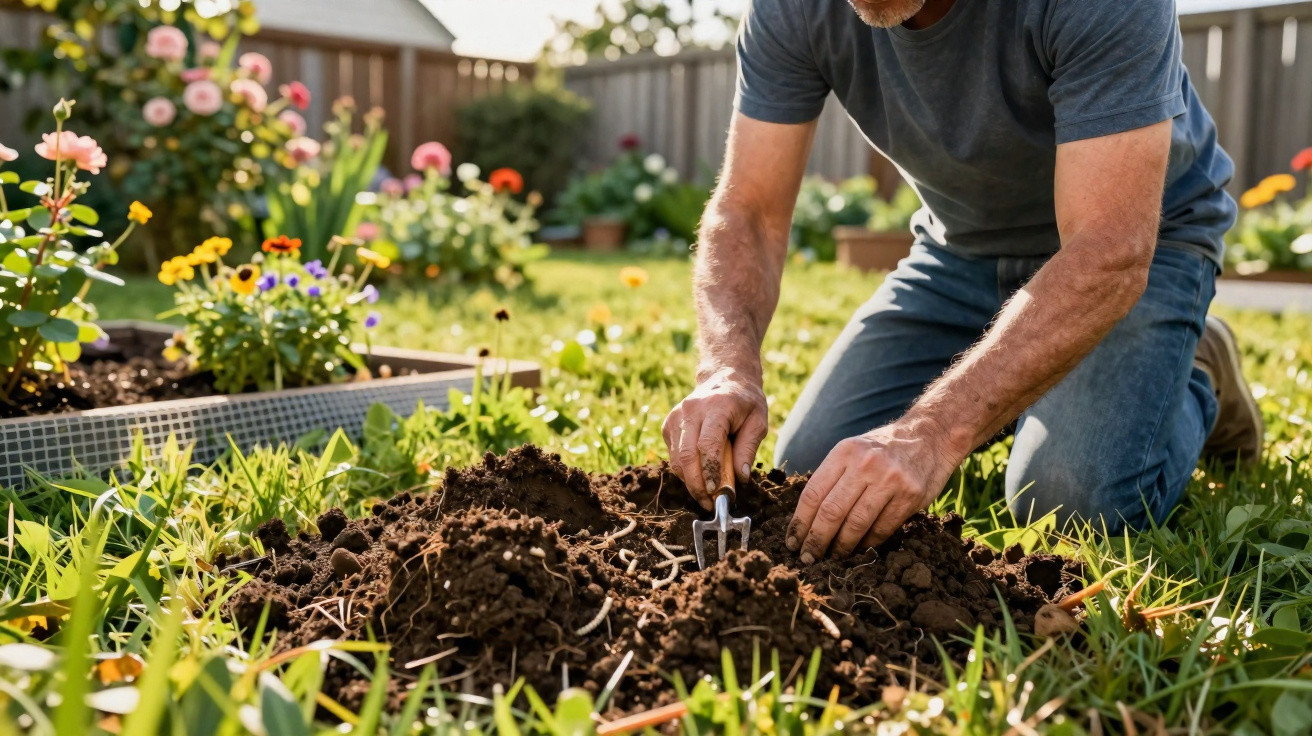
One morning, you look out of the window and, instead of an expanse of lush green, see mounds of loose soil. For many people, this is the moment when the “war on moles” begins. Yet anyone who instinctively turns to traps, poison or even exhaust fumes is not only harming animals and the soil, but also rejecting an unexpected ally for the lawn and garden.
Why molehills are so irritating
Moles usually dig their tunnels 15 to 30 centimetres below the lawn surface. What appears above ground are small volcanoes of soil, suddenly scattered across the area. The lawn can look spoiled, with every dark mound drawing the eye.
Uneven patches form beneath the turf. Children can easily twist an ankle while playing, the lawnmower bumps along, and bed edges may become unstable. In vegetable gardens, young plants can be lifted and root zones loosened. It often looks more dramatic than it really is, but understandably causes concern.
Many gardeners then react with the attitude: “Only one of us is digging here – and it is me.” The issue is that this immediate defensive response ignores what is actually happening underground and the work the mole carries out free of charge.
What moles really do beneath your lawn
The European mole (Talpa europaea) is a highly specialised digging animal. Its body resembles a compact, furry torpedo, while its broad front paws work almost like miniature excavator buckets. In loose, fairly damp soils rich in earthworms and insect larvae, it creates an extensive tunnel network.
These tunnels bring a surprising range of benefits:
- Soil aeration: The passages carry air into deeper layers, helping micro-organisms work more effectively and allowing roots to breathe more easily.
- Improved drainage: Rainwater can soak away faster, reducing waterlogging.
- Breaking up compacted soil: Particularly in heavy, clay-rich or waterlogged ground, moles loosen densely packed areas.
Nevertheless, one persistent misconception remains: many people believe that moles eat plant roots. In fact, the opposite is true. Moles are carnivores.
Their diet mainly includes:
- earthworms
- chafer grubs, such as cockchafer larvae
- larvae of various beetles
- woodlice, millipedes and, occasionally, slugs
A single mole family can consume its own body weight in soil-dwelling creatures every day. Many of these animals can cause substantial damage to grass roots or vegetable plants. Moles significantly reduce their numbers – without poison, effort or interruption.
Moles do not destroy your garden – they secretly control the pests that would damage it in the long term.
There are also two frequently overlooked side effects. Mole droppings act like a light organic fertiliser. Meanwhile, the loose soil from molehills is almost as good as sieved growing medium – ideal for sowing seeds and potting up plants.
The biggest mistake: tackling moles aggressively
Many gardeners resort to extreme measures, including poisoned bait, car exhaust fumes, smoke cartridges or even small explosives. These approaches are not only ethically questionable, but are often simply illegal. They can harm people, pets and the soil ecosystem over the long term.
Anyone attempting to “eradicate” moles with chemicals or exhaust fumes loses a natural ally against soil compaction and root damage for years.
The risks are obvious:
- Health hazards: Exhaust fumes and chemicals can remain in the soil, where children and pets may come into contact with them.
- Environmental damage: Poison spreads through the ground and can also affect beneficial animals and micro-organisms.
- Legal issues: Many products are prohibited for use in private gardens, and misuse can be costly.
The result is contaminated ground – and moles, or their successors, often return anyway once conditions are suitable again. Taking radical action against them means undermining your own garden’s ecology.
How to keep the benefits without turning the garden into a moonscape
The sensible approach is not “all or nothing”, but to protect sensitive areas while leaving the rest accessible to moles. This keeps the soil alive without turning your favourite lawn into a trip hazard.
Where moles should be welcome
Suitable areas include:
- the rear part of the garden, where people rarely walk
- naturalistic corners with wild perennials or a wildflower meadow
- strips beneath fruit trees in a small home garden
- border areas beside hedges or behind garden sheds
In these places, moles act as free soil managers. Essentially, they carry out tasks for which some gardeners would otherwise need expensive equipment or labour-intensive soil cultivation.
Protecting lawns and beds selectively
For an ornamental lawn or a neatly maintained vegetable garden, there is a relatively straightforward, though somewhat labour-intensive, option: close-mesh mole mesh.
This mesh is installed 40 to 50 centimetres below ground when creating a new lawn or bed. The process usually works as follows:
- Remove the topsoil and set it aside.
- Dig down to the required depth.
- Lay the mole mesh across the whole area, slightly overlapping it at the edges.
- Replace the soil, level the ground, then sow the lawn or create the bed.
When its tunnel system meets this barrier, the mole moves sideways instead. This keeps prominent areas largely free of hills, while the soil beyond the mesh can still be worked naturally.
Everyday tips for dealing calmly with molehills
Molehills do not have to remain like small craters for weeks. A relaxed response can even put them to good use.
- Simply level the hills: Spread the soil with a rake, then overseed if the grass appears damaged.
- Use the soil for sowing or potting: Fine, stone-free soil is excellent for sowing in pots, trays or window boxes.
- Use animal deterrents in specific spots: Metal rods fitted with bottles, or dedicated ultrasonic devices, disturb the animals with sound so that they move towards quieter areas.
Every molehill can become free material for pots and seed trays – turning annoyance into a practical benefit.
Those who do not want to drive the animals away completely, but merely guide them elsewhere, achieve the best balance between an attractive garden and a functioning soil ecosystem.
Common confusion: mole or vole?
Many people mistake moles for voles, with consequences. Voles really do eat roots, tubers and young fruit trees, and can cause considerable damage. Moles do not.
| Feature | Mole | Vole |
|---|---|---|
| Diet | Carnivore (worms, larvae) | Herbivore (roots, tubers) |
| Hills | Medium-sized, often round, with fine loose soil | Small to flat, often mixed with root remains |
| Tunnels | No open holes, heavily branched | Often visible side entrances and exits |
If you notice damage to tulip bulbs or young fruit trees, look closely before blaming the mole. In many cases, a vole is responsible – an entirely different animal with a completely different way of life.
Why an “imperfect” lawn wins in the long term
The trend is already moving away from sterile carpet-like lawns towards livelier, more resilient spaces with clover, daisies and more insects. Moles fit this picture remarkably well. They make soil more permeable, help counteract problems when lawns suffer from dry spells or waterlogging, and reduce underground pests.
Anyone who accepts that a garden is a living system rather than a showroom floor from a furniture shop will often end up with less work, lower costs and healthier plants. A few hills at the edge of the garden are no longer a disaster, but rather a sign that something beneath the surface is working for the garden, not against it.
With a considered combination of protected zones, tolerated areas and gentle guidance, the mole changes from an enemy into a quiet ally. The greatest mistake remains reaching for harsh measures on impulse and driving away that very ally, along with all its benefits for the lawn, soil and vegetable garden.






Comments
No comments yet. Be the first to comment!
Leave a Comment