
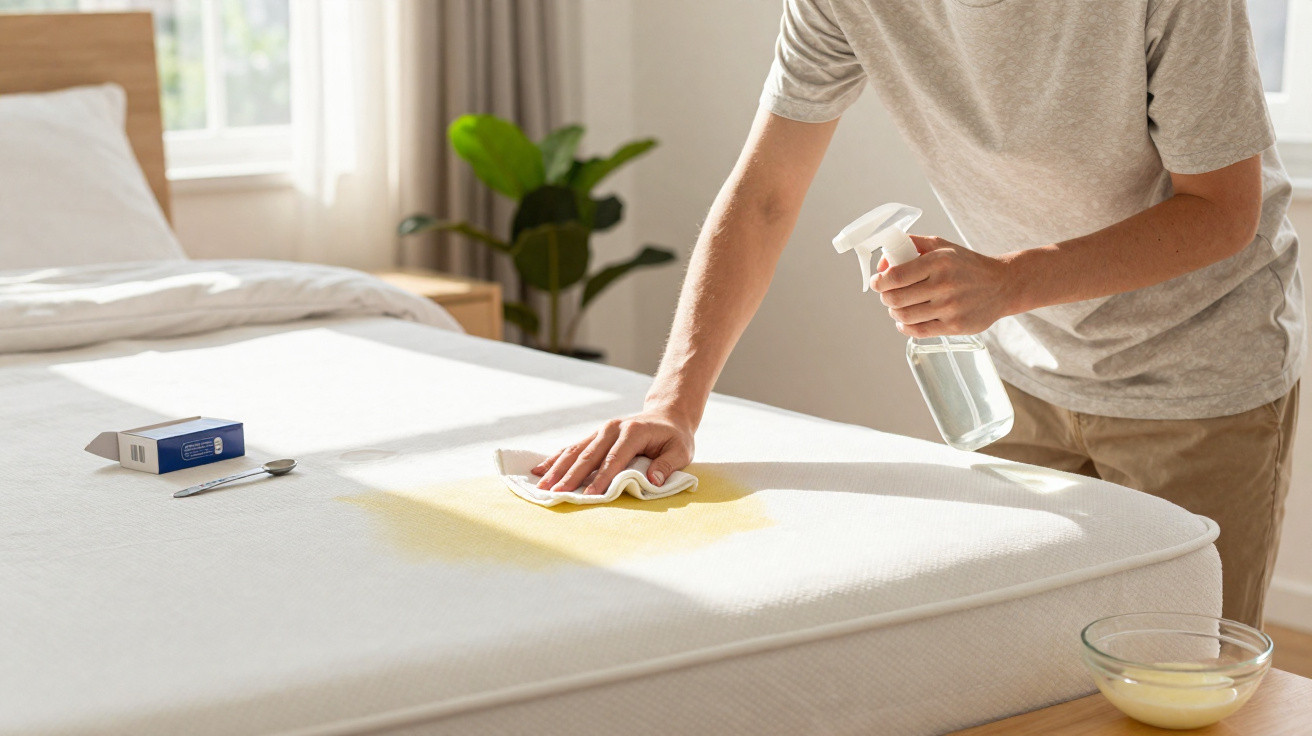
Clean sheets make a difference, but a mattress can hold hidden traces that become visible in the morning light.
Recently, home-cleaning forums have been full of talk about an easy remedy for yellow marks that gradually spread across mattresses. Using store-cupboard basics, this method is designed to be gentle and to bring back a clean, neutral finish without hiring a cleaning service.
Why mattresses go yellow
Yellow discolouration develops as sweat, body oils and dead skin cells collect in the surface layers. Humidity accelerates this build-up, while also creating more welcoming conditions for mites and bacteria. Limited ventilation makes matters worse, particularly in damp bedrooms or where a bed sits directly against a wall.
Bleach-based cleaners may damage fibres and discolour fabrics. Many readers say they get stronger results from an inexpensive blend that cleans, neutralises odours and dries without making the surface feel brittle.
This gentle approach targets sweat and body-oil oxidation, not just the surface tint. Aim for clean and dry, not stark white.
The three-ingredient mattress cleaning mix
This solution needs only everyday household products. Together, they help remove stains, reduce odours and refresh the upper foam or ticking layer.
What you’ll need
- 1 cup (240 ml) 3% hydrogen peroxide
- 3 tablespoons baking soda
- 1 teaspoon mild liquid detergent
- 1 clean spray bottle, 2 microfibre cloths, 1 fan (optional)
Formula at a glance: 1 cup 3% hydrogen peroxide + 3 tbsp baking soda + 1 tsp mild detergent. Mix just before use.
Step-by-step method
- Combine the three ingredients in a spray bottle. Gently swirl the bottle rather than shaking it to prevent excessive foaming.
- Vacuum the mattress to clear away dust and grit.
- Apply a light mist to the yellowed sections. Avoid saturating the foam.
- Leave the mixture for 10–15 minutes while it fizzes and releases the residue.
- Using a clean cloth, wipe in small circular movements. Rinse the cloth, then repeat.
- Pick up any remaining residue with a cloth that is only slightly damp.
- Allow the mattress to dry completely with windows open or a fan set to low. Do not replace the sheets before it is dry.
Recent stains can often fade quickly. More established marks may require a second treatment once the mattress has dried fully. Focus on gradual improvement rather than expecting a single spray to solve everything.
Precautions before you begin
Carry out a spot test first. Use a concealed corner or the underside of the cover, then wait 20 minutes and look for any colour change. If the area remains unaffected, continue with a light application.
Control the amount of liquid carefully, as foam does not cope well with saturation. Excess moisture can cause musty smells and even mildew. Use short bursts of spray, and position the fan nearer if the room is humid.
Dry thoroughly. Moisture without airflow leads to odor and, in some cases, mold growth. No bedding back on until the core feels dry.
When to contact a professional
Very deep or old stains, signs of mould, or odours that remain after thorough drying are reasons to call a professional. Specialist cleaners use controlled steam or low-moisture extraction, along with antimicrobial products suited to foam and ticking. Many households arrange this annually, commonly as part of spring cleaning.
How to keep a mattress clean for longer
Sensible weekly and seasonal routines
- Vacuum once a month with a fabric attachment to remove dust and mites from seams.
- Fit a waterproof, breathable mattress protector and wash it alongside the sheets.
- Air the bed by opening windows for a cross-breeze on dry days.
- Rotate or turn the mattress, where the model permits, every three months to distribute wear.
- Control humidity. Keep relative humidity at 40–50% to reduce odours and microbial growth.
What to avoid
- Do not use chlorine bleach on ticking or foam, as it may weaken fibres and cause blotches.
- Do not use heavy steam on memory foam. Combined heat and moisture can distort its cells.
- Do not use enzyme-rich pet-stain products on wool-blend covers, because they may alter the fibres.
Why this gentle chemistry works
Hydrogen peroxide separates into water and oxygen, helping to lift the oxidised body oils responsible for the yellow colouring. Baking soda balances pH and takes in odours. A small amount of detergent breaks through greasy films that hold dust. Working in three ways, the combination addresses the stain chemistry while leaving behind less residue than many spray-and-leave cleaners.
| Stain type | First response | Notes |
|---|---|---|
| Fresh sweat | Peroxide mix, light mist | Usually fades in one pass if dried well |
| Old yellowing | Two light passes, dry between | Progressive lightening beats scrubbing |
| Spills (tea/coffee) | Blot first, then mix | Protein + tannin; avoid rubbing early |
| Urine accidents | Blot, enzyme cleaner, then mix | Enzymes break proteins; dry fully after |
| Mildew | Stop and call a pro | Foam can hold spores deep inside |
Notes for each mattress material
Memory foam
Apply the finest mist possible. Press a white towel against the area to assess the moisture level. If the towel feels wet, stop and let the mattress dry before making another pass.
Latex
Although latex is more resistant to dust mites, it can still develop sweat stains. Maintain good airflow and avoid hot steam to preserve its springiness.
Hybrid and innerspring
Air channels around the coils help these mattresses dry more quickly. Even so, treat the top panel as you would foam and use only a gentle spray.
Frequently asked questions readers keep sending
Will the mix bleach coloured ticking?
Most modern ticking is made with colourfast dyes, but a spot test is still essential. If you notice lightening or a ring, dilute the peroxide using equal parts water.
Can I store the solution?
No. Hydrogen peroxide degrades over time. Prepare a fresh batch for every use and apply it within an hour for the best fizzing action and stain removal.
What if I only have baking soda?
Baking soda on its own can reduce odours. Scatter it over the mattress, leave it for an hour, then vacuum it away. It is unlikely to remove much yellowing without peroxide and a small amount of detergent.
Extra tips and realistic caveats
Prioritise prevention. A zip-up protector prevents sweat reaching the foam, makes washing easier and can pay for itself by postponing professional cleaning or replacement. If night sweats are frequent, consider breathable protectors with a polyurethane membrane instead of vinyl, as they retain fewer smells.
Accidents occur, so keep a small cleaning kit close to the laundry: travel-size peroxide, baking soda, a small bottle of detergent, a spray head and two white cloths. Act within minutes, use as little liquid as possible and start air circulating immediately. This helps limit yellowing and odours, while reducing the likelihood of needing a second treatment later.




Comments
No comments yet. Be the first to comment!
Leave a Comment