
What makes lantana so special
If you are tired of bare borders and dull balconies, it is easy to reach for familiar choices such as pansies or winter heather. But there is another option that brings colour for months, draws in insects and copes remarkably well with heat: the lantana shrub, often sold simply as lantana or changing rose.
Native to tropical parts of the Americas and Africa, lantana grows there as a small, often densely branched shrub that soon reaches a substantial size. In the UK, it is usually grown in pots or in sheltered gardens.
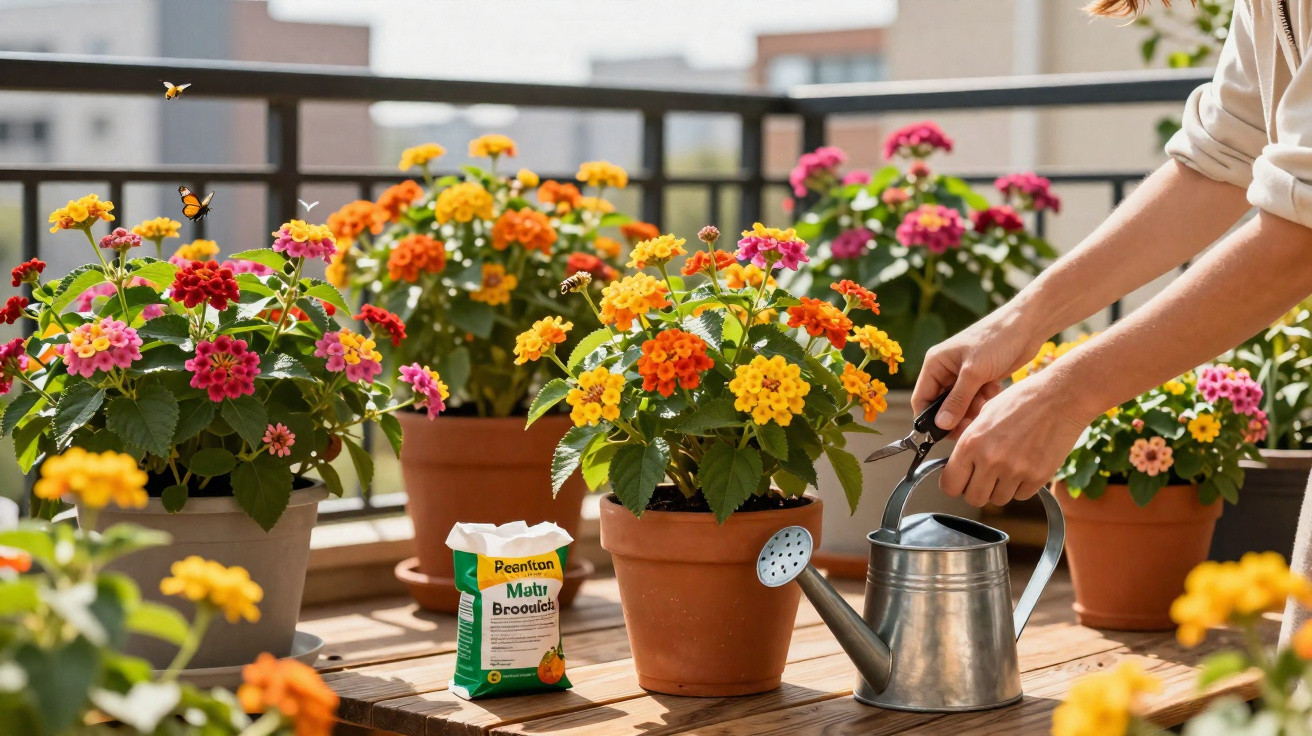
Its standout feature is its rounded flower clusters. Dozens of individual flowers sit tightly together and change colour as they age. This creates striking blends of yellow, orange, pink and purple, often all appearing on the same shrub at once.
Lantana’s greatest strength is its ability to keep producing flowers for almost the whole year in mild areas, bringing colour when many other ornamental plants have long since faded.
Another advantage is that its flowers are rich in nectar. This makes the shrub a valuable draw for butterflies, bees and other pollinators. After flowering, it produces small berries that many bird species readily take, offering an extra benefit for anyone wanting to bring more wildlife into the garden.
Why the continuously flowering shrub is a garden game-changer
In a typical garden year, there is often a clear gap: spring and summer are colourful, while autumn and winter can feel rather grey. Lantana can bridge that period when the climate allows. In areas with mild winters, it may flower almost continuously; in cooler regions, it can still extend the season well into late autumn.
It is also a notably tough plant. Once the shrub is properly established, it handles dry spells far better than many other ornamental plants. That makes it a useful choice for anyone who does not want to water every day, or who needs to plant up a sunny, hot spot.
- Flowers for many months: from late spring into winter, and almost continuously in mild locations
- Excellent for insects: nectar-rich and highly attractive to butterflies and bees
- Tolerates heat well: copes better with dry, warm summers than many traditional favourites
- Plenty of colour: multi-coloured flower heads create lively accents in beds and on balconies
Location: where lantana really thrives
Full sun is essential
For the shrub to perform at its best, it needs one thing above all: light. A position in full sun is ideal, while part shade noticeably reduces flower production. On a balcony, south- or south-west-facing spots are perfect; in the garden, choose a warm, sheltered corner.
Good drainage matters most when it comes to soil. Lantana is sensitive to waterlogging. The ground should be loose, fairly sandy and free-draining. Heavy clay soils can be improved with sand or fine grit. In pots, use a mix of compost and mineral material such as expanded clay or lava granules.
The right pot size and spacing in the bed
For balconies and patios, containers holding around 7 to 10 litres work well. They give the roots enough room without becoming excessively heavy. Large drainage holes and a drainage layer of expanded clay or gravel are important.
In beds, leave roughly 50 to 100 centimetres between plants, depending on the variety. Strong-growing types spread quickly and can overwhelm closely planted neighbours. If you want to create a colourful lantana hedge, plant the shrubs slightly staggered so their crowns eventually form a continuous line.
Care: how little effort is really needed
Watering with a little care
During the first three to four weeks after planting, watering is especially important. Keep the soil evenly, lightly moist so the roots can establish well. After that, water when the top layer of soil has dried out.
Compost in containers dries faster than soil in a border. On hot summer days, it may need checking daily. Push a finger two to three centimetres into the compost to quickly tell whether more water is needed.
Pruning for dense growth and more flowers
Without regular pruning, the shrub soon grows in every direction and loses its shape. A firm cut back in spring keeps it compact. Light shaping trims after strong summer growth phases are also useful.
Pruning also encourages branching. More shoots mean more flower clusters, so using the secateurs confidently is usually rewarded with a fuller and longer flowering display.
Propagation: new plants for next to nothing
If you have taken a liking to the plant, there is no need to buy new ones every year. Lantana is easy to propagate from cuttings. The best time is spring, when shoots are strong but not yet fully woody.
- Cut young shoots around 8 to 12 centimetres long.
- Remove the lower leaves so that nothing rots in the compost.
- Place the cuttings in a pot of loose, sandy compost.
- Water lightly and keep the pot in a bright place, out of direct sun.
With a little patience, roots will form and one parent shrub can soon become a small collection of plants – ideal for filling window boxes, edging beds or creating your own butterfly corner.
Risks and limits: what gardeners should keep in mind
Its vigorous growth has a downside. In smaller beds, lantana can start to crowd out other plants. Keep pruning in mind and do not allow the shrub to grow unchecked, and it will remain manageable.
Toxicity is another key consideration. Many varieties contain substances that can be problematic for children and pets. The leaves and unripe berries are considered particularly concerning.
Families with young children or free-roaming cats and dogs should choose the location carefully – ideally out of reach of curious hands and mouths.
In regions with very mild winters, the shrub can spread strongly and put pressure on native species. It is worth checking regularly for young plants nearby and removing unwanted seedlings. This keeps the planting under control.
Creative ideas for balconies, patios and gardens
The plant’s main benefit is its versatility. It works just as well in a pot as it does in a border, and combines attractively with many other species.
A colourful focal point in a small space
Even one or two larger containers can bring a noticeable burst of colour to a balcony. Combined with trailing plants, lantana creates dense arrangements with an almost tropical feel. Place the shrub close to a seating area and you can watch butterflies at close range.
A living hedge or bed edge
As a loose flowering hedge, lantana forms colourful summer walls that can frame paths or define patios. In Mediterranean-style gardens, it works well with fragrant lavender, sage or robust geraniums. The contrasting leaf textures and scents create a lively overall effect.
A nectar stop for butterflies
Anyone keen to support insects can create a dedicated nectar area. Several lantana shrubs combined with native perennials such as knapweed, thyme or hyssop provide food for months. The result is a small but effective contribution to biodiversity in the garden.
What gardeners should know before buying
The plant is not fully hardy. In areas where frost is expected, it is best moved in late autumn to a bright, cool, frost-free place, such as a conservatory or a stairwell window. Water sparingly there; some leaf drop is normal. It will produce fresh growth again in spring.
If you do not have suitable space indoors, you can still enjoy lantana as a seasonal summer feature, much like other Mediterranean container plants. Even then, it is well worth growing: the long flowering period and strong insect interest bring noticeably more life to balconies and patios.
One further point is often underestimated: lantana is more forgiving of minor care mistakes than many delicate flowering plants. If watering is occasionally missed or you are dealing with dry conditions, this shrub is a reliable partner. For beginners in ornamental gardening especially, it offers a good chance of quick success – and colour when many other plants have already taken a break.






Comments
No comments yet. Be the first to comment!
Leave a Comment