
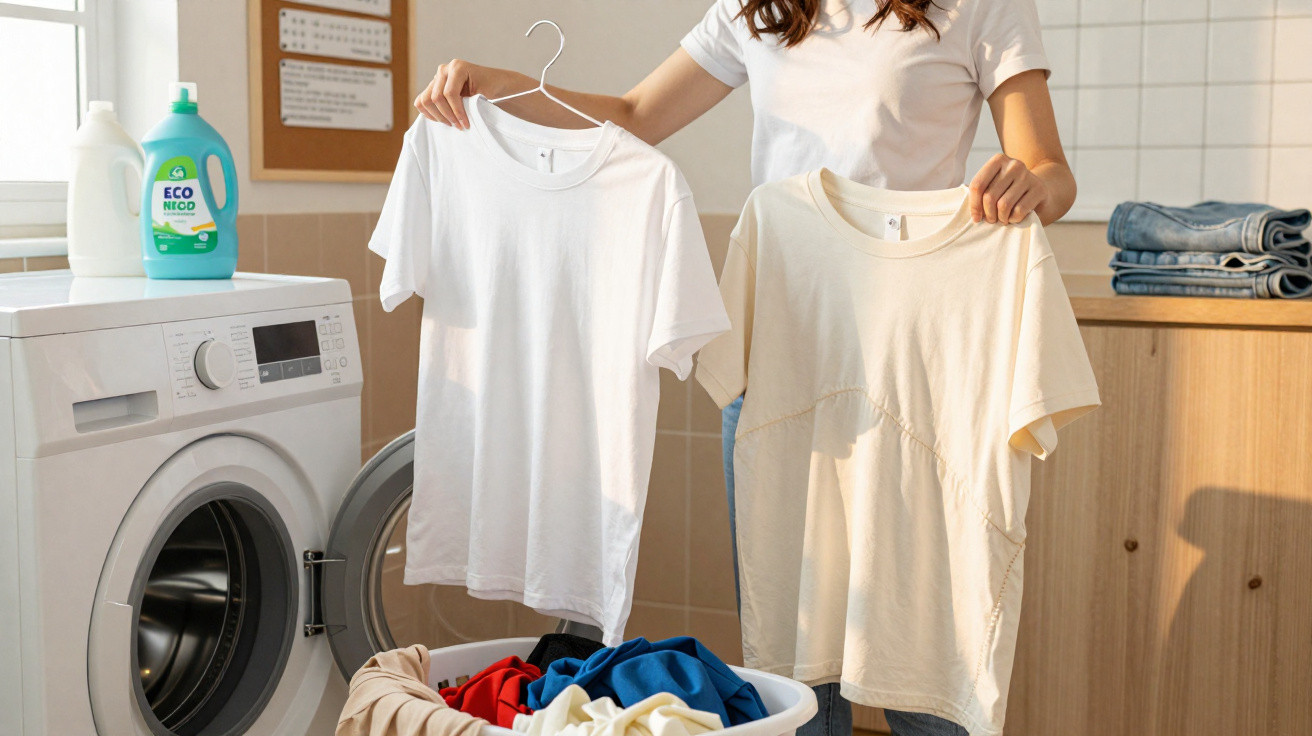
Turning a T-shirt inside out, flipping jeans inside out and putting everything straight into the drum is regarded as best practice in many homes. The reasoning seems sound: the outer surface is protected, prints are preserved and colours last longer. Yet there is one specific situation in which this habit can cause major problems: the garment comes out smelling fresh and looking clean at first glance, but remains visibly stained.
Why we wash clothes inside out
The principle itself is not wrong. Regularly turning printed T-shirts, dark jeans or delicate fabrics inside out can genuinely help extend their lifespan.
When washed inside out, the inner side receives the most thorough cleaning, while the visible outer side experiences less friction and abrasion.
The main benefits of this approach are:
- Protecting prints and designs: Images, flock prints and embroidery rub less against the drum and other garments.
- Gentler care for dark fabrics: Black and very dark items fade more slowly, so the washed-out appearance develops later.
- Better results against odours: The inside of clothing sits closest to the skin, where sweat, deodorant residue and creams build up. Turning garments inside out lets detergent reach these areas more directly.
This can be particularly useful for underwear, sportswear and close-fitting T-shirts. Washing them inside out consistently often helps them feel fresh for longer.
The problem with visible stains on the outside
However, this is precisely where the major trap lies. As soon as the outer surface is genuinely dirty, the supposed advantage becomes a disadvantage. The washing machine is then working against you rather than for you.
Visible dirt needs to be exposed to the water flow, detergent and mechanical friction during the wash cycle – this is the only way it can be removed reliably.
If you still automatically turn the garment inside out, this is what happens:
- The stained area ends up folded away on the inside.
- The fabric effectively shields the mark from the strongest flow of water.
- The helpful friction takes place mainly elsewhere, rather than where it is needed.
The result is a garment that leaves the machine smelling of detergent and seeming “fresh”, only for the stain to reappear as it dries. Sometimes it even leaves a distinct ring – the notorious stain halo.
Stains that are especially stubborn when clothes are washed inside out
Some types of dirt are particularly affected when they are hidden during the wash cycle:
- Grease and oil: cooking oil, butter, mayonnaise and vinaigrette
- Strongly coloured sauces: tomato sauce, curry, chilli and ketchup
- Mud and natural stains: mud, soil and grass marks on knees and trouser legs
- Cosmetics: make-up, foundation and lipstick on collars, sleeves or scarves
These substances can work their way deep into the fibres. If they are treated only half-heartedly or incorrectly, they may leave permanent marks. Once a stain has properly dried in and set, the washing machine often cannot remove it completely.
The right order: treat the stain, then wash the garment the right way round
Rather than blindly turning every item inside out, use a simple three-step rule whenever there are visible stains:
First identify it, then pre-treat it, and finally wash it the right way round – this gives stains the least chance of surviving.
The recommended process is:
- Identify the stain: Before putting an item in the laundry basket, quickly inspect the front, collar, sleeves and knees.
- Dampen it lightly: Moisten the affected area with a little lukewarm water. For protein stains, cold water is better, as it helps open up the fibres.
- Apply a suitable product: Use a different treatment depending on the type of stain.
| Type of stain | Treatment before washing |
|---|---|
| Greasy/oily | Put a drop of washing-up liquid on the slightly damp area and gently work it in |
| Protein-based (sweat, blood) | Rinse with cold water, then apply stain remover; avoid heat at the beginning |
| Strongly coloured (tomato, curry) | Use an enzyme-based stain remover or stain soap and leave it to work briefly |
| Mud/soil | Allow it to dry completely first, brush it off, then pre-treat the area |
| Persistent odours | Sprinkle a little bicarbonate of soda onto the dampened area and leave it to work briefly |
The crucial point is not to scrub aggressively. It is better to massage the treatment in gently with your fingers or a soft cloth, while allowing a little more time for it to work. Rubbing too hard damages fibres and roughens the fabric.
After pre-treatment, put the garment into the machine the right way round so the stain is properly exposed. Water can then reach the dirty area directly, detergent can work where it is needed, and the movement of the drum provides the necessary friction.
When washing inside out still makes sense
Despite these warnings, routinely turning clothes inside out still has its place – just not in every situation. If there are no visible stains, it is usually safe to wash certain items inside out.
- Printed T-shirts and hoodies: Prints, flock designs and lettering retain their “fresh” appearance for longer.
- Dark jeans and sweatshirts: The outside fades more slowly and is less likely to look dull.
- Underwear, sportswear and fitted tops: Odours are removed more effectively because the inner side is cleaned more thoroughly.
- Performance clothing: Membranes and technical surfaces remain intact for longer when they are not constantly exposed to direct rubbing.
One exception requires some judgement: very delicate prints or thick flock motifs may need to stay inside out even when there is a stain. In these cases, thorough pre-treatment is especially important, along with a suitable programme that provides enough movement.
Important washing settings that are often underestimated
Whether garments are inside out or the right way round, the effectiveness of the machine depends greatly on its settings. Several factors make a far bigger difference than many people realise:
- Temperature: In most cases, 30 to 40 degrees is sufficient, but always follow the care label. Excessive heat can fade colours and set stains.
- Spin speed: Delicate fabrics can only tolerate a moderate spin speed, otherwise they become worn out prematurely.
- Load size: An overfilled drum prevents proper water circulation. Instead of being cleaned, garments are simply compressed together.
- Amount of detergent: Too much product leaves a film and can make textiles look dull, while too little will not clean effectively.
- Closed zips and hook-and-loop fastenings: This reduces micro-scratches and snagging on delicate items.
Another point that is often overlooked is the tumble dryer. As long as a stain is still visible, the garment should not be exposed to heat. High temperatures can effectively “bake” the remaining residue deep into the fibres and make it permanent.
The most useful new routine when sorting laundry
Many problems begin while laundry is being sorted. Throwing clothes into the basket and later loading them into the machine without checking means missing opportunities for better results.
A quick inspection before an item goes into the laundry basket often achieves more than the most expensive detergent.
In practice, that means:
- When sorting by colour, also check for stains and heavily used areas such as collars, underarms and trouser hems.
- Do not mix heavily soiled items with ordinary lightly worn laundry; deal with them separately instead.
- Decide briefly: does this item need protection, or is removing dirt the priority?
This leads to an easy rule to remember: If the outside is dirty, wash the garment the right way round. If the outer side looks clean, it can be washed inside out to protect it.
Building this quick check into your routine before using the machine can prevent many repeat washes, protect your clothing and make stubborn rings or returning stains far less frustrating. Suddenly, this seemingly minor step when loading laundry makes much more sense – because it is a deliberate choice rather than a habit.






Comments
No comments yet. Be the first to comment!
Leave a Comment