
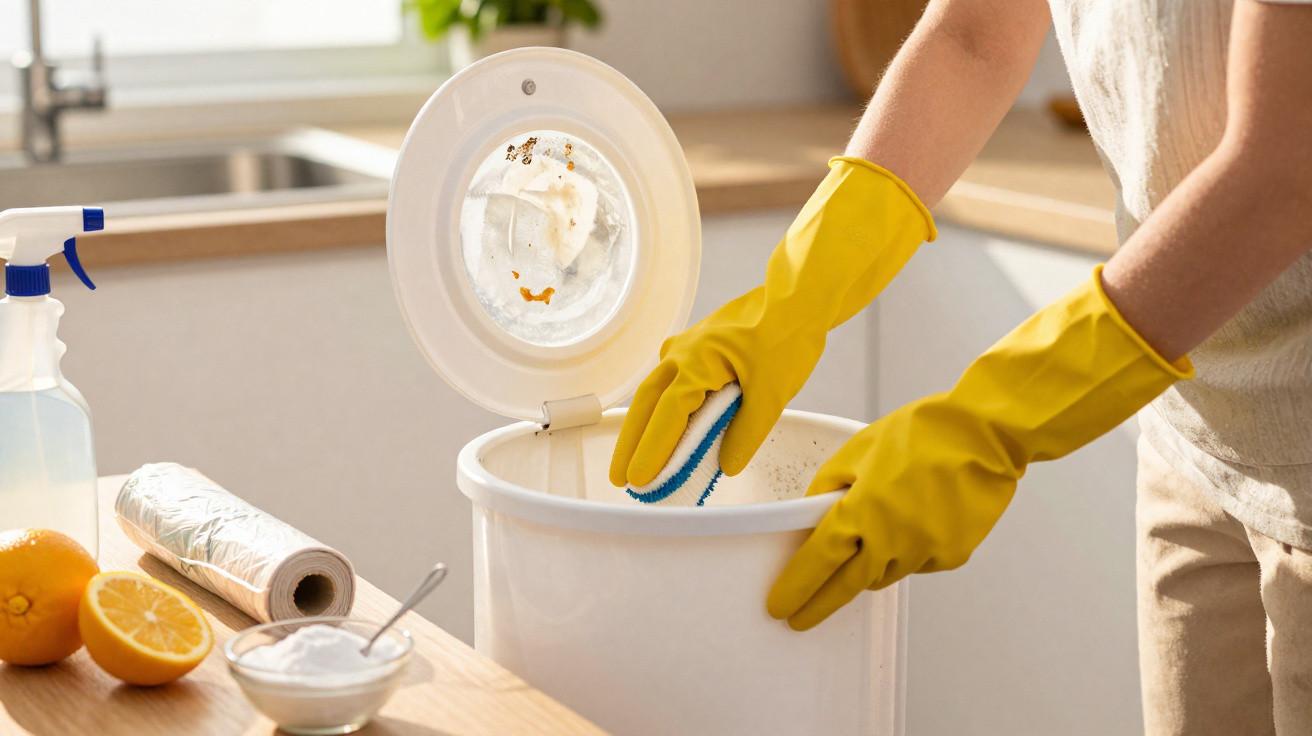
It stands unobtrusively in the corner, with its lid closed, and appears entirely innocent.
But this ordinary household item could be the grubbiest spot in your kitchen.
Many of us focus on gleaming worktops and immaculate sinks while overlooking the one thing that takes in all the waste. Concealed by a plastic liner and a lid, it seems “contained”. Hygiene experts warn that this assumption is seriously mistaken.
The dirtiest corner most people ignore
In almost any kitchen, you can often tell where the bin is before it comes into view. The subtle odour of yesterday’s meal, fruit peelings and coffee grounds points the way. The bin itself, however, seldom receives much attention.
It collects everything your household throws away: greasy wrappers, meat leftovers, yoghurt pots coated in residue, partly used cartons and the occasional leaking container you intended to rinse but did not. Strong bin liners help, yet liquids and grease can still find their way into the places you least want them.
The plastic bag hides the mess from your eyes, not from bacteria. Juices and grease slip past the liner and soak into the bin.
Across days and weeks, these unseen leaks leave a moist coating inside the bin. Combined with heat and darkness, that layer becomes an ideal environment for microbes and mould. Even with the lid closed, smells grow more noticeable as volatile compounds escape into the room.
Be honest: when was the last time you properly scrubbed your bin, both inside and out? Plenty of people cannot remember. Some have not cleaned it at all since bringing it home from the shop.
Once a week: the cleaning rule almost nobody follows
When hygiene specialists are asked how regularly a kitchen bin needs washing, their answer is generally the same: roughly once a week. Most people react with surprise.
A liner makes weekly cleaning seem unnecessary because it gives a misleading feeling of protection. However, studies of hygiene in the home consistently place kitchen bins among the household’s most contaminated surfaces, alongside sponges and sink drains.
Experts recommend a deep clean of the kitchen bin about every seven days, or after three to four full bags.
Households that produce less rubbish may be able to leave it for up to two weeks. The calendar should not be your only guide, though. If a bag splits, leaks or leaves streaks on the bin’s sides, it needs cleaning immediately.
When you should clean immediately
- The bin liner has visibly torn or leaked.
- There are sticky areas or obvious residue at the bottom.
- An odour remains even immediately after fitting a fresh bag.
- Fruit flies are gathering around the bin.
- The lid feels greasy or has noticeable food marks.
Overlooking these warning signs allows bacteria to multiply and odours to worsen. It can also draw pests, including flies and rodents, particularly during warmer weather or in compact flats where the kitchen is close to living areas.
How to clean your kitchen bin without turning it into an ordeal
People often put off washing their bin because the task seems unpleasant and complicated. In reality, it is usually simpler than it looks. Broken into manageable stages, the whole job generally takes under ten minutes.
Step-by-step cleaning method
Prepare the bin area
Remove and dispose of the liner. Take out any rubbish stuck to the bin, using your hand or a disposable spatula. Put on rubber gloves if sharp items are present.Use hot water and washing-up liquid
Pour several centimetres of hot water into the bin and add a generous amount of washing-up liquid. Agitate the water or scrub every surface with a brush, including the lid and hinges.Degrease and disinfect
Apply a household product that both disinfects and cuts through grease to all surfaces. Leave it in place for about five minutes. This contact period helps lower germ levels rather than merely covering up odours.Rinse thoroughly
Rinse the bin with fresh hot water until all foam has gone. Using a shower head or handheld spray in the bath is often easier than trying to do this in the kitchen sink.Dry carefully
Dry the interior and exterior with paper towel or a clean cloth. Keep the bin open briefly to allow any leftover moisture to evaporate.
A damp bin is the perfect playground for mould. Drying it fully matters as much as washing it.
If handling the bin in the kitchen is awkward, take it to the shower or bath instead. This keeps splashes contained and avoids contaminating the sink used for preparing food.
Simple habits that keep the bin fresher for longer
Regular cleaning has a major effect, but a few everyday practices can limit odours and contamination between washes.
| Habit | Benefit |
|---|---|
| Briefly rinse recyclable containers | Reduces residue, meaning fewer odours and flies. |
| Wrap scraps of meat and fish | Helps prevent blood and juices leaking into the bin. |
| Shut the lid fully | Limits odour spread and prevents insects getting in. |
| Replace bags before they become overfilled | Avoids tears and spills collecting at the bottom. |
| Put baking soda beneath the liner | Helps absorb moisture and neutralise odours. |
Some people also lay a sheet of newspaper or an old cloth in the base of the bin beneath the liner. It absorbs minor leaks and is easier to discard or wash than dried-on sludge is to scrub away.
What’s growing in there? A quick look at bin microbes
Kitchen waste provides the conditions microorganisms favour: food, dampness and warmth. Food remnants left at room temperature can soon support bacteria including E. coli and Salmonella, especially where raw meat or unwashed fruit and vegetables have been discarded.
Fungi and mould spores flourish on wet surfaces inside a bin as well. Although many are harmless, they may still cause irritation and sneezing in sensitive individuals. A dirty bin creates an avoidable health concern for small children, older relatives, and anyone with asthma or a weakened immune system.
The bin rarely makes people ill on its own, but it raises the background level of contamination in the kitchen.
Hands that come into contact with a grimy lid or bin pedal can carry germs to refrigerator handles, cupboard doors and, eventually, food-preparation surfaces. This chain of contact explains why hygienists count the bin among the “high-touch” surfaces needing regular attention.
Real-life scenarios: when the bin quietly takes over your kitchen
Consider a small city flat with an open-plan kitchen and living area. The bin is beside the worktop where vegetables are chopped. You replace the bag when it is full but never wash the bin itself. Within a few weeks, discarded coffee grounds, takeaway packaging and decomposing salad leaves leave a faint acidic odour in the room. You may stop noticing it, but visitors will not.
Now picture that same flat following a straightforward routine: every Sunday, the bin is taken into the shower for a hot wash, spray, rinse and dry. A spoonful of baking soda goes beneath the replacement bag. The sour smell vanishes, and the entire room feels fresher without scented sprays.
Another frequent example involves a family with young children. Children may throw yoghurt pots, partly eaten fruit and juice cartons directly into the bin, sometimes without properly opening the lid. Sticky liquid runs down the outside and onto the floor. Wiping the lid and pedal every few days, alongside a weekly wash, controls this build-up and reduces the trail of grime that little hands can carry around the home.
Beyond smell: why a clean bin changes how the kitchen feels
Compared with costly improvements such as new appliances or an elaborate tap, a clean bin may seem unimportant. Yet modest hygiene routines can alter the feel of a home more than expensive gadgets do.
Odour is only one consideration; there is also a feeling of being in control. When hidden areas - the bin, sponge and drain - are dealt with, the lingering worry that “something’s not quite right in here” is reduced. That sense of calm is valuable, particularly for people who cook often or spend much of the day at home.
A weekly bin wash is not about perfection. It’s about cutting down the grime you never see but always breathe.
After it becomes routine, many people find they rely less on powerful air fresheners or continually burning scented candles in the kitchen. When cooking, the room smells of food; when not cooking, it has almost no smell at all - which is what most of us really want.



Comments
No comments yet. Be the first to comment!
Leave a Comment