
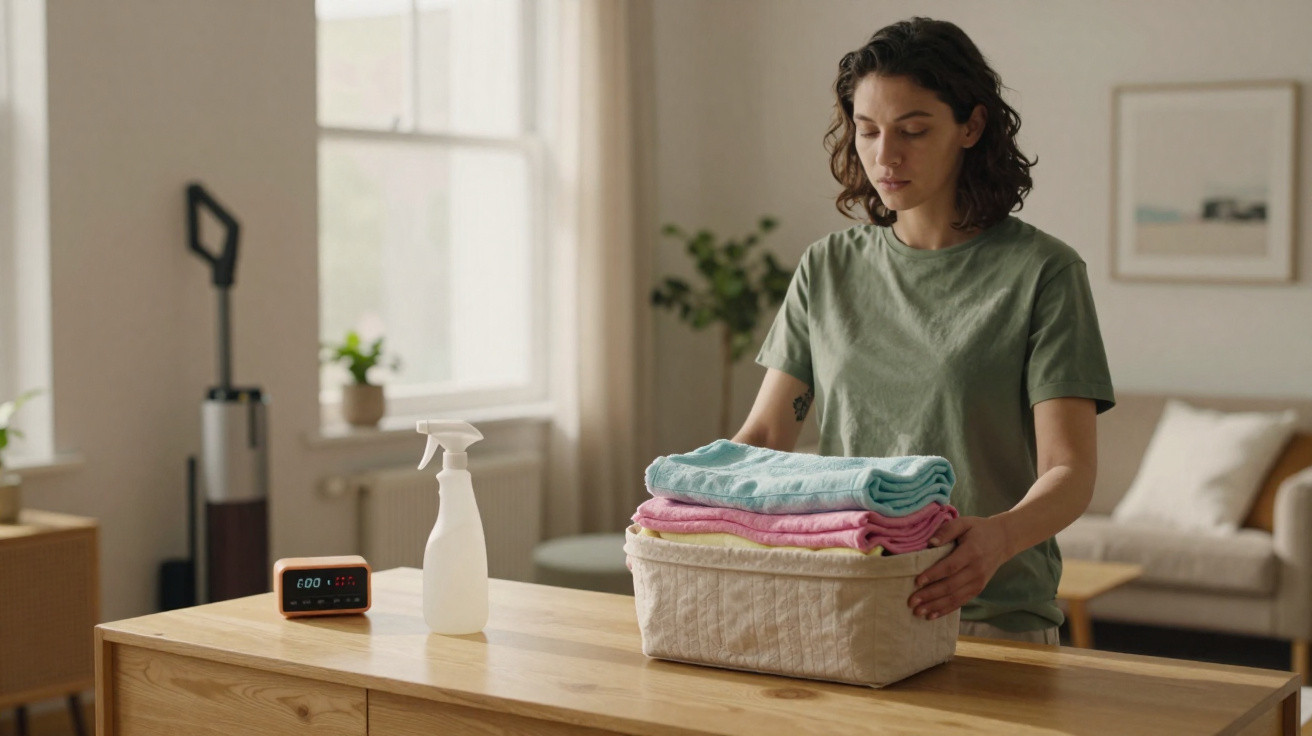
The sink is gleaming, the cushions have been plumped and a candle glows on the coffee table. Two hours later, her kitchen will appear exactly as it did. Meanwhile, yours will already have a sink full of dishes, crumbs across the floor and an overflowing laundry basket again. The effort is the same, but the outcome is not. The distinction is neither how vigorously nor how frequently she cleans; it is the sequence she uses, like an understated routine.
Most of us tackle the clutter that bothers us most at first glance: a crowded worktop, a sofa buried beneath toys or a questionable mark on the floor. We rush in, scrub, shift stacks about, and somehow the mess simply moves into another room. The habit behind homes that remain tidy is less exciting, yet more effective, than any wonder product. It comes down to completing the right task at the right time, without unknowingly reversing your own progress.
This is when cleaning begins to work like a row of dominoes. Follow the proper sequence, and you handle each thing once - and it genuinely remains finished.
Why your cleaning order changes everything
Watch a professional cleaner for ten minutes and one thing soon stands out: they do not drift from task to task. They follow clear circuits, working from the highest points in a room down to the floor, before leaving through the doorway. They do not return to correct areas they have already cleaned. Without noticing, most of us do precisely the reverse. We dust once we have vacuumed, clean the sink before carrying in dirty dishes, or straighten shelves and then shake out blankets.
This haphazard routine wastes more than time. It creates that disheartening sense that your home will never remain clean, regardless of how much effort you put in. Reverse the sequence and the atmosphere shifts. You no longer dirty the areas you have already dealt with. Surfaces remain clear for longer, floors stop needing a rescue operation every evening, and the house begins to support you rather than work against you.
Professional routines generally rely on straightforward principles: large to small, dry to wet, top to bottom and back to front. They begin at the source of dirt rather than where it eventually settles. This is why windows, vents, upper shelves and neglected corners matter more than we might assume. Dust drops, crumbs travel and moisture spreads. A sensible sequence accounts for gravity and everyday behaviour. You are doing more than cleaning; you are controlling how clutter and grime can travel around your home. Apply that approach intentionally once, and every brief tidy has far more lasting impact.
The “longer clean” order: making it work at home
The sequence that makes a quiet but significant difference is broadly this: declutter → high dusting → surfaces → bathrooms → kitchen → floors → details. At every stage, work from the furthest part of the room towards the exit, continually moving dust and belongings forwards rather than back again. Picture yourself as a slow, steady wave: nothing needs saving twice.
Begin by quickly decluttering every room. Put laundry into baskets, take dishes to the kitchen, collect rubbish in one bag and place miscellaneous objects in a “later” box. This is not the time to organise your whole life; the aim is simply to reveal the surfaces. Once that is done, dust high shelves, picture frames, lamps and the tops of doors. Next, wipe tables, desks and bedside tables. Deal with bathrooms before the kitchen, as bathroom dirt should not travel near food. Leave the kitchen until the end of the “wet work”, immediately before doing the floors in one complete pass.
A family in Leeds tested this exact sequence for a week, timing the work on a phone. It was the same home and the same hectic routine, with three children and one dog. Previously, their Saturday clean took almost four hours, yet by Wednesday the results already felt “gone”. Using the new order, they reduced the major clean to 2 hours 20, shared between two adults, and the house still looked remarkably put together on Thursday evening. The biggest change was not the shine, but how many post-work “crisis cleans” they no longer had to do.
They discovered that they vacuumed once rather than three times, because dust from upper shelves was no longer settling onto newly cleaned carpets. The bathroom remained fresher, as toothpaste splashes and hair were no longer carried from sinks to floors and back again. The mother laughed at one unexpected outcome: “The kids are finally learning that if it’s not in the basket in time, it doesn’t get washed this round.” The sequence established unseen boundaries. It marked the divide between “before the wave” and “after the wave”. That boundary is what helps a home feel clean for longer instead of constantly sliding back into disorder.
There is a straightforward reason for this. Whenever you cross cleaned areas with dirty tools, dirty feet or dirty items, you silently reset the timer. A good order reduces the number of times this occurs. Decluttering first ensures every wipe reaches the actual surface rather than a pile of papers and toys. Dusting high places early lets tiny particles settle on areas that have not yet been cleaned. Completing all “wet zones” together means your cloths travel from cleaner places to dirtier ones, rather than the other way round.
Saving floors until the end makes them your final reset. They gather every crumb, dust particle and hair brought down from above. Then you leave the room, without returning with a bucket or a pile of laundry. Logic may sound less appealing than eucalyptus-scented spray, but its benefits last longer. The more closely your tasks follow gravity and your everyday routines, the longer every room retains its freshly settled appearance.
The step-by-step cleaning order that keeps rooms clean for days
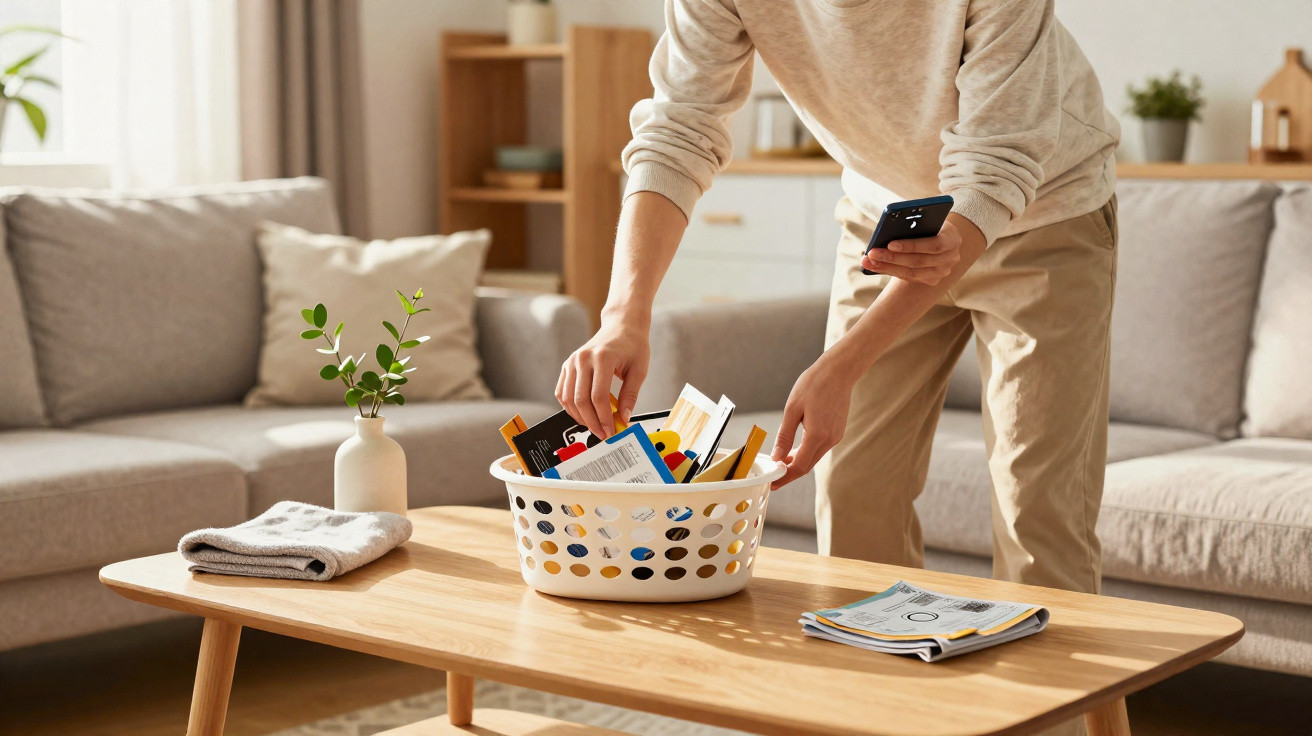
Start with a whole-home circuit that uses no cleaning product whatsoever. Take a laundry basket and a rubbish bag, then move clockwise from your front door for a “grab and go”: clothes, toys, stray mugs, delivery boxes and empty packaging. Do not assess anything or sort through memories. Simply clear clutter from visible surfaces quickly. This first circuit makes every later step easier, and it is where many people unknowingly undermine the rest of their cleaning.
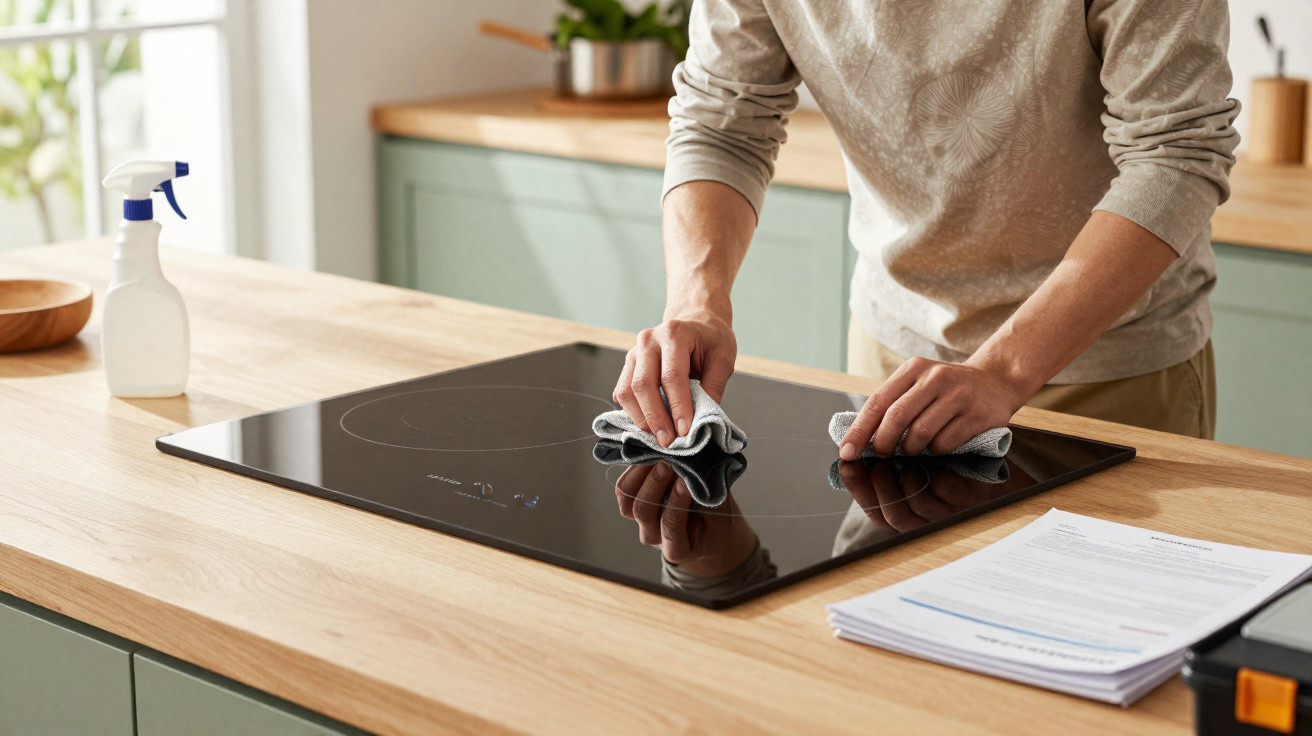
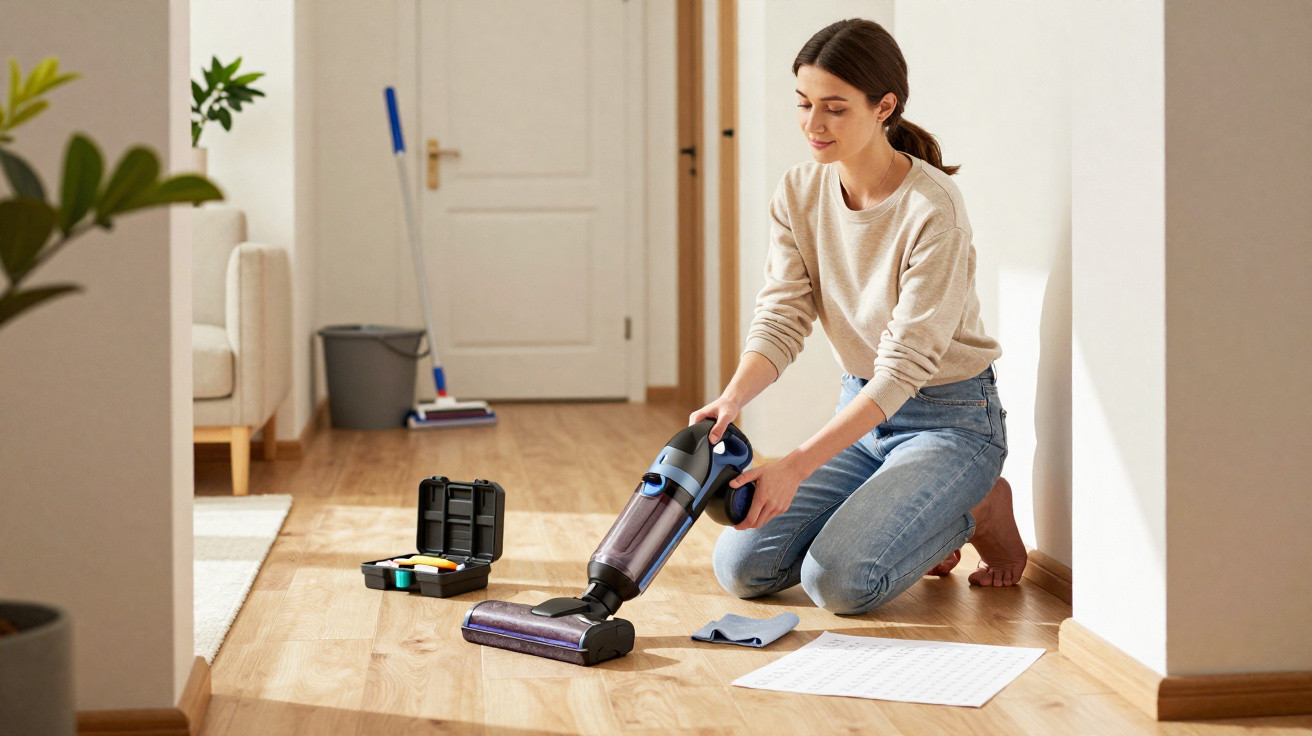
Then move on to high dusting and dry jobs. Clean shelves, frames, vents, ceiling fans and cabinet tops. Work through each room from the highest reachable point down to shoulder level. After that, tackle horizontal surfaces, including tables, desks, bedside tables and TV units. Bring out wet products only once every dry job has been completed. Clean bathroom sinks, showers and toilets first; follow with kitchen worktops, the hob and sink; then finish mirrors and glass. Floors are the final task: vacuum or sweep the entire home in one run, then mop only where it is genuinely required.
Let us be honest: nobody really does this every day. The key is to view this “perfect order” as a weekly or fortnightly reset. On hectic days, simply use parts of it. Wiping the bathroom quickly? Leave the mirror until last so sink splashes do not land on freshly cleaned glass. Got five minutes in the kitchen? Clear and wipe the hob before the worktops, allowing crumbs to fall onto areas you have not cleaned yet. Even in small doses, this sequence discreetly extends the period in which your home feels manageable.
One frequent error is attempting a deep clean and a reorganisation during the same session. That is how you find yourself at 11 p.m., sitting on the floor sorting old receipts with a half-mopped kitchen behind you. Save organisation and emotional decisions for another day. During your “order run”, only place belongings in their general category: laundry, dishes, rubbish or “belongs elsewhere”. Another common pitfall is cleaning “by room” rather than “by task”. This involves carrying products and tools back and forth, while spreading grime between rooms.
Cleaning by task can feel odd initially. You may walk more during the first week. However, your tools will remain cleaner, your pace will become more consistent and your results will be clearer. You are swapping small bursts of chaos for one unbroken line. If you live with others or have children, say the sequence aloud. People are surprisingly receptive when they know what comes next. They also object less when the rules are consistent: clutter goes into baskets before the “wave”, and floors are off-limits once they are finished.
“Once I stopped fighting the house and started following the same order every time, it felt like cleaning finally had an off switch,” confided Emma, 39, who lives in a small two‑bed flat with her partner and a toddler. “Before, I was always half‑cleaning something somewhere. Now, when I finish the floors and close the cleaning cupboard, my brain believes me. It’s done.”
That feeling of mental completion matters just as much as gleaming taps. When a routine takes the same route each time, your body learns it. Your thoughts can drift, podcasts can play and children can help with small jobs. You no longer need to decide continually what comes next or worry that you missed the bathroom. Everything becomes calmer. The home remains in that calm state for longer, too, because every room was handled in a sequence designed to endure.
Here is a quick cheat sheet for your fridge:
- Declutter quickly using a basket and rubbish bag before applying any product.
- Dust and dry-clean high areas first, followed by eye-level surfaces.
- Clean bathrooms before the kitchen, so grime does not move towards food.
- Vacuum or sweep the entire home in one pass, then mop selected areas.
- Keep final “prettifying” - cushions, throws and candles - for the last 5 minutes.
| Key point | Details | Why it matters to readers |
|---|---|---|
| Always declutter before you clean | Take one laundry basket and one rubbish bag to clear surfaces during a single circuit of your home. Prioritise speed over perfection, placing items only in their broad category zones. | Cleaning is quicker and feels less demanding when you are not wiping around piles. You see results sooner, making you more likely to complete the work instead of losing energy halfway through. |
| Clean “top to bottom” and “back to front” | Begin with high shelves, frames and vents, work down to tables, and finish with the floor, always moving from the furthest corner towards the door. | Dust and crumbs land on places you have not cleaned yet, so you avoid repeating work. Your floors remain clean for days because they really are the last area you touch. |
| Group tasks instead of rooms | Complete all dusting throughout the home, then all bathroom jobs, followed by the kitchen and floors, rather than finishing one room completely at a time. | You maintain a consistent rhythm, carry fewer products and create a habit that can run almost automatically. The home stays evenly clean rather than having one “perfect” room and three neglected ones. |
A home that stays clean begins with how you move
On a peaceful Sunday afternoon, notice how mess makes its way into your home. Shoes gather by the door, post lands on the table, snacks appear near the sofa and towels drift from bathroom hooks to bedroom chairs. None of it is dramatic. It is the gradual, unseen tide that undoes your major cleaning days. Altering the order in which you clean is a way to draw a new map over that tide.
Practically speaking, you will spend fewer hours pursuing the same crumbs and dust bunnies. On an emotional level, something gentler changes too. Your home no longer feels like a permanent test you are failing. Every weekly run has a beginning, middle and end. You start to spot your own habits: the corner that always collects shoes, the chair that gathers once-worn clothes and the kitchen area that attracts unopened post. Once you recognise the pattern, you can adjust it.
We have all had that moment of looking at the living room and wondering how it became such a mess so quickly. Changing your order will not make you enjoy scrubbing grout or folding fitted sheets for pleasure. It will, however, make every bit of effort you already put in last longer. Your Tuesday morning coffee will feel different when the worktops still resemble Saturday’s. Your evenings will feel more spacious when you are not taking out the vacuum at 9 p.m. The choreography is straightforward, but its effect can strangely feel like reclaiming a small part of your life.
FAQ
- Do I really need to follow this order every time I clean? You do not. Treat it as a “full reset” sequence for weekly or fortnightly cleans. On busy days, borrow the logic instead: declutter before wiping, dust before vacuuming and leave floors until last. Even following part of the sequence helps your home remain clean for longer.
- How long should a whole-home clean take with this method? It depends on the size of your home and how much you own, but many people can clean a small flat in 90 minutes and an average house in 2–3 hours. The main benefit is not necessarily speed, but avoiding the need to repeat the same jobs during the week.
- What if I prefer cleaning one room at a time? You can still apply these principles within each room: a quick declutter, high dusting, surfaces and then the floor. If finishing a space gives you a stronger sense of completion, start with your most-used rooms - kitchen, bathroom and living room - in that sequence.
- How do I handle pets and constant hair on the floor? In homes with pets, retain the same order but add brief daily “spot sweeps” in busy areas. A quick cordless vacuum around food bowls and favourite sleeping spots will extend the results of your weekly deep clean.
- Which cleaning products work best with this routine? Keep to a small collection: an all-purpose spray, bathroom cleaner, glass cleaner, microfibre cloths and a decent vacuum or broom. It is the routine rather than the brand that makes the clean last longer. Using fewer products also reduces unnecessary back-and-forth.


Comments
No comments yet. Be the first to comment!
Leave a Comment