
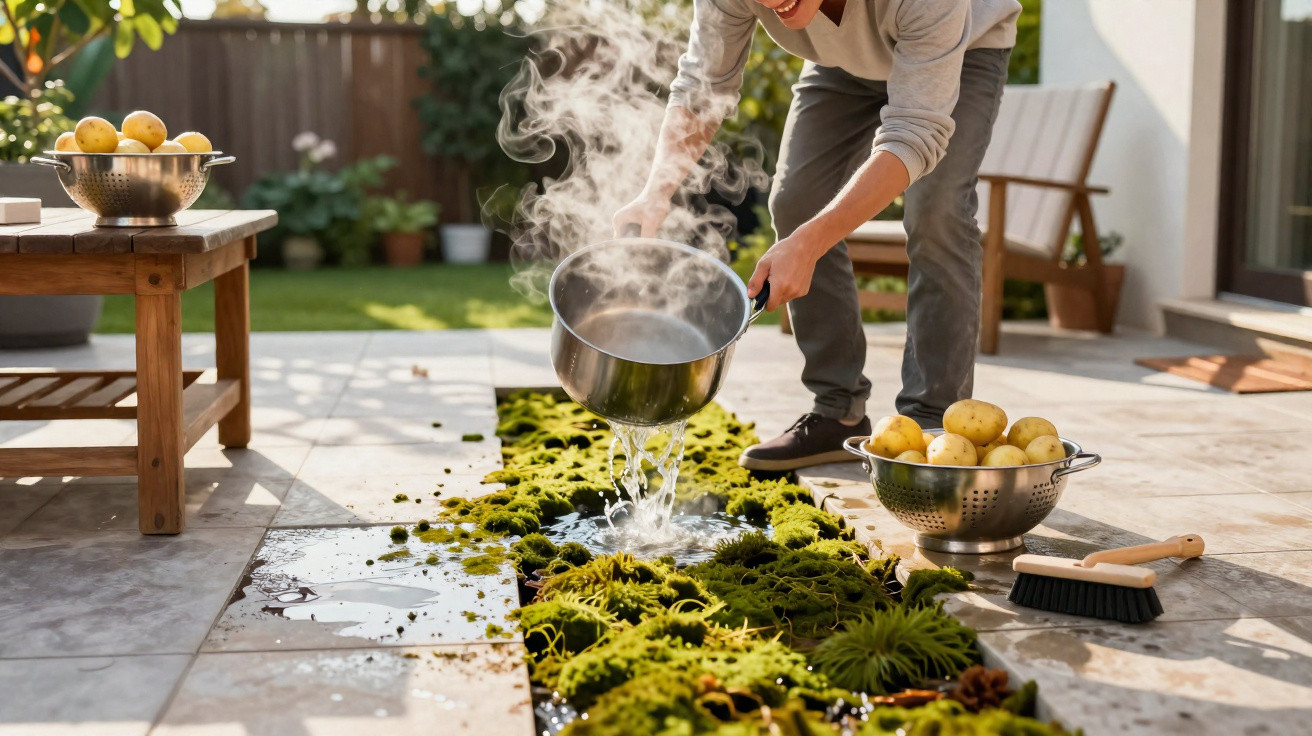
Many people reach for chlorine bleach almost automatically in spring to scrub stubborn moss from paving slabs, wood or stone. Yet this can damage not only the environment but often the surface itself. A simple kitchen by-product can do the same job - without the smell, toxic residues or hours of scrubbing.
Why chlorine is a poor choice for the patio
For years, chlorine-based cleaners were seen as a quick answer to green growth. In some gardens, the smell is almost unmistakable in March. Specialists now strongly advise against using bleach on patios.
- Chlorine can damage joints, wood and certain types of stone.
- Rain can wash it into groundwater.
- It harms insects, microorganisms and nearby plants.
- Surfaces can be left faded and patchy.
There is another problem: this supposed “deep cleaner” does little to tackle the underlying cause. Spores remain in joints and pores, then quickly return when the weather is damp. The result is therefore usually short-lived.
Avoiding harsh chemicals protects the soil, the garden and your own respiratory system - while also saving money on costly specialist cleaners.
Moss and algae: why they develop on a patio
Moss, algae and lichens thrive in damp, shady conditions. Typical trouble spots include north-facing areas, spaces beneath trees and places with insufficient drainage slope.
Common causes of green growth
- Persistent moisture caused by missing or blocked drainage
- A shady position with very little direct sunlight
- Wood, rough tiles or natural stone that retain water on the surface
- Leaves, soil and dust, which provide nutrients
This growth makes a patio look dirty and neglected. More importantly, damp deposits make the ground slippery, and falls are not uncommon. Anyone with children or older people at home should therefore take it seriously.
The zero-cost solution: potato cooking water
What would normally be poured down the drain can be surprisingly effective outdoors: the water used to cook potatoes. This tip now appears in many gardening magazines because it combines several benefits.
Why potato water works: the simple chemistry behind it
As potatoes cook, starch from the tubers is released into the water. This starch consists mainly of amylose and amylopectin - two substances that create a fine film as they cool. These properties can be used against moss and algae.
- Pour the water, while still boiling, over the dry affected surface.
- The sudden heat damages the cells of moss, algae and lichens.
- As it dries, the starch forms a film that blocks the tiny openings on the plant surface.
- The unwanted growths “suffocate” and die off.
After 24 to 48 hours, the moss will turn dark brown to black. It can then be brushed away with little effort or swept off using a stiff broom.
Potato water works in two ways: a heat shock plus a starch film that blocks the breathing of the remaining plant matter.
Step-by-step guide to a moss-free patio
1. Clear loose dirt before applying the treatment
Before using this household remedy, it is worth preparing the area thoroughly:
- Remove leaves, soil and loose debris with a yard broom.
- Lightly roughen stubborn patches with a brush.
- Allow the surface to dry as much as possible so that the hot water is not diluted.
When using a brush and broom, wear gloves and, ideally, safety glasses. Smooth surfaces in particular can cause splashes, and loosened particles can easily reach the face.
2. How to use potato water correctly
- Cook potatoes as usual in plenty of water.
- Once cooked, do not allow the water to cool; pour it straight into a sturdy bucket.
- Carefully pour the boiling water over the affected areas of the dry patio.
- Douse heavily affected joints particularly thoroughly.
- Leave the area undisturbed for at least one day and do not rinse it straight away.
Important: pets and young children should not walk across the still-wet surface while the water remains very hot. Once it has cooled, there is no longer any danger.
3. Follow-up work after one or two days
After 24 to 48 hours, the green growth will have changed colour noticeably. The final stage is then as follows:
- Remove the remaining moss using a brush or sturdy broom.
- Rinse with clean water to wash away dirt and the starch film.
- Allow the patio to dry thoroughly.
If desired, you can then apply a suitable stone or wood protector to limit future moisture penetration.
Useful alternatives and when to use them
Not everyone happens to be cooking potatoes. A few other household remedies may also help when used properly:
| Product | Effect | Note |
|---|---|---|
| Sodium bicarbonate (the classic kitchen powder) | Alters the pH level and inhibits algae and moss growth | Apply as a solution, leave it to work, then brush |
| Soft soap with a little washing-up liquid | Loosens grease and dirt, making mechanical cleaning easier | Particularly suitable for lightly soiled patios |
| Household vinegar | The acid attacks the cell structure of the growth | Use sparingly and not directly beside beds or lawns |
If you have particularly sensitive natural stone, test any new method first in an inconspicuous area. Some surfaces react badly to acid or strong alkalinity.
How to delay fresh growth significantly
To stop the patio becoming completely green again next winter, regular care and structural details matter greatly. A few straightforward measures can make a substantial difference.
Regular maintenance beats drastic treatment
- Remove autumn leaves promptly rather than leaving them for weeks.
- Sweep dry once a month, paying particular attention to the joints.
- Do not pile potting compost or bark mulch directly against the patio edge.
- Move plant pots from time to time so that moss does not form beneath them.
Where water continually collects, check the slope and drainage. Blocked channels or obstructed drains can often be cleared with just a few simple steps.
Hydrophobic protection for long-term help
Applying a sealant or water-repellent treatment to stone or concrete after cleaning can considerably reduce the risk of recurring growth. The surface absorbs less water, dries more quickly and therefore offers moss less favourable conditions.
These products are available from DIY shops and are designed for different materials. It is important to let the surface dry completely beforehand; otherwise, the treatment can trap residual moisture inside.
What many people do not know: the risks of pressure washers and “miracle products”
A pressure washer can seem tempting at first. The patio looks clean within minutes. However, the powerful jet can wash out joints, tear open wood fibres or roughen delicate stone. This allows dirt and moss to settle even more quickly the next time it rains.
So-called “bio” moss removers also deserve a careful look at their ingredients. A bottle decorated with green leaves is not automatically harmless to insects, soil or groundwater. Many such products are simply unnecessary when basic household remedies are combined with a brush, patience and regular sweeping.
Practical everyday examples
In day-to-day life, it makes sense to incorporate the potato-water method into cooking. If you are already planning to cook at the weekend, collect the cooking water and take it straight outside in a bucket. The more often the growth is treated this way in spring, the clearer the surface will remain.
The same principle also works on smaller paths or steps. The key is always to pour the water onto a dry surface and give it time to work. If you hose the area down immediately afterwards, you remove the beneficial starch film.
This approach is especially useful in densely built-up residential areas, where rainwater runs into the drainage system: a waste product replaces expensive chemicals, the patio becomes safer to walk on, and your own garden remains largely undisturbed as a habitat for animals and plants.



Comments
No comments yet. Be the first to comment!
Leave a Comment