

When spring arrives and heavy coats, woollen jumpers and suits are put away, cheap plastic garment bags are often the automatic choice. It sounds convenient, yet the downside frequently appears months later: musty laundry, yellowed shirt collars and misshapen fibres. A straightforward, free alternative may already be in the linen cupboard: a discarded duvet cover or old sheet, cleverly repurposed.
Why plastic secretly harms your wardrobe
Moisture, mustiness and static charge
At first glance, plastic covers seem to offer protection. They keep out dust, look reasonably tidy and are easy to buy. The problem is that plastic seals garments in almost airtight conditions. Any remaining moisture from the air or within the fabric itself is trapped inside.
“In a wardrobe, plastic acts like a mini greenhouse: moisture remains inside and there is hardly any air exchange.”
The specific consequences include:
- Trapped moisture: Traces of perspiration or slightly damp fibres cannot dry fully, encouraging musty marks and unpleasant smells.
- Risk of mould: In cool homes with limited ventilation, even slightly raised humidity can create a microclimate inside plastic covers.
- Static charge: Synthetic covers build up static quickly, attracting dust and potentially putting strain on delicate wool fibres.
- Heat build-up: Dark garment bags against an external wall can warm up, while temperature changes place stress on fibres.
High-quality materials such as wool, silk and cashmere are particularly sensitive. Rather than being preserved, they can age more quickly in these conditions.
Why cotton and linen offer better protection
Old bed sheets and duvet covers are usually made from cotton, linen or a tightly woven cotton blend. These are precisely the types of materials textile professionals use when breathable protection is needed.
Their benefits are clear:
- Breathable: Air is able to circulate and moisture can escape.
- Kind to fibres: Natural fabrics do not rub against delicate materials as harshly as rigid plastic does.
- Dust filter: The fabric catches dust without completely sealing garments off.
- Temperature balancing: Natural fibres buffer fluctuations in temperature more effectively.
“An old sheet works like a breathable coat for your coat: protection on the outside, air on the inside.”
Turn an old sheet into a garment bag: step by step
Materials that most households already have
You do not need a sewing room or specialist equipment to create simple, practical protection. In most cases, a look in the linen cupboard and the odds-and-ends drawer is enough.
You will need:
- a discarded bed sheet or old duvet cover, ideally made from tightly woven cotton or linen
- sharp scissors, preferably fabric scissors if available
- a needle and thread or a sewing machine
- wooden or sturdy metal coat hangers
- optionally, a tape measure and dressmaking pins
One useful tip: an old duvet cover with a zip is especially easy to repurpose, as two sides are already closed.
Option 1: a quick cover with minimal sewing
If time is short, this pared-back version is enough:
- Fold the old sheet in half lengthways.
- Cut a small slit in the centre at the top, just large enough for the hook of the hanger to pass through.
- Drape the sheet over the coat or dress on its hanger like a cape.
- Secure the sides with two or three stitches, or safety pins, to stop the fabric slipping.
This option already provides effective dust protection while allowing air to move freely. It is ideal for short-term storage.
Option 2: a tailored fabric garment bag
For favourite items that will be stored for longer, make a more substantial cover:
- Take measurements: Hang the coat or dress on a hanger and roughly measure its length and width.
- Cut the fabric: Cut two rectangles from the sheet, slightly larger than the garment, for example 110 × 65 cm.
- Layer the fabric: Place both pieces right sides together, with the patterned or finished sides facing inwards.
- Sew: Stitch the sides and lower edge together, leaving the top open.
- Make the opening: Create a short reinforced slit at the centre of the top for the hanger hook.
- Turn it through: Turn the fabric right side out and the garment bag is ready.
“The difference compared with cheap shop-bought covers: this version fits your garments properly and lets them breathe.”
How fabric protection changes your clothes storage
Fewer odours and fewer discolourations
Anyone who has unpacked a white shirt after a winter in plastic will recognise the issue: slight yellowing around the collar and a stale smell that does not entirely disappear, even after washing. Fabric covers substantially reduce these effects.
Natural fibres absorb excess humidity from the air and release it again. This means less condensation forms on the surface of garments. Odour molecules are less likely to cling to the textile, and discolouration occurs less often.
A longer life for coats, suits and dresses
Better protection is especially worthwhile for clothes worn only occasionally. A well-made wool coat or quality suit should ideally last for many years. Inside a sealed plastic bag, heat, moisture and friction can accelerate ageing.
Under fabric covers, by contrast:
- shoulders and collars retain their shape better because condensation does not collect,
- hard-edged plastic components do not continually rub against delicate yarns,
- the fabric is less likely to distort because the environment remains more stable.
More than protection: order, appearance and sustainability
Less waste, lower costs and more style in the wardrobe
Every newly bought plastic cover means more packaging, crude oil and transport for an item that often tears within a few years before ending up in the bin. An old sheet has already served its purpose as bedding and can now take on a second role.
Several advantages at a glance:
- No need to buy anything new: Your budget stays intact, and spontaneous wardrobe reorganising can happen immediately.
- Less plastic waste: Each reused natural-fibre item helps avoid plastic.
- A calmer appearance: Several covers made from the same fabric make the wardrobe look more orderly.
- A personalised solution: Patterns, colours and sizing can all be adapted to individual preferences.
“What might once have been thrown away as an ‘old sheet’ becomes a lasting organisational system for the wardrobe.”
How your wardrobe can feel more pleasant
Organising a clothing collection with fabric covers quickly changes the atmosphere. Opening the doors no longer reveals rustling plastic sleeves, but calm textile surfaces. The garments behind them remain easy to reach while still appearing protected.
This can feel particularly reassuring in smaller homes: the wardrobe looks less crammed, even though it holds exactly the same number of pieces. Uniform fabric fronts conceal visually busy colours and random shapes.
Practical extra tips for perfect garment protection
Combining fabric covers with proper storage
To get the best results from this method, follow a few basic rules:
- Always wash or dry-clean garments before storing them.
- Put only completely dry items into the covers.
- Use appropriately sized coat hangers so shoulders do not become stretched or misshapen.
- Leave wardrobe doors open occasionally to allow air to circulate.
- In particularly damp rooms, consider placing a small moisture-absorbing dehumidifier granulate in the wardrobe from time to time.
Natural helpers against moths and mustiness
Anyone already thinking about moths when putting clothes away can add a few extras to fabric covers:
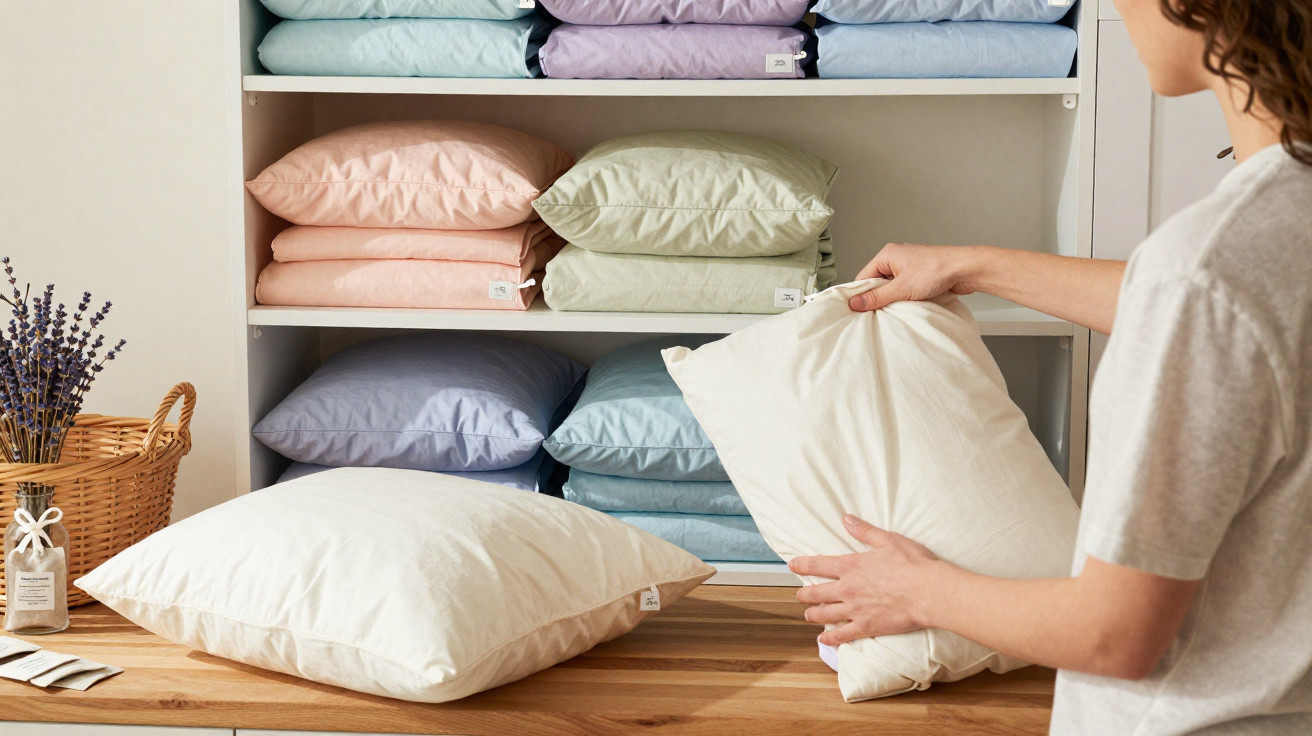
- hang small sachets of lavender or cedarwood near the hangers,
- air the wardrobe from time to time and give the covers a quick shake,
- inspect older items if there is any concern rather than packing them away unchecked.
The scent of lavender lightly transfers to the fabric, masks musty notes and deters many insects. This helps favourite garments stay in better condition not only visually, but also in terms of smell.



Comments
No comments yet. Be the first to comment!
Leave a Comment