
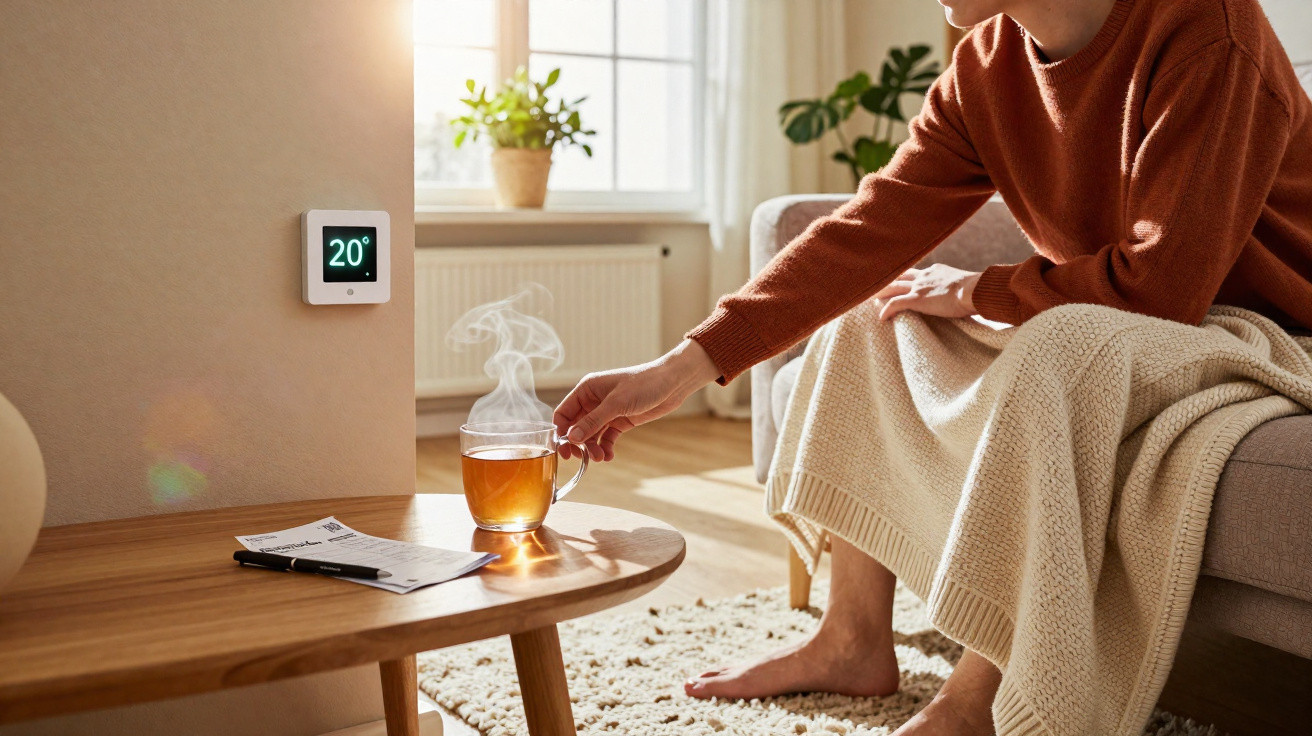
New findings, however, cast serious doubt on that figure.
Politicians, energy advisers and heating campaigns have all but set the 19-degree recommendation in stone. Keeping a home at this temperature is said to save both money and the climate. Yet many people still feel cold, others fall ill more often, and some wonder why their heating bills barely fall despite going without. Energy experts now consider the long-standing standard recommendation too broad and are turning their attention to a slightly higher temperature.
Why the 19-degree guideline was introduced in the first place
The familiar 19 °C figure dates back to the 1970s, when it was shaped by the oil crisis and energy shortages. Governments responded with energy-saving appeals, regulations and clear limits for offices, public buildings and homes. Since then, the recommendation has proved remarkably persistent.
The issue is that many properties at the time had poor insulation, while their windows and heating systems bore little resemblance to those in today’s buildings. Nevertheless, the same recommendation is still applied to everyone, from draughty older homes to modern energy-efficient houses with triple glazing.
“A figure from yesterday’s energy crisis is only of limited use as a measure of comfort today.”
Experts such as energy manager Nick Barber regard 19 °C as a reasonable minimum, but not as a comfortable temperature for every situation. Anyone who sits for long periods, works from home or lives in an older building can quickly feel thoroughly cold at 19 °C.
Comfort is about more than the number on the thermostat
Whether a room feels warm or cold depends on several influences, rather than air temperature alone.
- Insulation standard: Cold walls “radiate” cold. In poorly insulated homes, 19 °C feels considerably cooler than it does in a well-renovated property.
- Humidity: Very dry air can make us feel cold more quickly. Most people find humidity between 40 and 60 per cent comfortable.
- Clothing and activity: Someone sitting on the sofa or working at a desk for hours needs more warmth than a person who is constantly moving around.
- Draughts: Leaky windows, doors or poorly adjusted radiators can create cold air currents, even where the temperature is “theoretically” appropriate.
Together, these factors affect what is known as thermal comfort. A rigid, one-size-fits-all figure ignores these differences. A young, fit person living alone in a well-insulated new-build has different needs from an older woman in an unrenovated period property.
Why many experts see 20 °C as a better target
Heating specialists such as Brad Roberson now often suggest 20 °C as a new everyday target for living areas. It may sound like a minor difference, but it is noticeably felt in day-to-day life.
- Greater wellbeing: At 20 °C, far fewer people feel cold, including those sitting still or wearing light clothing.
- More stable health: People who shiver less are less prone to tension, colds and persistent tiredness.
- Manageable extra consumption: An additional degree does increase heating costs somewhat, but the effect in well-insulated buildings is often smaller than feared.
- Technical support: Modern thermostats and smart heating systems regulate temperatures very accurately. They maintain 20 °C only when needed and reduce the temperature automatically as soon as nobody is at home.
“For many households, 20 °C is the point at which comfort rises noticeably while costs remain easy to control.”
Different temperatures for different rooms
How heat is distributed around a home matters at least as much as the target temperature in the living room. Applying one temperature to every room wastes considerable potential.
| Room | Recommended temperature | Reason |
|---|---|---|
| Living room / home office | approx. 20 °C | Main living area, often involves plenty of sitting, so comfort is crucial |
| Bedroom | 16–18 °C | A cooler bedroom supports rest, while bedding provides extra warmth |
| Bathroom | up to 22 °C | Turn up the heating only at shower times, then reduce it |
| Hallway, storage room | approx. 16–17 °C | Short stays only; frost protection matters more than comfort here |
Clearly dividing a home into zones can reduce overall energy use while still improving wellbeing. Smart radiator thermostats or room thermostats for underfloor heating make this control comparatively straightforward.
Heating without an escalating bill: practical tips
The key is to maintain 20 °C in the rooms used most often without forcing the boiler to run at maximum output all the time. Several adjustments can have an immediate effect.
- Check insulation: Sealing windows, insulating shutter boxes and lining radiator recesses can sometimes noticeably reduce heating demand.
- Programme thermostats: Set fixed schedules: warm in the morning, lower during the day, raise again in the evening and reduce overnight.
- Make use of sunshine: Open curtains during the day and close them at night. This brings free solar heat into the room.
- Keep doors closed: Warm air should remain in living areas rather than flowing unnecessarily into stairwells and hallways.
- Leave radiators unobstructed: Sofas, curtains and furniture positioned in front of radiators absorb a great deal of their output. Keeping the space clear in front of them significantly improves their effect.
- Have the system serviced: Bled radiators and serviced boilers or heat pumps operate more efficiently and consistently.
“Anyone who adjusts several small factors can afford the comfort of 20 °C without entering a spiral of rising costs.”
Who finds 19 °C genuinely too cold
For healthy adults in well-insulated homes, 19 °C may be acceptable in everyday life. However, certain groups are considerably more sensitive to cold.
- Children: They lose heat more quickly, yet are not active all the time. Being cold for extended periods can encourage infections.
- Older people: Their metabolism works more slowly and sensitivity to cold increases. Temperatures that are too low put strain on the heart and circulation.
- People with pre-existing conditions: Ongoing cold can worsen issues such as cardiovascular disease, rheumatism or respiratory illnesses.
Studies from several countries show that respiratory infections, joint problems and exhaustion occur more often in households that heat very sparingly on a permanent basis. For these groups, a room temperature around 20 °C may be more of a health necessity than a luxury.
How perceived cold differs from actual degrees
Many people are surprised when they set up a thermometer: it may display 20 °C, while the room subjectively feels more like 18 °C. Several effects are responsible:
- Radiant cold: Cold external walls draw heat from the body, even when the air temperature is correct.
- Draughts: Even gentle air movement around the feet or neck can create a shivery feeling.
- Air that is too dry: Heated air with humidity below 30 per cent allows the mucous membranes and skin to cool more quickly.
Humidifiers, sealed windows, rugs on cold floors and properly adjusted radiator valves can substantially raise the perceived temperature without changing the actual number of degrees.
What a realistic winter heating plan can look like
Anyone wanting to rethink their habits can make gradual changes rather than switching abruptly. A practical approach for many households is:
- Set the living room and home office to around 20 °C and test this for one to two weeks.
- Limit the bedroom to 17 °C, using a good duvet or wool blanket instead.
- Raise the bathroom temperature only when it is in use, then reduce it sharply.
- Keep hallways and ancillary rooms cool, but frost-free.
- After a few weeks, compare heating costs with perceived comfort and make small adjustments to the settings.
Combining this approach with modest insulation improvements and well-programmed thermostats often produces a balance that feels pleasant without overwhelming the household budget.
How energy prices, climate and comfort can work together
The old 19 °C figure remains an important reminder: every degree lower saves a measurable amount of energy. But rigidly sticking to it at all costs achieves little if residents are cold, become ill or feel uncomfortable in their own homes.
The most interesting current development is that intelligent heating systems combine price information, outdoor temperatures and user behaviour. Heat pumps, smart thermostats and good insulation create scope for comfort and savings to coexist, without relying on dogma from the oil-crisis era.
Those who find their personal “comfort range” somewhere between 19 and 21 °C, zone their rooms intelligently and improve their home step by step will ultimately face less stress over bills while still enjoying a warm, welcoming home. That is the point: not a magical number, but a coherent overall balance of comfort, health and common sense.





Comments
No comments yet. Be the first to comment!
Leave a Comment