
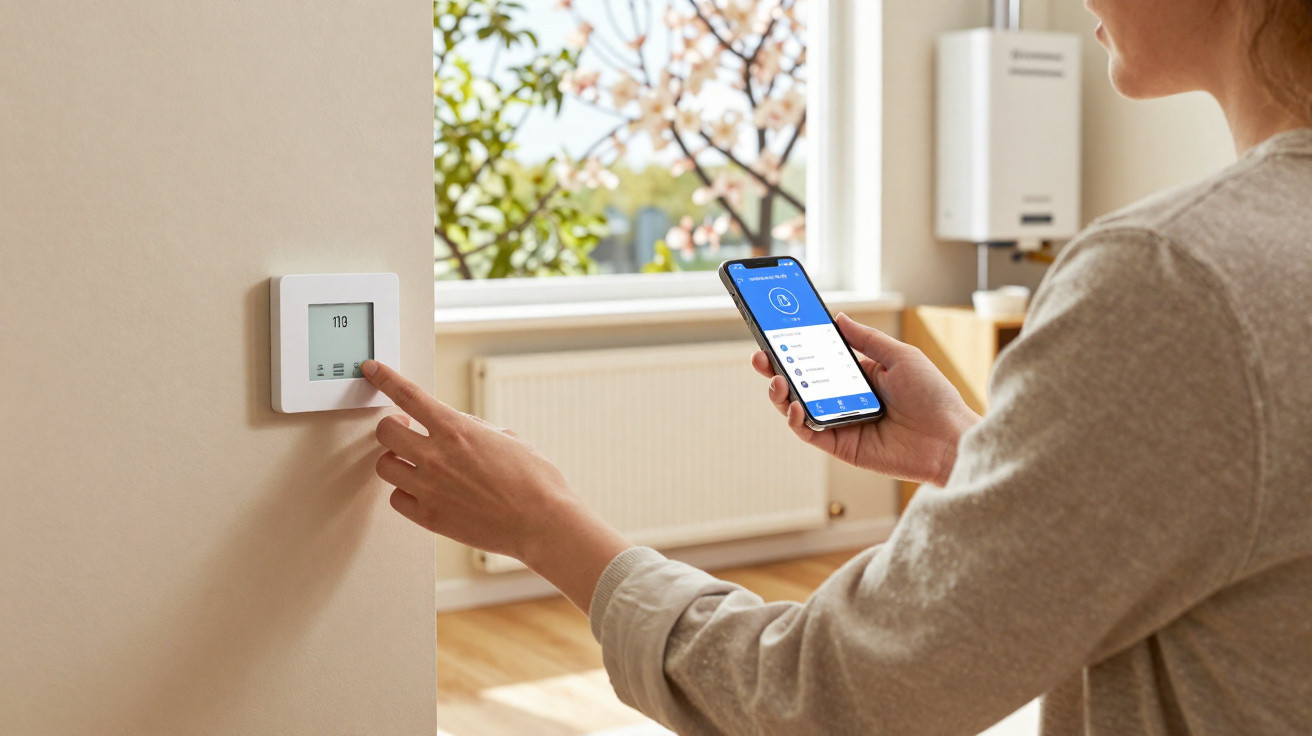
Many people turn their radiators off completely in March or April because the midday sun is blazing through the windows. The following morning, they are left shivering at the kitchen table while the heating is running at full power. This constant switching back and forth creates avoidable expense and hassle. A smarter approach during the transition from winter to spring, by contrast, cuts energy use, protects the system and maintains consistent comfort at home.
Why suddenly turning the heating off in spring is a costly mistake
Spring may suggest T-shirt weather, but temperatures often fluctuate considerably in reality. In many areas, daytime temperatures rise to 15°C or more, yet overnight they can drop to 5°C or below. Homes cool down far more than many people realise.
If you switch the heating off entirely on a sunny day, the usual result is that the house feels uncomfortably cold in the evening or overnight. Rooms lose their stored warmth, while walls and floors cool down. The next day, the system has to use substantial energy to bring everything back up to temperature.
“Reheating a cold house uses more energy than maintaining a moderate, constant temperature.”
The boiler, heat pump or district-heating unit then repeatedly powers up and down over short intervals. That is not only hard on your budget, but also places unnecessary strain on the equipment.
Insulation determines how relaxed you can be in spring
The impact of turning the heating off depends greatly on how well the property is insulated. In a well-insulated building, floors, walls and furniture retain their warmth for a long time. Sunshine contributes heat during the day, and temperatures fall much more slowly overnight.
Poorly insulated flats and houses are different. Warm air escapes quickly, while cold external walls pull down the room temperature. Anyone who selects “heating off” too early in these properties will find themselves feeling cold sooner than they would like.
- Well-insulated new build: the heating can often be turned down sooner, as temperatures remain stable.
- Unrenovated older property: a longer transitional period and a slower reduction are sensible.
- Partially renovated property: monitor carefully how much the home cools overnight.
If you are unsure, check the indoor temperature each morning for several days. If it drops clearly below 19°C, turning the heating off completely is usually not a good option.
Adjust heating intelligently: turn it down gradually rather than switching it off
Rather than shutting the heating down abruptly, energy experts advise reducing it in stages. This is straightforward to put into practice:
- Lower the room temperature by 1 to 2°C each week.
- Keep less frequently used rooms cooler earlier, such as the home office or guest room.
- Shorten heating periods: provide a little heat in the morning and evening, and use less during the day.
This helps your body adapt to a slightly cooler environment without leaving you immediately feeling chilly. At the same time, consumption falls without the system constantly needing to be restarted.
Thermostats and smart technology as money-saving tools
Programmable thermostats are particularly valuable during the transitional season. They automatically control when heating is needed and how strongly it runs. A typical schedule might include:
- gently warming the home before you get up in the morning,
- a lower temperature during the day when nobody is at home,
- slightly more warmth in living areas again in the evening.
Smart thermostats and central heating controls can do even more. They incorporate weather data, recognise routines, respond to open windows and can be managed through an app. This means you can reduce heating quickly on an unexpectedly warm day without switching off the entire system.
“Those who adapt their heating to everyday life rather than rigidly switching it ‘on’ or ‘off’ often save double-digit percentages on energy costs.”
Weather rather than the calendar: the right time to stop heating
Many households follow fixed dates: “The heating stays off after Easter” or “We do not heat after 1 May”. From a climate perspective, this rarely makes sense. What matters is the actual weather.
As a rule of thumb, only switch the heating off completely once overnight lows have remained clearly in double figures for an extended period. A sensible benchmark is at least two weeks during which night-time temperatures do not fall below around 10°C.
Regional differences also need to be considered:
- Alpine areas and higher elevations: heating is stopped significantly later, often only in late spring.
- Large cities and densely built-up areas: buildings warm up more during the day, so earlier reductions may be possible.
- River valleys and windy locations: greater cooling means allowing for a longer transitional period.
Do not switch the boiler off completely: use summer mode
If you have your own gas or oil heating system, it is generally not advisable simply to turn off the main switch in spring. Modern systems offer what is known as summer mode. In this setting, radiators stay cold but the system continues to provide hot water.
The benefit is that the equipment remains operational, pipes and pumps continue to move, and space heating can be reactivated quickly if there is a sudden cold spell. A system left completely inactive can sometimes restart only with difficulty after months out of use.
“Summer mode protects the heating system, ensures hot water and preserves flexibility during unpredictable weather.”
Spring is the ideal time for servicing and a check-up
When the heating is used less, it is the best time to arrange thorough servicing. If you postpone this until summer, you may end up caught in the autumn rush, when everyone needs a heating engineer at the same time.
Useful measures in spring include:
- Arrange annual servicing for the boiler or heat pump.
- Bleed radiators and have flow rates checked.
- Clean blocked filters and sludge-filled heating circuits.
- Check controls and thermostats, and reset them where necessary.
A well-maintained system operates more efficiently, uses less fuel or electricity and is less likely to fail. That is a decisive advantage, especially on the first cold days of autumn.
Every home is different: factors to check before stopping heating
There is no single perfect rule for switching the heating off. A sensible decision takes several factors into account:
| Criterion | Question | Implication for stopping heating |
|---|---|---|
| Location | City, countryside or high altitude? | Switch off later in cooler areas. |
| Insulation | Renovated new build or older property? | Good insulation allows an earlier reduction. |
| Usage | Working from home or empty during the day? | Take a more gradual approach where people are at home frequently. |
| Health | Young children, older people or unwell household members? | Plan for more consistent, slightly higher temperatures. |
Personal sensitivity to cold also matters. Some people are comfortable with 19°C in the living room, while others feel uncomfortable below that level. The aim is not to force everyone into the same temperature, but to avoid unnecessary extremes.
Practical everyday tips for the transitional season
Alongside adjusting the heating, a few simple habits can help you make better use of warmth:
- Open curtains and blinds during the day so sunlight can warm rooms.
- Close them in the evening to retain stored heat.
- Air rooms briefly and fully rather than leaving windows on tilt, so walls and furniture do not cool down.
- Put rugs in cold rooms to improve the feeling of warmth.
- Keep bedrooms slightly cooler and living areas moderately heated.
Combining these measures with a gradual temperature reduction can significantly lower heating consumption during the transitional period without leaving you cold.
The long-term effects of heating incorrectly
Persistent temperature fluctuations put pressure not only on heating equipment but also on the indoor environment over time. Walls that cool down repeatedly can become damper, encouraging mould growth, especially in poorly insulated corners or behind furniture.
Comfort also suffers. Anyone who feels cold in the evening and wakes in a chilly home will automatically turn the heating up more, often beyond what they actually need. In the end, this “heating marathon” costs more than a well-planned, more consistent strategy.
Those who understand their own consumption more precisely, for example through smart meters or monthly bills, soon notice how strongly their spring behaviour affects annual costs. Just a few degrees and several weeks of intelligent control can amount to hundreds of pounds per year, particularly at current energy prices.





Comments
No comments yet. Be the first to comment!
Leave a Comment