
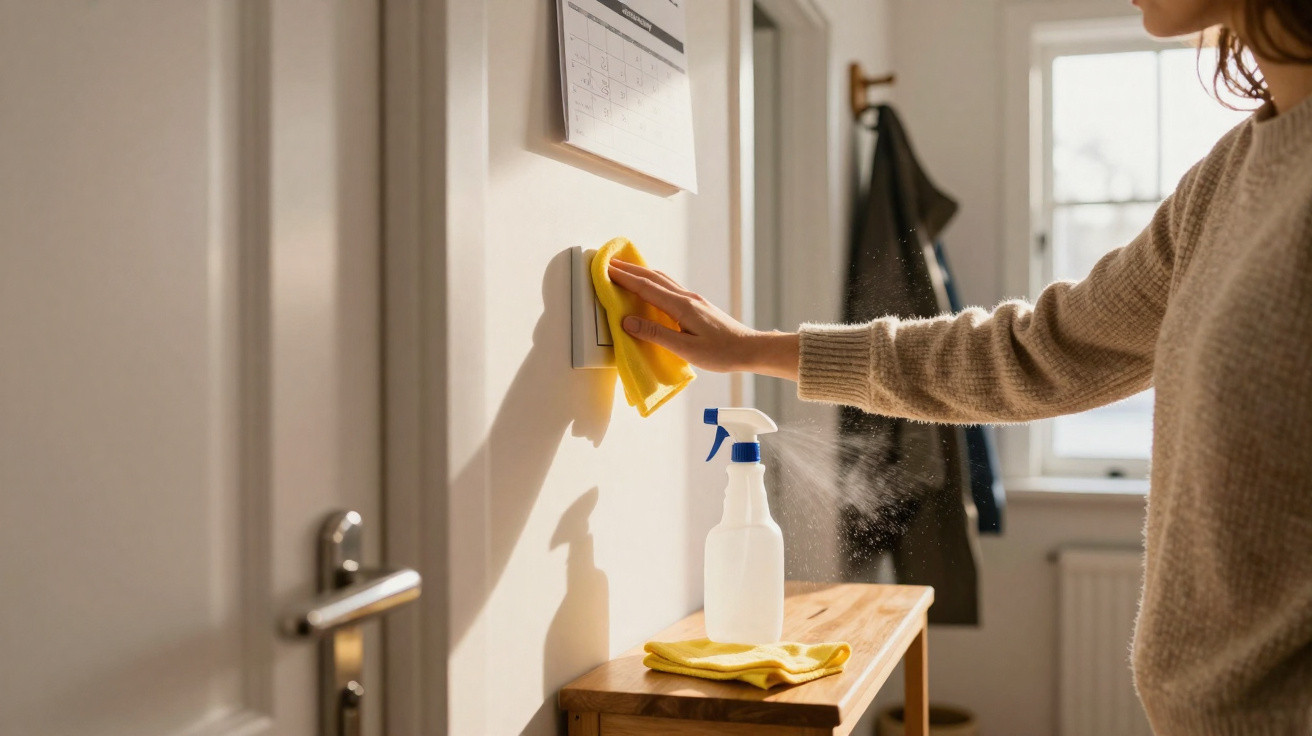
It tends to happen in the middle of December. You are standing in the hall with your coat only half on, sniffling slightly, when you notice the light switch. There are grey finger marks on it, plus a faint sticky streak left by little hands passing over it. Beside it is the door handle, touched without a second thought by everyone entering and leaving.
You wipe your nose and then put your hand on that very same handle.
That is the small moment when winter germs quietly get the upper hand.
The radiator is humming, the indoor air is drier and the windows remain closed. People cough into their hands, children return from school with runny noses, and those microbes need only one route: the small objects that everybody touches a dozen times each day.
Cleaning them can sound dull, even overly particular. But the point at which you begin makes all the difference.
Why switches and handles quietly control winter germs
Take a mental walk through your home. The front-door handle. The hall light switch. The bathroom handle. The kitchen switch above the worktop. The fridge door. For microbes, these places work like a social network where everything gets “liked” and “shared” without permission. We touch them after waking up, after coming home on public transport, when children rush in from school and when somebody is already feeling slightly unwell.
On an ordinary day, none of this stands out. These objects simply do their job: they click, turn and let us through. Yet they are precisely the junctions where winter viruses and bacteria meet, mingle and travel to another hand.
Imagine an average Sunday in December. Friends are visiting, children are racing about and coats are heaped on a chair. One visitor has a barely noticeable sore throat, another is getting over a cold, and your child has only just begun to cough. Whenever someone uses the bathroom or switches on the hall light, an invisible trace is left behind.
Research into “high-touch surfaces” at home and in workplaces repeatedly finds the same pattern: in winter, door handles and switches are among the most contaminated items. Not toilets. Not phones. The unassuming handle comes out on top.
Even so, people often disinfect the obvious areas while overlooking the small plastic rectangle fixed to the wall.
This is why acting before January matters so much. Winter germs benefit from two things: dry indoor air and continual movement between people. By the end of December, festive gatherings, shopping trips, end-of-term school events and family visits greatly increase the flow of people through your home.
When your switches and handles are already being cleaned routinely by that point, the viral “highway” is interrupted ahead of peak season. You are doing more than clearing away today’s germs; you are disrupting the chain that lets colds, flu and stomach bugs pass from one person to another at home or in the office.
It is rather like gritting the road before a freeze, instead of sliding on black ice every morning.
How to clean switches and handles effectively
Begin by choosing one route, such as the journey from your front door to the kitchen. Use a microfibre cloth lightly dampened with warm water and a mild multi-purpose cleaner or diluted washing-up liquid. Wipe each handle and switch along that route from top to bottom, including the small edges. Two or three passes are enough; there is no need to scrub furiously.
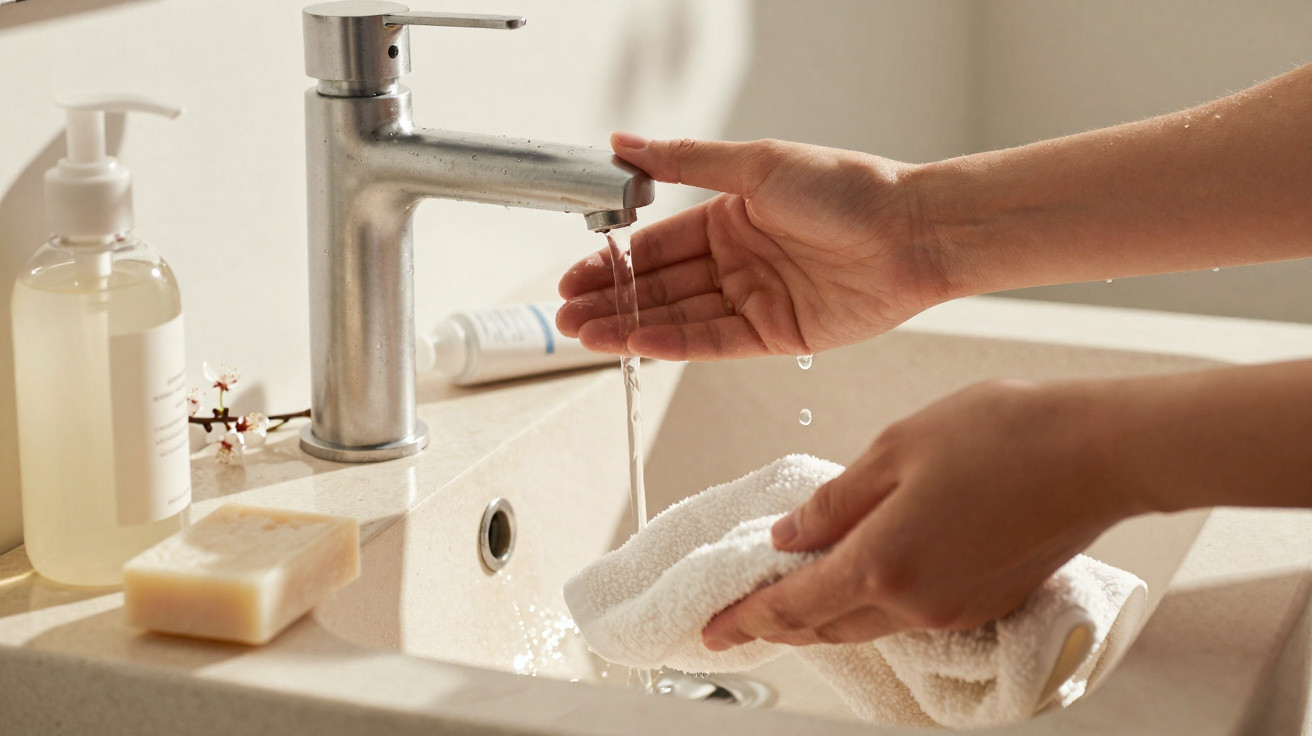
Then wash your hands.
After finishing that main route, include the bathroom and bedroom doors. The real answer is not an intensive clean on one major day, but establishing a fast, almost automatic action to repeat two or three times a week from mid-December onwards.
Most people either go too far or hardly do it at all. They use too much disinfectant, wipe once, breathe in the fumes and tell themselves they will “deep clean properly later”. Or they simply forget. Honestly, hardly anyone manages this every day.
Take a different approach. Keep a small cloth and gentle cleaner somewhere accessible and noticeable: behind the front door, beneath the bathroom sink or on the kitchen worktop. Whenever you spot them, spend 90 seconds wiping three handles and two switches. Nothing more. It is a small routine with a substantial effect over several weeks.
Your hands do not need to feel tacky, and your home does not need to smell like a hospital. The aim is cleanliness, not sterility.
The objective is not perfection but consistency. Doing a little, regularly, before January shapes the whole season.
“Once I started wiping the same four handles every other day in December, our winter felt completely different,” says Elsa, mother of two and nurse in a busy clinic. “We still caught the odd cold, but it didn’t hop from one person to the next like it used to.”
- Prioritise high-traffic handles and switches: the front door, bathroom, kitchen and children’s rooms.
- Apply gentle products to the cloth rather than directly to the switch, so you do not damage electrical parts or metal.
- Take a short “germ tour” every few days before January, ensuring the habit is established when viruses reach their peak.
The understated benefit of beginning before January
There is something unexpectedly reassuring about moving through your home at night and feeling a recently wiped door handle. It feels as though someone has looked after the place, even if that person was you five minutes earlier between two loads of washing. Starting this modest December ritual will not magically stop every germ, but it does quietly alter the odds.
You touch your face a little less often after contact with a contaminated surface. The amount of virus on those objects falls, meaning that if you do touch them, your body has a better chance. Without a lecture, children also learn that cleaning can be quick and ordinary, rather than a punishment or a panic response once someone is ill.
There is a psychological benefit too. Once the new year begins, we tend to discuss major resolutions involving exercise, food, money or careers. Yet the very small habits that genuinely influence everyday health are already established, almost without notice.
You have moved from reactive cleaning (“Someone vomited, where’s the bleach?”) to proactive care. Rather than battling yesterday’s germs, you are quietly shutting the doors they would normally pass through. You did it before January, before the proper winter surge arrived and before everyone around you began coughing on the bus.
This straightforward attention to switches and handles may even trigger a chain reaction in the way you think. You start seeing your home differently, and these small practical objects are no longer invisible. You open a door, feel the metal or plastic, and notice its condition and its story. You might mention it at work or to family: “We started cleaning just the handles before New Year’s and we’ve been less sick.”
That sort of everyday household wisdom spreads quickly. One person tries it. Someone else adjusts it. Another person adds handwashing to their routine when they come through the door. There is no magic or miracle involved. It is simply one of those quiet habits that can affect how often, throughout a winter, you end up on the sofa with a box of tissues and a pounding head.
| Key point | Detail | Value for the reader |
|---|---|---|
| Target high-touch spots | Concentrate on door handles and light switches along main routes | Focuses effort where germs spread most quickly |
| Start before January | Create a straightforward wiping routine in December, ahead of virus peaks | Interrupts transmission chains early and reduces winter infections |
| Small, regular actions | Clean for 90 seconds, 2–3 times weekly, using mild products | Simple to maintain, realistic for busy lives and effective over time |
FAQ:
- Do I really need special disinfectant for handles and switches? Not always. Soapy water or a mild multi-purpose cleaner on a cloth removes a large proportion of germs. You can use disinfectant occasionally, particularly when somebody at home is already unwell.
- How often should I clean them in winter? For most households, cleaning the main handles and switches two to three times weekly is already a major improvement. If you have young children or someone vulnerable at home, you can do it more often without making it an obsession.
- Can I spray directly on the switch or socket? It is better not to. Spray the product onto the cloth, rather than the wall or switch itself, to stop liquid getting into the electrics. A lightly damp cloth is sufficient.
- Is this really more useful than cleaning the toilet? Both are important, but studies frequently find greater contamination on door handles and switches because everybody touches them so often. Toilets are cleaned more regularly; handles generally are not.
- What about offices or shared spaces? The same idea applies. Wiping shared handles, meeting-room switches and kitchen door handles in December and January can greatly reduce the effect of “everyone sick at once” in teams.

Comments
No comments yet. Be the first to comment!
Leave a Comment