
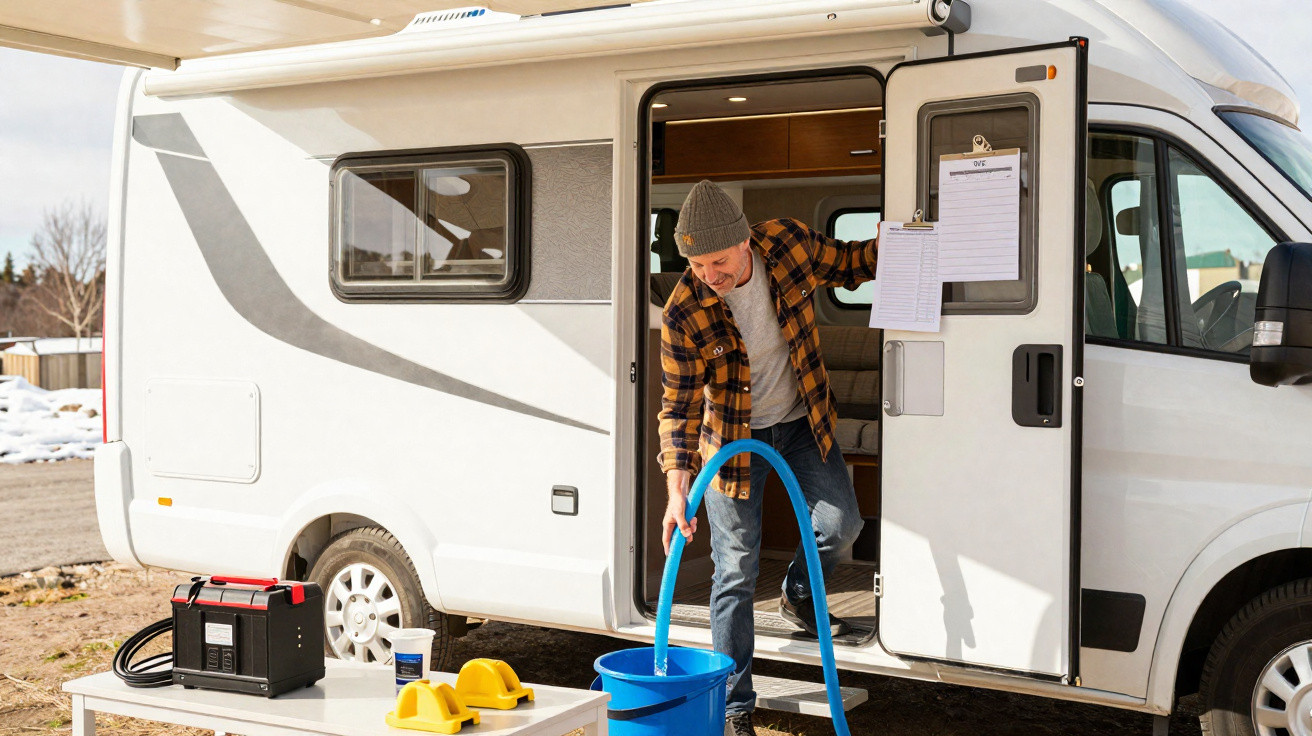
When temperatures fall, simply parking your leisure vehicle is not enough. A few straightforward tasks can prevent unpleasant surprises when warmer weather returns.
A motorhome, campervan or caravan left for several weeks without preparation can be affected by cold, damp and standing unused. The resulting damage is not always immediately obvious: a dried-out seal, weakened battery or cracked pipe may only show itself on the first spring trip. Winterising does not necessarily take a full day, but it does require a methodical approach.
Drain the entire water system
This is the first priority whenever the vehicle will be parked in an area where frost is possible. Water expands as it freezes. In a compact system of pipes, connectors, taps, a pump and, in some cases, a water heater, the resulting pressure can cause cracks that are costly to repair.
“A nearly empty tank is not enough: the pipes, pump, taps and water heater must also be drained.”
First, empty the fresh-water tank and waste-water tank at an authorised disposal point. Then open every tap, selecting both hot and cold water. The aim is to remove any water remaining in the pipework. Do not overlook the exterior shower head if your layout has one.
The water heater needs particular care. Follow the manufacturer's instructions before opening or draining it. Some units have a safety valve or a dedicated drain device. Never switch a water-heating appliance back on until its tank has been filled.
Do not overlook small traps
Sink and shower traps often retain a small amount of water. While this prevents odours rising during use, it can freeze. Depending on the equipment, you may be able to drain them or add a product suitable for leisure-vehicle water systems. Avoid harsh liquids, as they may damage seals or contaminate water collected later.
Protect the battery without allowing it to run flat
Batteries are not spared by long periods off the road. Even when unused, a battery gradually loses charge. An alarm, tracker, clock or certain onboard devices can make this worse. A deeply discharged battery may lose some of its capacity or fail altogether.
Start by turning off unnecessary electrical loads. Check that lights, the water pump, fridge and sockets are not still operating. If the vehicle is stored in a secure, ventilated garage, a compatible maintenance charger can keep both the starter battery and leisure battery at a suitable level.
- Inspect the battery terminals and remove any signs of corrosion.
- Recharge the batteries before a prolonged period of storage.
- Disconnect the leisure battery if your installation and vehicle handbook permit it.
- Avoid running the engine for only a few minutes: a brief start does not always replace the power it uses.
- Plan a monthly voltage check.
If the roof has solar panels, they can help maintain the leisure battery. Their output falls considerably when they are covered with leaves, snow or dust. A gentle clean before winter remains worthwhile.
Choose a dry, monitored storage location
The storage location matters almost as much as the technical preparation. A dry, stable and well-ventilated space reduces the risk of damp. A closed barn may appear ideal, but a confined atmosphere can also encourage condensation if air cannot circulate.
Inside the living area, remove moisture-holding textiles, including cushions, throws, bedding and towels. Leave cupboard doors slightly ajar to promote airflow. A moisture absorber can provide additional protection, provided it is checked regularly. It is no substitute for proper ventilation.
“Damp can take hold before frost: it damages fabrics, wooden panels, foam and electrical contacts.”
A vehicle stored outdoors benefits from protection against branches, gutters and places where water pools. A breathable cover designed for this purpose can protect the bodywork. An ordinary tarpaulin fitted too tightly traps moisture and may mark the paintwork through rubbing.
Look after motorhome tyres, brakes and engine
Very long-term parking places strain on tyres. The vehicle's weight rests continuously on the same area, which can slightly distort the rubber. Inflating the tyres in line with the storage recommendations helps reduce this risk. Do not exceed the maximum pressure specified by the manufacturer.
On level ground, avoid leaving the parking brake engaged for months, as braking components may seize. The vehicle should be secured with suitable wheel chocks positioned correctly. This precaution must follow the manufacturer's guidance, especially for a heavy vehicle.
| Item to check | Action before winter | Risk avoided |
|---|---|---|
| Tyres | Check their condition and adjust the pressure | Distortion and under-inflation |
| Brakes | Use wheel chocks on stable ground | Parking-brake seizure |
| Fuel | Fill the tank according to the planned storage period | Condensation in the tank |
| Engine fluids | Check levels and leaks | A delayed spring departure |
For fuel, a well-filled tank generally reduces condensation inside it. This measure depends on the fuel used and how long the vehicle will remain unused. If in doubt, the service handbook remains the reference.
Clean the interior and keep pests away
A crumb left in a drawer can be enough to attract mice. Before closing up the vehicle, empty food cupboards, the fridge and bins. Clean all surfaces, dry the shower, then leave the fridge door slightly open once it has been defrosted. This reduces stubborn odours and mould.
Rodents also favour engine bays and secluded areas. Check for possible entry points without blocking mandatory vents. Ventilation grilles must never be obstructed: they ensure that certain gases can escape and help keep the living area safe.
Schedule regular checks
Successful winterising does not mean forgetting about the vehicle until spring. A visit every three or four weeks makes it possible to check for water ingress, battery charge levels, tyre pressures and any signs of pests.
Take the opportunity to open the doors for a few minutes when the weather is dry. Look beneath the vehicle: even a small puddle may indicate an oil, coolant or fuel leak. It is better to spot this during winter than on the first holiday journey.
The term “winterising” therefore covers far more than simply parking up. It is a period of active protection for the vehicle and its equipment. An hour of preparation in autumn can prevent lengthy repairs, lingering odours and a postponed departure when the urge to get back on the road returns.




Comments
No comments yet. Be the first to comment!
Leave a Comment