
The first frosty nights invariably arrive before our homes are prepared, and energy bills are biting harder than ever this year.
With temperatures falling and tariffs rising, many households face an identical problem: how can they stay warm without ripping open walls or exhausting their savings? A growing range of low-tech, affordable approaches is quietly gaining ground across the UK and US, bringing back traditional practices while combining them with modern materials.
Why walls matter more this winter
Housing specialists across Europe and North America caution that badly insulated walls may allow up to a quarter of a home’s heat to escape. The result is higher bills, colder nights and rooms that people instinctively avoid. Comprehensive retrofits, whether internal or external insulation, can cost thousands and usually need professional installers. Many tenants and homeowners cannot realistically take that option.
Instead of a single big project, more people stitch together small, reversible fixes that chip away at heat loss room by room.
This “patchwork insulation” approach is bringing decorative fabrics, ingenious panels and thoughtful furniture positioning into focus again. These measures are no substitute for proper insulation, but together they can make a genuinely noticeable difference to comfort.
Thermal curtains for windows and cold walls
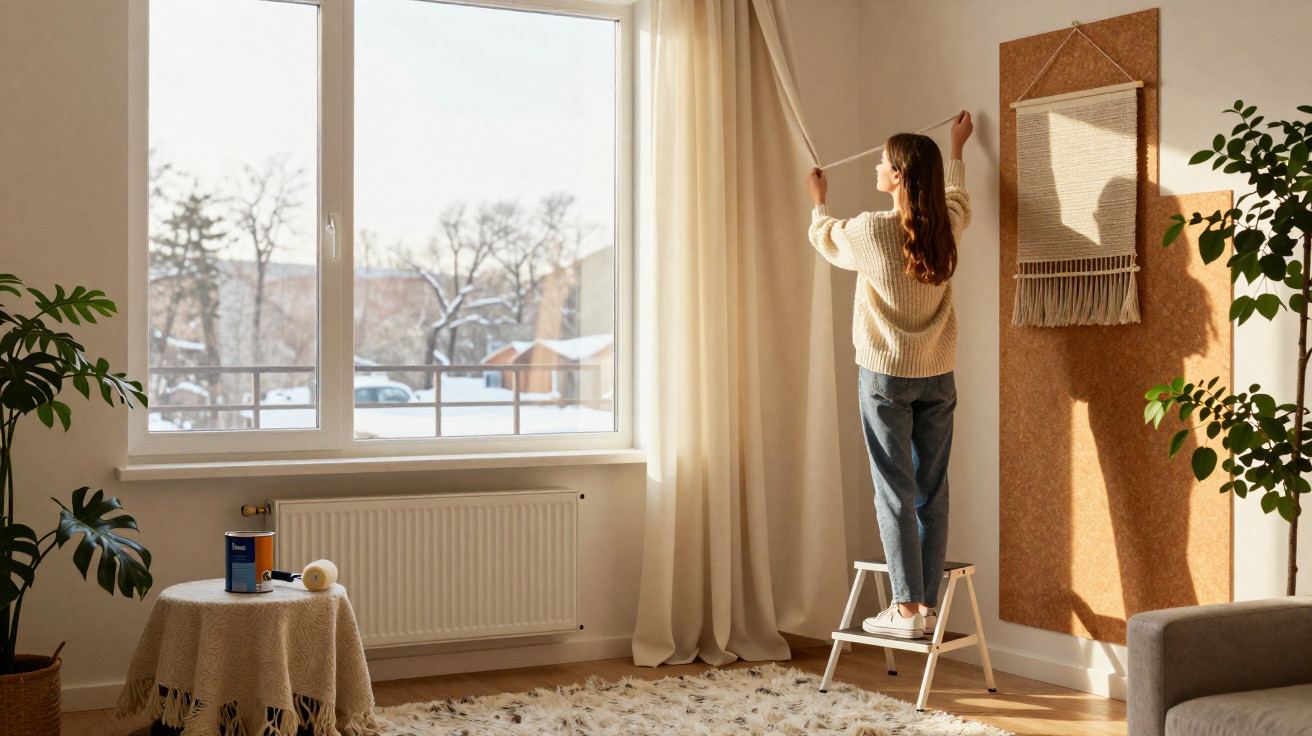
The first area to tackle is often the window zone and the coldest exterior walls. Thermal curtains have shifted from a specialist item to a winter essential. Although they resemble ordinary curtains, they contain dense polyester, foam or fleece layers that slow heat loss through glazing and thin brickwork.
They work in three practical ways: by holding a pocket of air between the material and wall, reducing draughts, and limiting radiation from a warm room towards the cold outdoors. In compact urban flats with single glazing, the change can be immediately apparent at night.
- Pick curtains that fall to the floor and are wider than the window frame.
- Fit the rail or pole as near to the ceiling as you can.
- Draw them completely once the sun has set, but open them when sunshine can heat the room.
A thick curtain over a bare exterior wall can act like a removable, textile “inner wall” that traps warmth after dusk.
Wall hangings and fabric panels: an old practice returns
Before central heating existed, households covered stone walls with tapestries, rugs and weighty fabrics for good reason: textiles and trapped air create a remarkably useful buffer. The practice is now returning in a contemporary guise.
Large woven hangings, vintage rugs displayed vertically and sewn fabric panels can form a second layer over cold facades. Wool, felt and velvet are effective because they are dense while remaining breathable. They will not turn a wall into a high-performance thermal barrier, but they lessen the sensation of cold radiating behind you that is common near outside walls.
Tenants in older terraced homes are increasingly trading in second-hand rugs specifically to put on walls rather than underfoot. Social media is filled with before-and-after images of bare, echoing rooms becoming softer and quieter cocoons once textiles have been installed.
Decorative insulation panels: foam, cork and hybrid boards
People willing to attach something directly to a wall can choose decorative insulating panels, which sit between major building work and simple textiles. Usually made from polyurethane foam, wood fibre or cork, these light boards can be secured using adhesive strips or screws and left in position for several winters.
They behave like a slim thermal jacket for your wall, nudging surface temperatures up and making rooms feel less damp and chilly.
Manufacturers promote modular tiles that can be painted, stained or covered in fabric. Certain types replicate timber slats or geometric 3D patterns, making insulation an obvious design feature rather than a concealed layer. For tenants, removable adhesive options and interlocking panels provide a limited improvement without disputes with a landlord.
Cork panels: natural, quiet and moisture-resistant
Cork has particularly become more popular during the past two winters. Taken from bark, it provides insulation, dampens sound and withstands humidity better than many synthetic foams. This makes it appealing in bathrooms, kitchens and north-facing corners that often remain damp.
| Solution | Main benefit | Best location |
|---|---|---|
| Cork panels | Natural insulation, moisture resistance | Bathrooms, kitchens, exterior walls |
| Foam panels | High thermal performance, low weight | Behind radiators, under windows |
| Fabric hangings | Comfort, aesthetics, reversible | Living rooms, bedrooms, rented spaces |
Furniture as a thermal shield: strategic bookshelves and sofas
The easiest adjustments can cost nothing at all. Repositioning substantial furniture may subtly alter the way a room retains warmth. A packed bookcase against a cold exterior wall creates an additional layer, slowing the movement of cold from outdoors into the room. A deep sofa or sideboard can have a similar effect lower down.
Energy advisers offer a straightforward guideline: position large, solid items against the coldest walls, but leave a small gap for air circulation and to prevent condensation. Do not obstruct radiators or vents, as this would remove the benefit. Each item has only a modest impact, yet every degree counts in a small room. For keen readers, filling an outside wall from floor to ceiling can almost serve as a heating tactic disguised as interior décor.
Thermal paints: fine coatings, modest improvements
So-called insulating or thermal paints have prompted considerable debate. They appear and apply like standard wall paint, yet include microscopic ceramic or glass beads. According to manufacturers, the beads send radiant heat back into the room, potentially reducing the cold surface feel of uncovered walls.
Independent testing generally finds limited benefits rather than dramatic results. However, alongside other steps, this slight improvement can raise a wall’s surface temperature enough to cut condensation and the cold, clammy feeling.
Think of thermal paint as a finishing layer that fine-tunes comfort, not as a replacement for serious insulation.
Homes commonly apply it in troublesome areas: behind a headboard, around a north-facing window or above skirting boards where mould commonly develops. The perceived improvement in comfort can seem disproportionate to such a thin coating.
Low-cost window and wall films: a plastic draught barrier
Transparent insulating films, which have long been used on single-glazed windows, are now also being fitted over adjoining wall sections and frames. The sheets are stretched over an opening and tightened with a hairdryer, enclosing a slim pocket of air. This added membrane reduces convective air currents that draw heat from rooms.
Costs remain comparatively low, fitting takes under an hour for each window and removal does not leave marks. In older properties with draughty frames, combining thermal curtains and these films seals many of the most accessible routes for heat loss without altering the brickwork.
Outdoor armour: climbing plants as living insulation
Not every option belongs inside. Some homeowners are using planting on the outside of their properties. Ivy, Virginia creeper and other climbing plants make a green covering that shades walls during summer and softens wind exposure in winter. A narrow cushion of air between foliage and masonry slows heat loss and overheating, depending on the time of year.
Used carefully, a green facade behaves like a seasonal coat: wind‑breaking in January, sun‑screening in July.
Experts nevertheless advise care. Certain vigorous roots may harm mortar or enter roof spaces when not controlled. Trellises or cable systems set slightly away from the wall, combined with regular pruning, are usually the safest solution. On urban streets where planning rules prevent substantial facade alterations, a light green covering can often be added without administrative complications.
Reflective panels behind radiators: a minor change with a noticeable effect
When a radiator is fixed directly to an exterior wall, some of its heat travels straight outside. Thin reflective panels, commonly foam faced with aluminium, address this with almost comic simplicity. Fitted behind the radiator, they reflect energy into the room rather than allowing it to warm the bricks.
A number of national energy agencies now include these panels among the recommended affordable measures for tenants. Costing only a few pounds or dollars per radiator, they reduce a portion of energy use and ease cold areas near the floor. In cramped rented homes, they are often used alongside draught excluders, window films and heavy curtains in a minimalist winter toolkit.
Stacking solutions: how far can “no-works” insulation go?
Energy specialists agree on one issue: none of these adjustments alone will turn a freezing flat into a cosy cottage. A “no-works” approach is effective because it combines layers that address different forms of heat loss. Textiles reduce radiant cold, films combat draughts, panels increase wall temperatures and furniture slows conduction.
Used together with care, these steps can allow the thermostat to be set several degrees lower without compromising comfort. At a time of unstable energy prices and climate targets, this everyday efficiency has quiet importance. For many tenants, this patchwork method also provides an unusual degree of control over a home they do not own.
Checking risks and side effects before starting
No single method suits every wall. Specialists recommend looking for concealed damp or structural cracks before covering a surface. A heavy curtain, panel or rug placed over an already damp wall can retain moisture and encourage mould. Ventilation, drainage and basic repairs should therefore come first in these circumstances.
Fire safety must also be considered. Heavy textiles and densely filled bookcases should not obstruct radiators, heaters, sockets or escape routes. Flame-retardant fabrics are more expensive, but lower the risk in small bedrooms and children’s rooms. Lightweight foam panels close to stoves or naked flames create comparable concerns.
For households close to fuel poverty, charities and local authorities in several cities now provide basic kits containing draught excluders, window films, radiator reflectors and guidance on furniture placement. Such schemes regard “soft insulation” as a social intervention as well as a technical one. Their expansion indicates a changing view of winter comfort: less focused on one major refurbishment, and more on layers, habits and the understated value of fabric, cork and books.





Comments
No comments yet. Be the first to comment!
Leave a Comment