
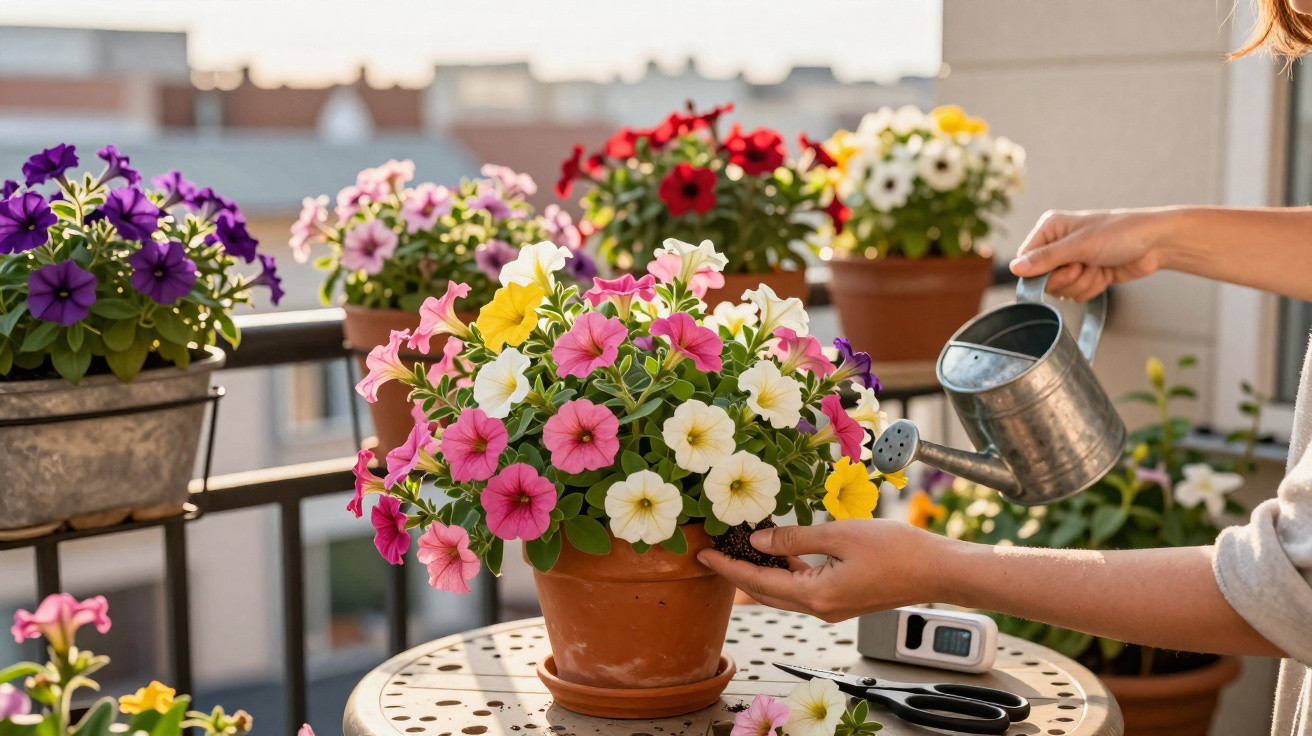
Calibrachoa, often called the mini petunia, brings together prolific blooms, trailing growth and excellent suitability for pots and window boxes. It does not literally thrive without care, but it avoids some of the regular jobs associated with other ornamental plants and will flower for extended periods with plenty of light, balanced watering and free-draining compost. This makes it particularly suitable for balconies, terraces and compact outdoor areas.
Why does calibrachoa perform so well in pots?
This plant has a semi-trailing habit, with stems that spread out and grow over the edge of their container. It creates a flowering cascade without needing an especially large window box, making good use of walls, railings, raised stands and hanging baskets.
Its flowers resemble small petunias and come in a range of shades, including yellow, red, pink, violet, white and mixed colour combinations.
- It is highly suited to pots and hanging baskets;
- It has a compact, trailing growth habit;
- It produces abundant flowers throughout the warmer months;
- It takes up very little floor space on a balcony;
- It can be combined with several colours in the same setting.
How much sun does a mini petunia need to stay full of flowers?
The mini petunia favours very bright positions and flowers at its best when it receives several hours of direct sunshine each day. A sunny balcony is generally a better choice than a spot that remains shaded all the time. In insufficient light, its stems may become leggy and it is likely to produce fewer flowers.
How should you water calibrachoa without causing root rot?
The compost should retain some moisture while the plant is growing, particularly because small pots can dry out quickly on hot days. Problems arise when excess water cannot drain away and the roots stay continually waterlogged.
A container with drainage holes and a light compost mix are essential. Rather than following a fixed watering schedule, adjust how often you water according to the temperature, wind and size of the pot.
- Check the compost moisture before watering again;
- Water until the surplus starts to run out through the drainage holes;
- Do not allow water to sit permanently in the saucer;
- Use a light compost that is rich in organic matter and drains well;
- Keep an eye on whether the compost dries faster during exceptionally hot spells.
Do you need to remove every faded bloom to encourage new flowers?
Many modern calibrachoa varieties are regarded as self-cleaning, meaning they can keep forming buds without needing each spent flower to be removed by hand. This significantly reduces maintenance. If the stems become overly long or untidy, light pruning can restore a more compact shape and encourage fresh growth.
Low maintenance does not mean neglecting the plant
Calibrachoa needs less attention than its flower-filled appearance may suggest, but it still requires nutrients to support such heavy blooming. In pots, where the volume of compost is restricted, periodic feeding with a fertiliser suitable for flowering plants may be needed, depending on the formulation used and the manufacturer's instructions.
The most appealing result comes from maintaining three conditions: ample light, effective drainage and the right amount of water. With these in place, calibrachoa in pots can cover the container edges with small flowers for much of the warm season, providing a colourful, relatively straightforward option for anyone wishing to transform a balcony without relying on a large plant or complicated daily care.




Comments
No comments yet. Be the first to comment!
Leave a Comment