
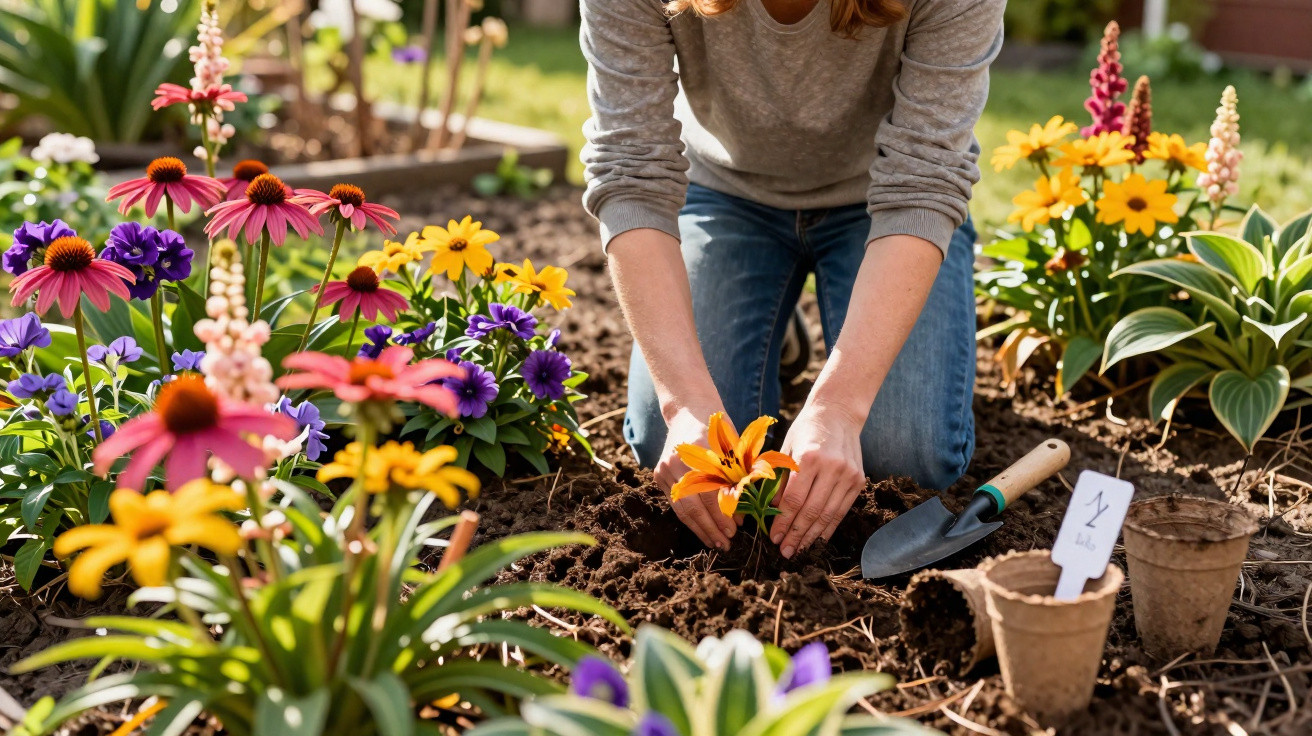
Many keen gardeners are now thinking about costly redesigns and complex planting schemes. Yet often all that is needed is a well-chosen selection of hardy perennials that return reliably year after year. Starting in spring creates the basis for an attractive, low-maintenance garden that lasts, without having to begin again every season.
Why perennials are the best choice now
Perennials, also known as herbaceous perennial plants, stay in the same position for several years. Most die back over winter, storing their energy in roots or rhizomes before bursting into growth again in spring. As the years pass, their clumps grow larger, flowering becomes more abundant and maintenance requirements decline.
“Plant a perennial once – and enjoy flowers, structure and fullness in the border for many years.”
Unlike annual summer bedding plants, they do not need to be sown or planted afresh every year. With careful choices, you can provide continuous flowers, structure and colour in the garden from late winter through to autumn.
Spring planting: the ideal time for new perennials
During early to mid-spring, the soil is usually loose while still retaining moisture. These are precisely the conditions in which perennials establish their roots particularly well. Plants have several weeks, and sometimes months, to settle in before dry spells and periods of heat arrive.
Points to bear in mind:
- The ground must not be frozen.
- Avoid waterlogging; soil should be only lightly moist.
- Ideally, choose a mild, overcast spell of weather.
- Water thoroughly after planting.
In northern areas and at higher elevations, perennial planting generally starts in April or May. In warmer regions, it can often begin as early as March. Making use of this window can produce a respectable display of flowers in the very first year.
Preparing the border: success starts with the soil
Before putting the first perennial into the ground, assess the site carefully. Sunny areas, lightly shaded spots beneath trees and truly dark corners beside walls all have entirely different requirements.
Prepare your border properly as follows:
- Remove old weeds thoroughly, digging out the roots as completely as possible.
- Loosen the soil deeply with a spade or garden fork and break up compacted areas.
- Work in well-rotted compost to add nutrients and improve the soil structure.
- After planting, apply a layer of mulch, such as bark mulch, woodchips or grass clippings, to retain moisture.
“Well-prepared soil means less watering, fewer weeds and plants that remain vigorous for years.”
A burst of colour in sun: perennials for sunny positions
For sunny sites, choose vibrant, heat-tolerant plants that continue to perform through summer. One possible sunny border could include the following:
- Peony (Paeonia): large, often fragrant blooms and a genuine focal point in late spring.
- Lupin: upright flower spikes in many colours, adding instant height to a border.
- Yarrow (Achillea): flat, colourful flower heads that tolerate drought extremely well.
- Crocosmia: slender, arching stems carrying fiery red and orange flowers.
- Delphinium: tall, elegant flower spikes in blue and violet shades, ideal for the back of a border.
- Aster: delivers another flourish of flowers at the end of the season, when many other plants are fading.
- Lavender: silvery foliage, a powerful scent and a magnet for bees and bumblebees.
Combining these plants thoughtfully creates a border full of colour from May that remains attractive into autumn. Free-draining soil is important, as most sun-loving perennials strongly dislike waterlogged conditions.
Shade and partial shade: perennials for cooler corners
Less sunny parts of the garden do not have to remain problem areas. Many perennials thrive in cool, evenly moist places, turning dark spaces into lush, restful retreats.
Ideas for partially shaded borders
- Lenten rose (Helleborus): often flowers while snow is still on the ground, making it ideal for early splashes of colour.
- Coral bells (Heuchera): colourful foliage in green, red, orange or almost black, attractive throughout the year.
- Bergenia: thick, glossy leaves accompanied by pink or white flowers in early spring.
- Astilbe: airy flower plumes that favour fresh, humus-rich soil.
For truly shady spots
- Hosta: an impressive foliage perennial, available in rich green, blue-green or variegated forms.
- Bleeding heart (Cœur-de-Marie): heart-shaped flowers hanging from arching stems, with a distinctly romantic character.
“With the right perennials, even the darkest garden corner becomes a small green stage.”
15 tried-and-tested perennials at a glance
| Perennial | Best position | Key benefit |
|---|---|---|
| Lenten rose | Partial shade | Flowers very early in the year |
| Peony | Sun | Large, fragrant flowers |
| Lupin | Sun | Adds height and structure |
| Penstemon | Sun to partial shade | Long summer flowering period |
| Lavender | Sun | Fragrance and bee-friendly appeal |
| Coral bells | Partial shade | Decorative foliage all year round |
| Hardy geranium (Geranium vivace) | Sun to partial shade | Long flowering period, good ground cover |
| Hosta | Shade | Large, graphic leaves |
| Yarrow | Sun | Tolerates heat and drought |
| Aster | Sun | Flowers in late summer and autumn |
| Bergenia | Partial shade | Robust, even in difficult soils |
| Crocosmia | Sun | Bright summer colour |
| Delphinium | Sun | Tall flower spikes, ideal as a backdrop |
| Astilbe | Partial shade | Light, floating clouds of flowers |
| Bleeding heart | Partial shade | Romantic flower shape |
How to plant perennials correctly
Once the soil has been prepared, planting itself is quick. Water container-grown perennials briefly beforehand so that the rootball is thoroughly moist. Dig a planting hole slightly larger than the pot, gently loosen the roots and set the plant at the same depth at which it was growing in its container.
Spacing is a common mistake: many perennials appear small when bought but spread considerably within one or two years. It is better to leave a little more room, otherwise plants will become crowded later and may weaken.
Low maintenance – but not maintenance-free
Perennials are considered straightforward, but they still need a small amount of attention. Water regularly during the first few weeks after planting, until the plants are established. Afterwards, a thorough watering during dry periods is generally enough.
Spread a thin layer of compost around the perennials once in early spring; this works as a natural slow-release fertiliser. Depending on the species, faded stems can be cut back, and some perennials may even flower for a second time.
Practical garden examples and smart combinations
When planning a new border, it is best to think in layers. Tall perennials such as delphiniums or lupins belong at the back. Peonies, yarrow or penstemon suit the middle, while hardy geraniums and coral bells work well right at the front as a living edge.
In shaded areas, mixing leaf shapes and colours creates interest: large hosta leaves, glossy bergenia foliage between them and the delicate leaves of bleeding hearts. This adds variety even when nothing is in flower.
Risks to keep in mind
Some perennials can spread vigorously over the years, including certain hardy geranium varieties and particularly vigorous yarrow cultivars. To keep them under control, divide the clumps with a spade every few years and give away any surplus sections.
Slugs also require attention: hostas and the young shoots of many perennials are especially appealing to them. Slug collars, copper tape or early hand-picking after damp nights can help to limit damage.
How perennials save money and time over the long term
Especially compared with seasonal balcony plants, perennials quickly pay for themselves. The initial cost occurs only once, the plants return each year and can later be propagated by division. In this way, a starter border can gradually grow into a complete garden.
By planning wisely and choosing robust species, you can visibly improve your garden in just a few weeks while also creating a foundation that will last for many years. Perennials bring structure, colour and life without overwhelming the diary. That is exactly what makes them so appealing to modern, busy garden owners.




Comments
No comments yet. Be the first to comment!
Leave a Comment