
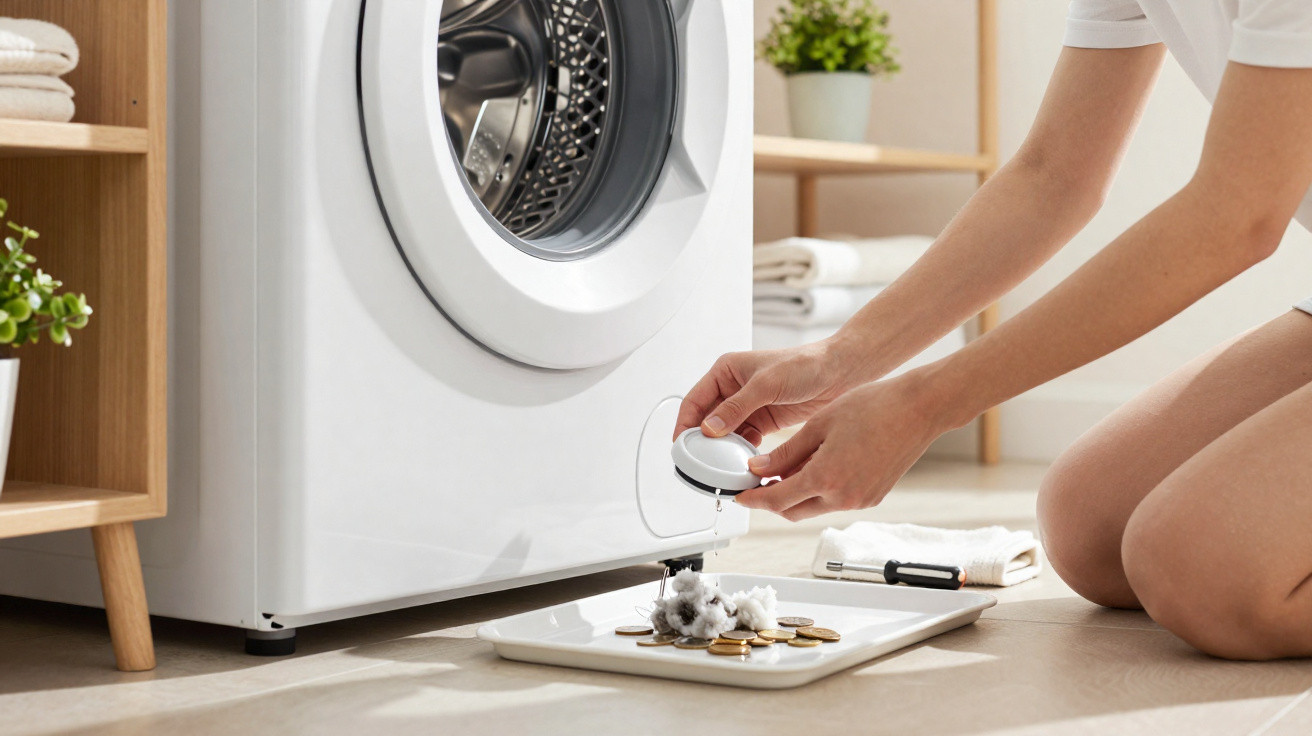
A small component in a washing machine can easily be overlooked during routine cleaning, despite being designed to trap lint, small objects and other debris. Depending on the model, it may be known as a debris filter, pump filter or drain filter, with its position and maintenance requirements varying between appliances.
Why can the washing machine filter collect debris?
During a wash cycle, lint, hair, tiny fabric fragments and items left in pockets may be carried along with the water. Some of this material enters the drainage system, where certain models use a filter to catch larger debris.
If this compartment becomes heavily soiled, it may restrict the flow of water. Some machines may drain more slowly, retain water in the drum or display error codes associated with the drainage system.
What can become trapped in the washing machine filter?
The debris found will depend on the clothing being washed and how the machine is used. Items that may be present include:
- Lint and fabric fibres;
- Hair and pet hair;
- Small pieces of paper;
- Coins or objects left in pockets;
- Other debris carried by the water.
Not every washing machine has a filter that users can access. Some models use alternative filtration systems, while others have filters that should not be removed without guidance.
How can you tell whether the machine has this filter?
Start by checking the manual for your particular model. On many front-loading washing machines, the drain pump filter is located behind a small flap at the bottom front of the appliance. On other machines, however, it may be positioned elsewhere.
Before opening any compartment, switch off the machine and follow the manufacturer's instructions. As some filters can contain residual water, be ready to collect any liquid released while cleaning.
How should you clean the filter without causing problems?
If the manual confirms that the user can clean the filter, carefully remove the debris and wash the part in line with the instructions. Then check that no items are lodged around the access area before refitting the component correctly.
Do not force a flap or part that is not intended to be removed. It is also not advisable to dismantle the drainage system yourself. If the washing machine still has problems after the manufacturer-recommended cleaning process, technical support may be required.





Comments
No comments yet. Be the first to comment!
Leave a Comment