
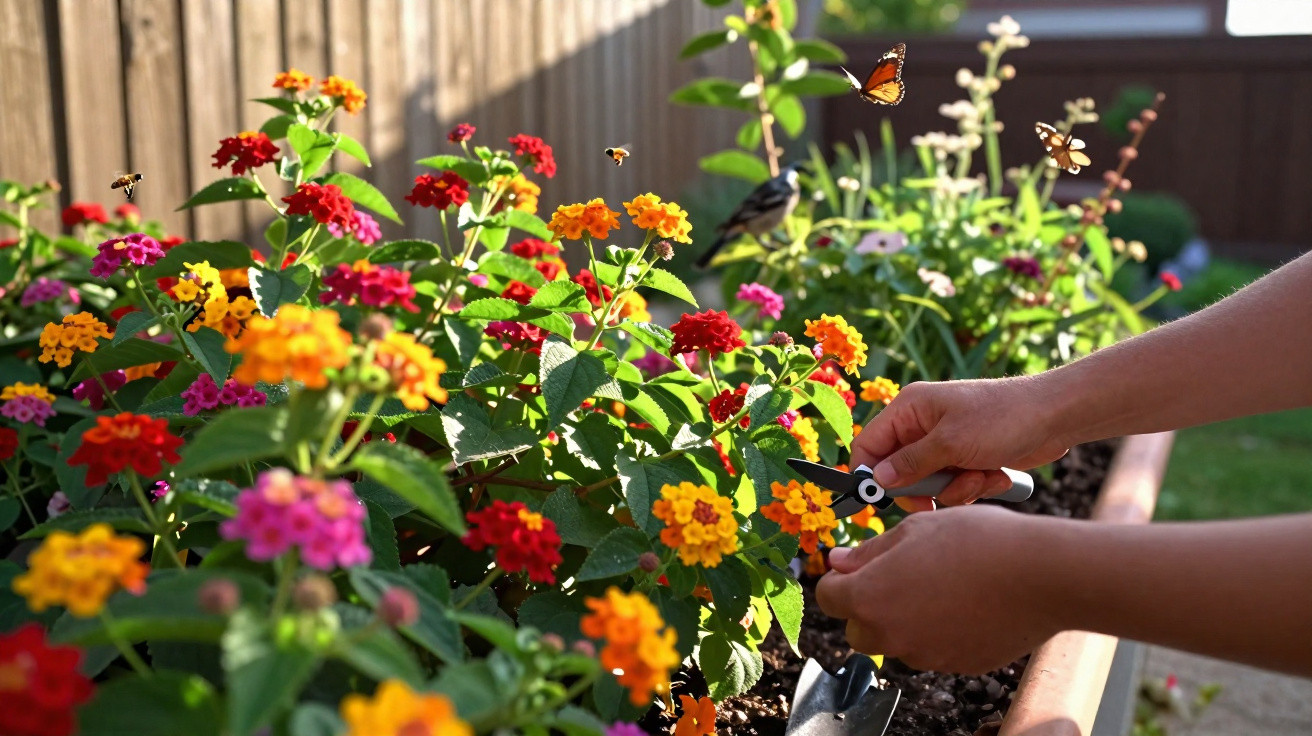
While roses, perennials and summer flowers obediently follow their seasonal schedules, this exotic plant refuses to play along. It takes no break, has no conventional winter dormancy and brings colour when other plants have long since given up. Even so, few amateur gardeners in the UK know about it.
A shrub that flowers throughout the year
The plant in question is Lantana camara, commonly known as lantana. Unlike typical garden plants, which make their big appearance in spring or summer before fading away, this shrub provides colour all year round.
“Lantana camara produces flowers continuously – in mild regions, literally in every month of the year.”
Its secret lies in the structure of its blooms. The plant forms rounded flower heads made up of numerous tiny individual flowers. Rather than opening simultaneously, they emerge in sequence. As older flowers gradually fade, fresh buds push forward immediately behind them. As a result, the shrub never looks bare or ‘finished’, but remains in peak condition.
Visually, Lantana is among the more striking choices for a flower bed. Its colour range extends from vivid yellow to orange, red, pink and violet. Several shades often appear on the same plant at once. Even experienced gardeners are frequently surprised by the intensity of these colours, particularly in full sun.
Winter colour from Lantana camara when other plants have given up
Things become especially interesting as temperatures fall. While many ornamental plants enter winter dormancy, Lantana simply keeps going in mild locations. It produces flowers when the rest of the garden looks grey. For anyone who does not want their outdoor space to appear bleak for months on end, it can be a genuine mood-lifter.
Compared with bulb plants such as snowdrops, which often do not really come into their own until their second year, Lantana shows its willingness to flower very early. Once it has established itself, it operates almost continuously – with no lengthy settling-in period and no ‘disappointing first season’.
Hardly any effort: how easy Lantana camara is to care for
Its lasting floral display may sound like the demand of a high-maintenance diva, but the opposite is true. Lantana is considered exceptionally undemanding and resilient. One of its main advantages is that it copes remarkably well with drought. This is a clear benefit for areas with hot summers or for gardeners who do not wish to water frequently.
The shrub is equally tolerant when it comes to soil. It will grow in poor, stony or sandy ground, provided it remains reasonably free-draining. There is no need for elaborate soil improvement, masses of compost or specialist growing media.
“Lantana camara delivers maximum impact with minimal care – perfect for anyone who does not want their garden to become a full-time job.”
What the plant actually needs
For the shrub to reach its full potential, one factor matters above all: light. Lantana loves sunshine. The more direct sun it receives, the denser and more colourful its flowers will be. It will still bloom in partial shade, but the display is noticeably more restrained.
Its basic requirements can be reduced to just a few points:
- Position: as sunny, warm and sheltered from wind as possible
- Soil: ordinary garden soil, well drained and never permanently wet
- Watering: water thoroughly only during prolonged dry spells
- Feeding: a light application of general-purpose fertiliser in spring is enough; extra feeds are optional
- Pruning: once or twice a year to maintain its shape and encourage fresh growth
In everyday terms, Lantana simply gets on with things in the background. There is no constant deadheading and no weekly treatments for fungal problems or aphids. The plant naturally has fairly strong resistance to common garden diseases.
How Lantana copes in cooler areas
Lantana can be killed by frost when grown in the ground during typical central European winters. Those living in areas with harder frosts should therefore grow it in a pot. In summer, the plant can stand outside in full sun; in winter, move it to a bright, cooler place, such as a conservatory, a stairwell window or a frost-free shed with a window.
In containers, Lantana stays somewhat more compact, which suits balcony gardeners. Moving it is straightforward: bring the pot indoors before the first severe frost, prune it back lightly, water sparingly and place it outdoors again in spring. This makes it possible to enjoy its year-round flowering even in cooler locations.
A magnet for butterflies, bees and birds
Its constant flowering does not only impress people; it also attracts wildlife. Lantana is regarded as a real buffet for pollinators because it supplies nectar almost without interruption. While other plants have gaps between flowering periods, this shrub remains a dependable stop-off point.
“Butterflies positively swarm around Lantana – anyone wanting more life in the garden will rarely go wrong with this plant.”
At a time when pollinators such as solitary bees and butterflies are finding fewer and fewer habitats, plants like this offer a double benefit. Just a few specimens in a border or on a patio can visibly increase insect activity.
After flowering, small dark berries develop and attract numerous bird species. Many gardens benefit twice over: butterflies flutter around during the day, followed by birds pecking at the fruit clusters. A visual focal point therefore becomes a small hub for biodiversity.
Ideal companions in a perennial border
Anyone already creating an insect-friendly planting scheme can combine Lantana successfully with other pollinator magnets. Popular pairings include:
- Asiatic lilies
- lavender
- Echinacea (coneflower)
- sage varieties
- catmint
While these perennials have distinct flowering periods, Lantana fills the gaps between them. This keeps the garden attractive for much longer and more useful for insects.
Versatile planting: from ground cover to container star
Lantana can be used very flexibly in garden design. In warm regions, the shrub can even serve as broad ground cover if it is pruned regularly. In borders, it works as a low flowering hedge or as a colourful feature at the front of taller perennials.
In a container on a balcony or patio, the plant displays all its strengths: compact, dense foliage topped by a carpet of colourful flower clusters. Its vigorous growth fills empty spaces quickly, which is useful in new gardens, freshly planted borders or bare corners of a courtyard.
“Lantana grows quickly but needs boundaries now and then – pruning keeps it in shape while also producing even more flowers.”
The only important point is to keep an eye on its spread. In very warm areas, Lantana can easily become dominant and crowd out weaker neighbouring plants. A firm cut back once or twice yearly is enough to restrain it and make the growth denser.
Practical tips for everyday gardening
Anyone introducing Lantana to their garden can follow these simple routines:
- In spring, choose a sunny site and plant it with some space from neighbouring plants.
- Water thoroughly once after planting, then water only in dry conditions.
- Trim it lightly in June to encourage bushier growth.
- Remove dead shoots in late summer, leaving the stronger ones in place.
- In cool areas, protect container-grown plants from frost and overwinter them frost-free.
In essence, that is all it needs. Many owners report that their Lantana survives for years with almost no special measures, as long as the site is suitable.
What else you should know
One point that is rarely mentioned is that Lantana is considered potentially invasive in some warm countries, as it spreads vigorously in the wild. In central Europe, this is currently of little relevance in gardens because winters are harsher. Anyone living in an especially mild area should nevertheless watch for uncontrolled self-seeding.
Another consideration concerns children and pets. Lantana fruits are regarded as mildly toxic when eaten in larger quantities. Although they may look appealing to birds, they do not belong in children’s hands or in a pet’s food bowl. Households with young children or dogs should place the shrub where nobody can accidentally snack on it.
For many amateur gardeners, Lantana is a kind of counterpoint to delicate trend plants. While orchids, Monstera and other indoor favourites often require specialist knowledge, suitable humidity or precisely measured watering, Lantana is generous in forgiving mistakes. Anyone who has previously thought they lacked green fingers may find surprisingly easy success with this plant.
Overall, the shrub offers an unusual combination: flowers throughout the year, little maintenance and considerable value for insects and birds. At a time of limited free time and costly resources, such an easy-care, continuously flowering plant feels like a small luxury that almost any garden can accommodate – whether in a border, a container or on a balcony.





Comments
No comments yet. Be the first to comment!
Leave a Comment