
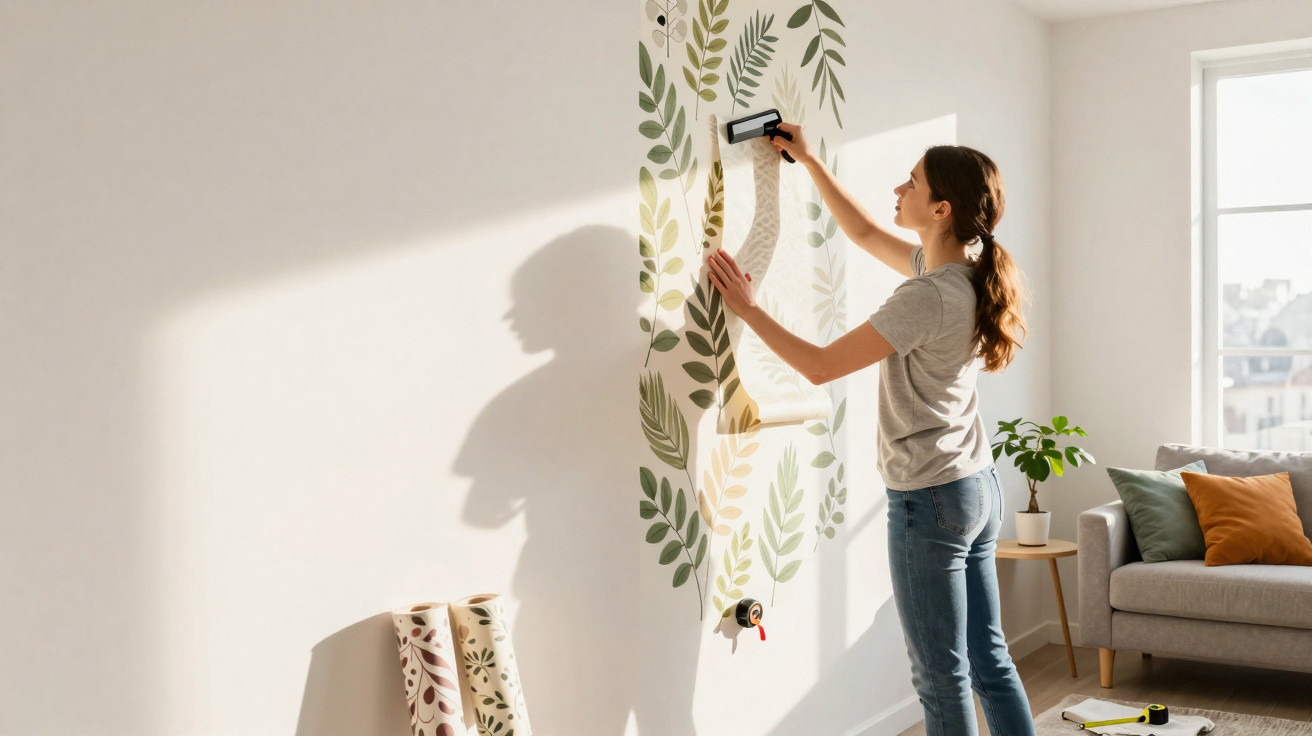
Among today’s options for refreshing interiors without disruptive building work, self-adhesive wallpaper has become a versatile solution for anyone wanting a complete change without spending much or creating a mess at home. It can transform a living room, bedroom, kitchen or even bathroom within a few hours, with no strong paint smell, no tradespeople and no dirt everywhere. You can make the change in one day and sleep in the renewed room that same evening.
What is self-adhesive wallpaper and why is it so practical?
Self-adhesive wallpaper is a vinyl (or similar) wall covering with adhesive already applied to the reverse, protected by a paper or plastic backing liner. This removes the need to buy paste separately, mix products or, in most cases, hire a professional installer.
Available in rolls or panels, it comes in a wide choice of patterns, textures and finishes, including polished concrete, marble, wood, brick, geometric, floral and children’s designs. Its straightforward application and removal make it especially popular in rented properties and for quick updates that require no demolition.
How to apply self-adhesive wallpaper with a neat finish
For an attractive result, preparation is crucial: the wall must be clean, dry, smooth and dust-free, while holes and cracks should be filled and sanded. Where the wall has recently been painted, it is essential to allow the paint to cure for the period stated on the packaging.
The process is simple and can be completed even by someone applying it for the first time, provided they follow a basic working order:
- Measuring and planning: measure the wall, work out how many rolls are needed and choose where to begin, ideally at an unobtrusive corner.
- Cutting the lengths: cut strips with a few centimetres of extra material at the top and bottom so that the finish can be trimmed precisely.
- Applying from top to bottom: gradually remove the backing liner, sticking the wallpaper down slowly and checking its alignment with a spirit level or plumb line.
- Removing bubbles: use a felt-edged smoothing tool or a card covered with a cloth, working from the centre towards the edges.
- Final finishing: trim away excess material with a sharp craft knife, using a ruler as a guide, and cut around sockets with the electricity switched off.
Watch a video on the CLICSTORE YouTube channel explaining how to install wallpaper step by step:
How long does self-adhesive wallpaper last and how should it be maintained?
Its lifespan generally ranges from 3 to 7 years indoors, depending on the quality of the material, direct sunlight exposure and humidity. In kitchens and bathrooms, it may last slightly less time, particularly in places subject to constant hot steam or water splashes.
A few everyday measures help keep the covering looking good for longer, preventing fading, lifting at the edges and stains that are difficult to remove.
How self-adhesive wallpaper transforms rooms with minimal investment
The visual transformation of interiors is the main appeal of this type of wall covering, which can draw attention to a wall behind a bed, sofa or dining table. Light designs create a greater sense of space, while bold patterns help define zones in open-plan rooms.
Another benefit is that it can easily keep pace with life stages and changing tastes, such as replacing a playful children’s bedroom design with something more neutral during adolescence. In offices and home offices, it can also provide a pleasant backdrop for meetings and video calls, without lengthy renovation work or substantial expense.
Comments
No comments yet. Be the first to comment!
Leave a Comment