
They are not puzzled; they are recording it. Before them is a full wall of toilet paper, illuminated like a cosmetics display. There are pastel wrappers, clean typefaces and little labels mentioning “skin comfort” and “sound‑reducing sheets”.
One person chuckles before opening a display sample roll. Their expression shifts, and they offer one word: “Wow.” Someone else quietly says something very close to, “Why don’t we have this at home?”
Across Japan, a fresh category of toilet paper is making its way quietly into bathrooms. It is softer, more considered and made for a country where toilets already resemble compact spacecraft.
Elsewhere, people are beginning to take notice. Frankly, there is a growing hint of envy.
Japan’s new toilet paper obsession
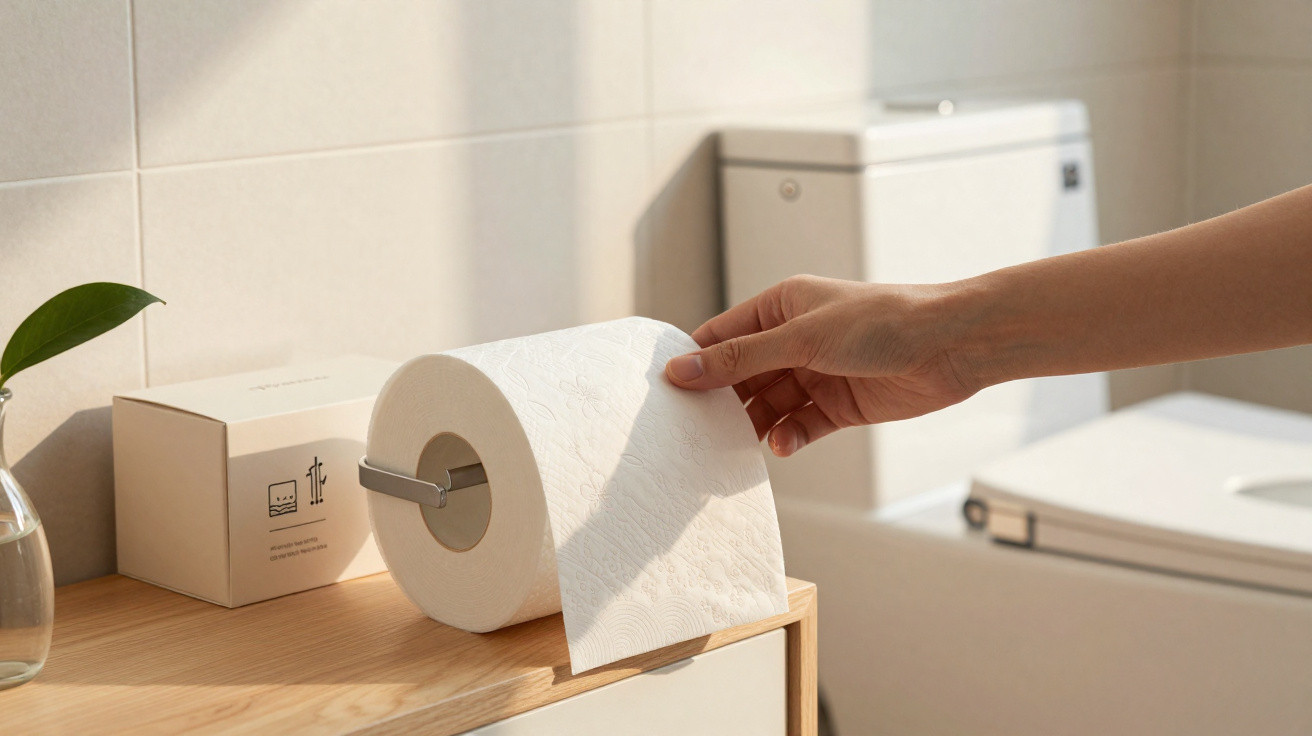
This new Japanese toilet paper is not simply for wiping; it manages the wider bathroom experience. Its sheets are thicker and multi-layered, with an oddly textile-like feel, while the material is formulated to break down cleanly without blocking ageing pipework.
Manufacturers describe certain products as “skin‑care paper” or “quiet paper”. A few rolls give off an almost imperceptible fragrance as they unwind, rather like opening a fresh notebook. Others have been designed specifically to prevent the harsh, awkward tearing noise heard in public toilets.
It may sound like a niche idea, but it feels far from niche when you hold a roll yourself.
At a convenience shop near Shibuya, a small shelf label sets out the differences. One roll is intended for “sensitive skin”, another says it leaves behind fewer fibres, and a third claims to limit airborne paper dust for people with allergies.
A young office worker picks up a two-pack of the new type and tells the cashier with a shrug: “I spend hours commuting and eat on the run. My stomach hates me. This is the least I can do for my body.”
Figures from several major Japanese retailers indicate that premium toilet paper is increasing in sales more quickly than standard products, particularly in urban areas, where homes may be compact but expectations remain high.
Bathrooms have quietly become micro-spas, even in flats no larger than a shoebox.
This development was not accidental. Japan has long approached the bathroom as a design problem rather than an afterthought.
Toilet technology forms part of the country’s identity: heated seats, bidets with adjustable water pressure, air dryers and even built-in white noise intended to cover the most human of noises. After experiencing a Japanese washlet, returning home to a plain cold porcelain seat can feel like swapping a smartphone for a flip phone.
The latest toilet paper is simply the missing connection: a soft, practical layer between human skin and high-tech ceramic.
Why Japan’s new toilet paper differs from yours
The central principle is straightforward: a smart toilet deserves smart paper. Japanese producers therefore began collaborating with dermatologists, plumbers and eco-engineers to rethink an item that most people purchase automatically, without much thought.
The outcome is a denser roll that is not more abrasive and is remarkably economical. Fewer sheets are needed, yet users can feel cleaner and experience less irritation.
Certain varieties include minute quantities of plant-based moisturising agents. There is not enough to make the paper feel tacky, only enough to reduce that dry, sandpaper-like pull.
During a visit to a factory in Saitama, an engineer described the objective as “the moment when your body forgets what just happened”. There should be no rubbing, stinging or remaining discomfort as you get dressed and leave.
Meanwhile, cities had raised concerns about ageing pipes, fatbergs and sewers that struggled with thick imported “luxury” rolls. Japanese paper therefore had to remain strong in the hand while behaving properly in water.
Demonstrations using clear tubes make the point: a sheet stays intact for several seconds, then loosens and breaks apart like a snowflake falling into warm rain.
On paper - literally - that may sound like marketing. Inside a drain, it is serious engineering.
This is the point at which the quiet overseas jealousy emerges. In the UK, parts of Europe and North America, toilet paper has generally fallen into two camps: cheap sandpaper or soft, excessively thick clouds that pipework quietly resents.
Very few brands properly reconcile comfort, plumbing performance and environmental impact. Some “eco” rolls are rough, while certain “ultra soft” options are essentially quilted duvets.
Japan’s newer approach presents a third option: fewer sheets, greater comfort, faster disintegration and less guilt. It responds to a question many shoppers did not realise they could ask in the toilet-paper aisle.
What the rest of the world can actually copy
You may not see this precise Japanese toilet paper in your local shop tomorrow. Even so, you can adopt the thinking behind it when you next choose a multipack on promotion.
Start by turning over the packet. Check three details: sheet thickness, ply count and any reference to “rapid dissolving” or “septic safe”. A thinner but more intelligently made roll with a respectable ply count can outperform a large, fluffy one in everyday use.
Next, find out how many sheets you genuinely use. Count during one quiet weekend, not to judge yourself but simply to observe. Are you pulling out half a roll through habit rather than need?
The Japanese principle is to use better paper, rather than simply more of it.
Noise is another subject frequently raised by people in Tokyo. Public toilets there often feature “sound princess” buttons, which play water sounds so users do not feel audible through the cubicle door.
You can apply a version of that privacy measure at home. Softer paper with a light texture produces less of that dreadful tearing echo, particularly on older holders. If you live in a shared flat or a house with thin walls, you will understand exactly why that is useful.
Let’s be honest: nobody really does this every day. But after changing your routine once or twice, the habit often remains.
Some readers may remain somewhat sceptical. Toilet paper can sound like an insignificant luxury beside, well, everything else happening in the world. Yet bathroom experiences affect comfort, health and even the relationship you have with your own body.
One Japanese designer I spoke to expressed it bluntly:
“We spend our lives pretending toilets are invisible. So we live with bad design, bad smells, bad sounds. When you fix that, people relax. They breathe. They feel human again.”
When the trend is reduced to its essentials, three points emerge:
- Comfort is not frivolous when it relates to hygiene and self-respect.
- Intelligent design can reduce waste without penalising the user.
- Even the dullest products deserve to be reconsidered.
Everyone has experienced that moment in somebody else’s bathroom: you look at the paper on the holder and immediately regret everything. A small improvement in that area can alter more than we tend to admit aloud.
The quiet revolution in the smallest room
Japan’s new toilet paper demonstrates that progress does not always take the form of a gadget or app. Sometimes it is simply a roll on a holder, discreetly addressing three issues at once: comfort, plumbing and the planet.
Once you know about it, the supermarket aisle at home can seem different. You notice bulk packs of basic paper and begin to wonder which compromises lie within those layers. You become aware of how your skin feels after a long day, or how often you pull at your waistband after using the loo.
It is a small prompt to treat yourself more kindly in life’s most private space.
Japanese toilets once seemed like an amusing travel anecdote, the sort of thing you would tell friends after a holiday: the heated seat, the mysterious controls, the unexpected jet of water. The story is now changing. It is no longer only about technology, but also about dignity built into everyday life.
The new toilet paper belongs perfectly within that story. It is less conspicuous than a bidet and more personal than any device. It remains there, unrolling quietly and improving a routine you have carried out thousands of times.
That is where the envy lies. It is neither loud nor resentful, just a gentle, persistent thought: if something this ordinary can be reimagined, what else are we leaving on autopilot?
You may mention it to a partner when you notice a new brand. You may send someone a link, laugh about “fancy loo roll” and privately wonder whether your bathroom could feel a little more like a space you have chosen rather than merely endured.
Perhaps that is the true legacy of Japan’s new toilet paper: not that every country imports identical rolls, but that we begin to expect more from ordinary things. That we ask for comfort without embarrassment. That we see the smallest room as part of our wellbeing, rather than an afterthought behind a closed door.
| Key point | Detail | Benefit for the reader |
|---|---|---|
| Rethought comfort | Softer multi-layer sheets, sometimes enhanced to limit irritation | Less everyday discomfort and a better feeling of cleanliness |
| Respect for pipework | Designed to disintegrate quickly after use | Lowers the risk of blockages, costly repairs and stress |
| Japanese mindset | Treating the bathroom as a space for design and care | Offers practical ideas for improving comfort at home |
FAQ
- What exactly makes this Japanese toilet paper “new”? It combines higher-end comfort features, including a soft texture, skin-friendly layers and sometimes a light scent, with fast-dissolving engineering. That makes it pleasant to use while also being gentler on plumbing systems.
- Can I buy this type of toilet paper outside Japan? Some premium Japanese brands are beginning to appear online and in Asian supermarkets overseas. Alternatively, seek locally available rolls that emphasise quick disintegration and comfort as a middle-ground choice.
- Isn’t a bidet enough without special toilet paper? Bidets reduce the amount of paper required, but most people still use a few sheets for drying or finishing. Better-quality paper makes that final stage gentler and more efficient.
- Is this really better for the environment? Using fewer sheets of a more intelligently designed, fast-dissolving paper can reduce waste and sewer blockages. However, the real impact depends on sourcing, manufacturing and how much paper you use.
- What can I change today if I want a “Japanese-style” bathroom feel? Begin with three improvements: more skin-friendly, quick-dissolving paper; a bidet attachment or handheld spray where possible; and small additions such as improved lighting or a shelf for a candle or plant, making the room feel less clinical.
Comments
No comments yet. Be the first to comment!
Leave a Comment