
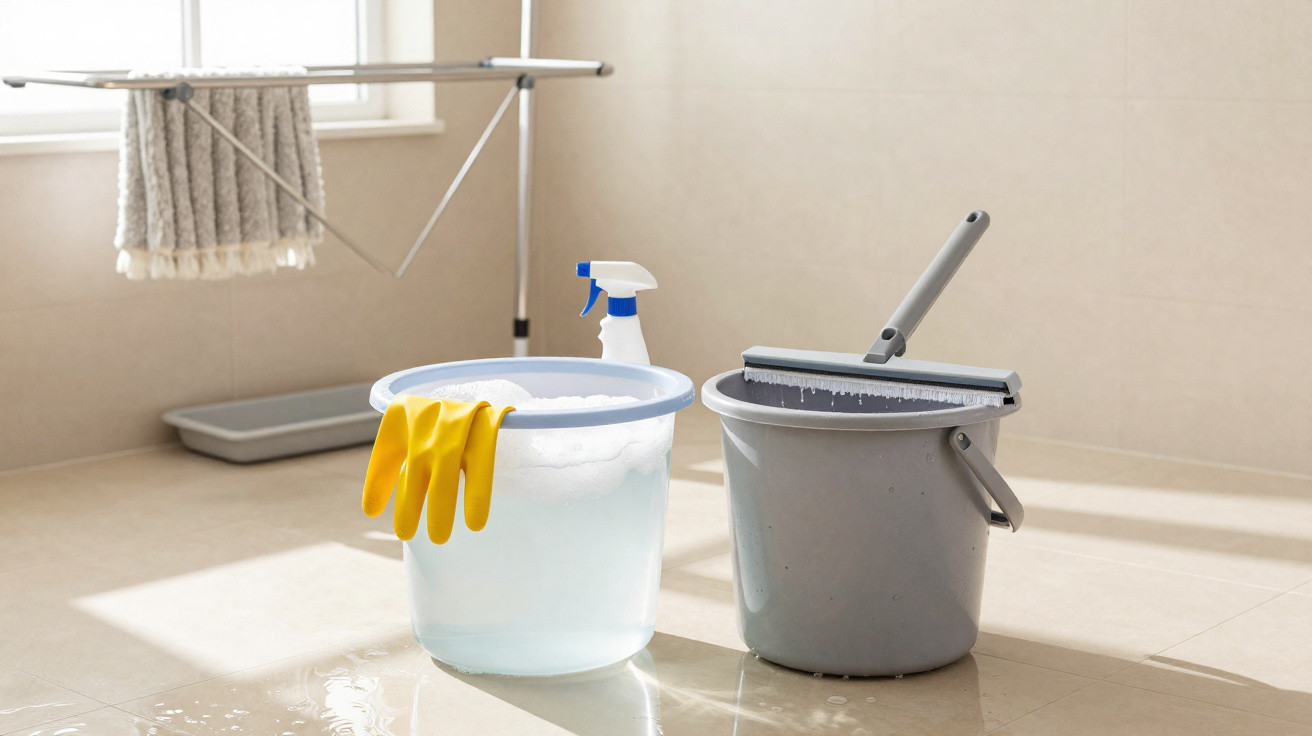
A floor squeegee and bucket help remove dirt, but they can also redistribute it when they are damp and poorly washed. Used water, a contaminated cloth and dirty rubber create a cycle that spreads residue across the floor and encourages unpleasant odours.
Why can a floor squeegee and bucket spread dirt around the home?
When a single bucket holds the cleaning solution, removed dirt and rinse water, the cloth goes back onto the floor carrying some of what it has just lifted away. This can leave stains on the floor, a sour smell and the impression of incomplete cleaning.
The squeegee’s rubber blade can also collect dust, hairs and moisture around its edges and where it joins the handle. Without washing and drying, this debris transfers back to the cloth or floor, contributing to visible dirt and a bad smell.
The mistakes most likely to undermine cleaning are:
- Water: reusing very dirty liquid redistributes residue over the floor.
- Rubber: dust and hairs become trapped along the squeegee’s edges.
- Cloth: dipping it back in contaminates the cleaning solution.
- Moisture: storing tools while wet allows odours to develop easily.
- Smell: a sour odour signals residue and inadequate drying.
What is the difference between cleaning and disinfecting tools?
Disinfection is used on non-living surfaces to reduce microorganisms, but it works best once dirt has been removed. Buckets and squeegees should therefore be washed and rinsed first, then treated with a suitable product according to the label.
Cleaning and disinfection are separate stages: cleaning removes debris, while disinfection reduces microorganisms using an appropriate agent. Applying disinfectant over mud, grease or dust limits the product’s contact with the surface that needs treatment.
How does the two-bucket technique work?
The two-bucket method keeps the clean solution separate from the water used to rinse the cloth. One container holds water and a product suitable for the floor, while the other contains water only, preventing dirt from continually returning to the cleaning mixture.
One bucket cleans while the other rinses
Separating the water prevents the solution from becoming contaminated.
Rinse the cloth in clean water before dipping it into the product again.
Replace the water whenever it becomes dark, cloudy or full of debris.
After using the cloth on an area, rinse it in the bucket of water, wring it out thoroughly, and only then dip it back into the cleaning solution. Change the rinse water when it turns dark, contains dirty foam or has visible residue at the bottom.
To use the method properly:
- put the appropriate cleaning solution in one bucket;
- keep only rinse water in the second container;
- rinse and wring out the cloth after cleaning each area;
- dip it back in only after removing accumulated dirt;
- replace the water once it becomes cloudy or very dark.
How should you wash and dry the bucket and floor squeegee after cleaning?
Once cleaning is finished, empty the water, wash the inside and rim of the bucket with washing-up liquid, rinse it and leave it to dry upside down. Storing it closed or stacked while still damp encourages odour, slime and contamination during the next use.
Wash the squeegee’s rubber blade on both sides, including the corners, grooves and the point where it meets the handle. Dry the tool in a well-ventilated place and clean the handle regularly too, as damp hands leave residue and grease there.
After every use, remember to:
- empty both buckets completely;
- wash the sides, bottom, rims and handles of the containers;
- leave the buckets to dry upside down;
- remove hairs and dust caught on the squeegee’s rubber blade;
- clean the handle and store the tool in a ventilated place.
How often should the floor squeegee and bucket be sanitised?
Anyone who understands why a floor cloth should not be left soaking in a bucket will recognise that the same care applies to these tools. A dry bucket, washed cloth and clean squeegee break the cycle of moisture and odour.
They should be sanitised after every cleaning session, with periodic disinfection according to the product and the material type. Never mix cleaning chemicals, follow the dilution stated on the label, and replace the squeegee when its rubber blade is misshapen, cracked or has a persistent smell.


Comments
No comments yet. Be the first to comment!
Leave a Comment