
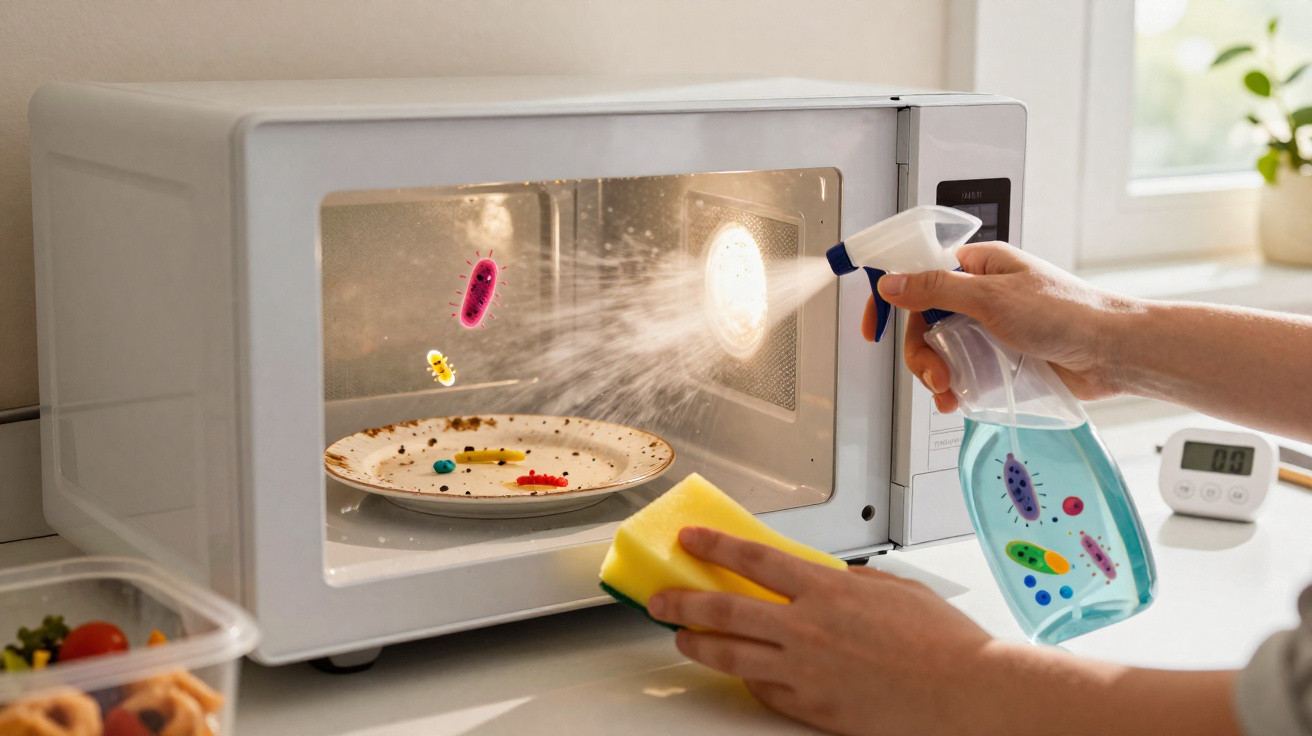
Microwaves are widely seen as a quick, convenient everyday solution: reheating leftovers, defrosting frozen food and bringing coffee back up to temperature. To many people, the appliance almost seems like a miniature steriliser – surely radiation and heat will simply “burn away” anything unclean. A recent study challenges that assumption: hundreds of bacterial species survive the process surprisingly well and may even find ideal conditions inside the appliance.
What researchers found inside microwave ovens
For the study, researchers took samples from numerous microwave ovens in homes, offices and shared kitchens. Even experienced microbiologists were surprised by the findings: more than 700 different bacterial species were detected, many of them alive and able to reproduce.
Bacteria from the Bacillus and Clostridium genera were especially noticeable. These microbes can form spores, which act rather like protective survival capsules. In this state, they can withstand heat, dryness and even some microwave radiation. It is precisely these spores that make thorough cleaning so difficult.
A microwave oven does not work like a disinfection device – live bacteria can still remain inside, even after repeated heating.
Many of these microorganisms gather in the same recurring places: baked-on food residue, beneath the turntable, in the gap around the door seal or within tiny cracks in the interior lining. These areas can develop a damp, nutrient-rich layer that provides ideal conditions for bacterial colonies.
Why these microbes can cause problems in everyday use
Not every bacterial species identified automatically poses a health risk. Microbes are present throughout our surroundings, on our skin and even in our gut, and we coexist with many of them without difficulty. However, the samples also repeatedly contained species known to cause digestive complaints and infections.
Possible health effects
The researchers identify the following typical risks:
- Gastrointestinal symptoms: nausea, abdominal cramps and diarrhoea after eating contaminated food.
- Food poisoning: certain bacteria produce toxins that can cause symptoms even in small amounts.
- Risks for vulnerable groups: children, older people, pregnant women and people with weakened immune systems often react more severely.
The situation becomes particularly critical when several factors occur together: a dirty appliance, food containing raw meat, inadequate heating and food being left at room temperature for too long. Under these conditions, individual bacterial species can multiply at an extremely rapid rate.
Shared kitchens present a particular risk
The study also found that microwaves in offices, schools and workshops generally perform considerably worse than appliances in private kitchens. Many users do not feel personally responsible, no one cleans them regularly, and food splashes are left to build up on the walls.
When the same microbes repeatedly transfer from these surfaces to fresh food, the likelihood of infections rises. Anyone who is already susceptible or has underlying health conditions should take particular care when using such appliances.
Why heat and radiation do not kill everything
The idea of a “sterile” microwave oven remains persistent, but the physical reality is far more nuanced.
How a microwave oven actually works
Microwave radiation primarily sets water molecules in motion. That movement creates friction, which generates heat and warms the food. What matters, therefore, is the temperature reached inside the food and how long it remains there, rather than the radiation itself.
Several issues can arise:
- Food is often heated unevenly, particularly when portions are large or foods are dense.
- The edges may become hot while the middle remains only lukewarm – an ideal area for microbes.
- Spore-forming bacteria can survive even high temperatures for a limited period.
- The appliance’s interior usually becomes much less hot than the food itself.
As a result, a kind of basic population of live bacteria can remain in the appliance, receiving fresh nourishment with every new splash or crumb.
How to make your microwave oven much safer
The reassuring news is that there is no need to panic or remove the appliance from the kitchen. A few consistent habits can substantially reduce the risk.
A cleaning routine that genuinely helps
Experts recommend three straightforward steps:
- Clean thoroughly every week
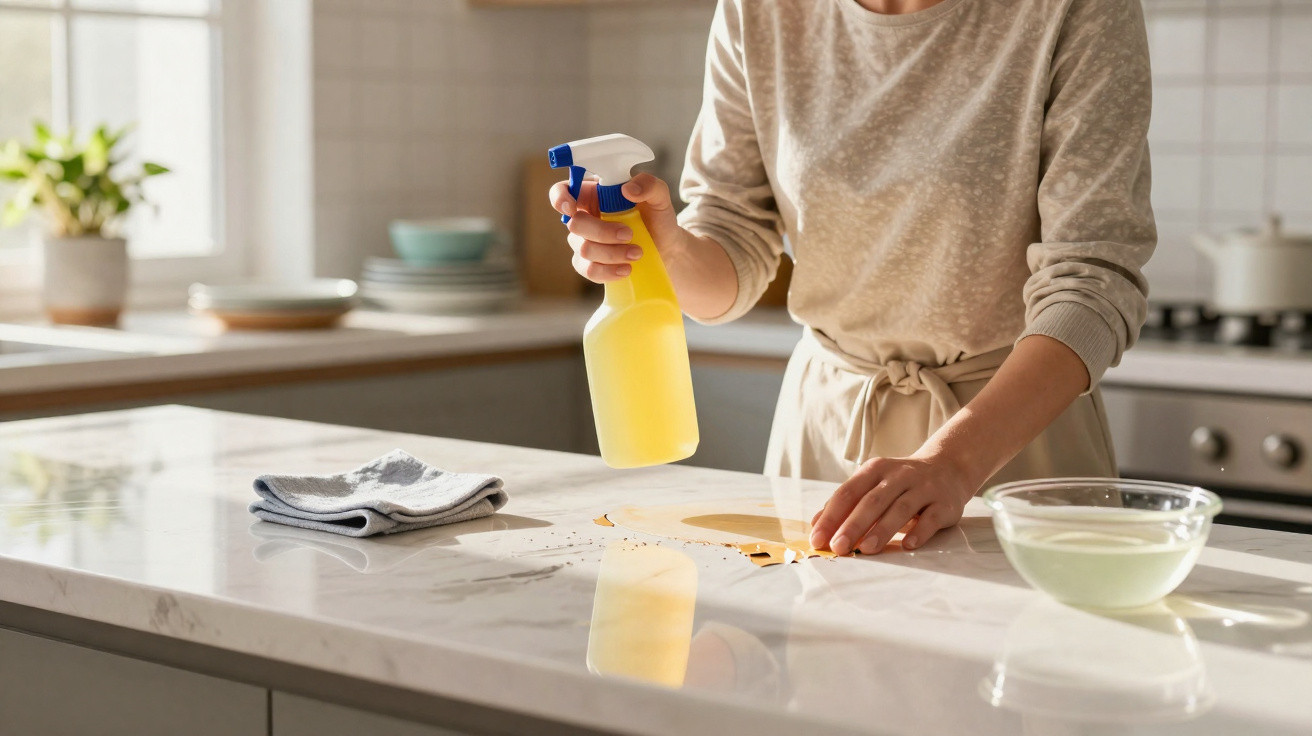
Wipe the interior walls, ceiling, base and turntable using a damp cloth and a suitable cleaner. Remove all visible food residue completely. - Do not overlook hard-to-reach areas
The door seal, corners and the area beneath the turntable are common problem spots. Cotton buds or a soft brush can be useful here. - Deal with splashes immediately
Fresh marks are far easier to remove before they dry out and become a breeding ground.
Many households also use a familiar method: heat a bowl of water with a little lemon juice or vinegar for a few minutes, leave it briefly, then wipe the interior clean. The hot steam loosens grease and crusted residue, while the acidity makes conditions less favourable for bacteria.
Avoiding sources of contamination while reheating
A great deal can go wrong – or right – during everyday use. The most important points are:
- Cover food wherever possible (with a cover, microwave lid or plate) to prevent splashes.
- Reheat leftovers only once, rather than repeatedly heating and cooling them.
- Stir larger portions during heating so that everything becomes evenly hot.
- Do not leave food uncovered in the appliance for long after heating.
- Check regularly that the seal and door still close properly and show no signs of damage.
Anyone who treats their microwave like an ordinary cooking appliance rather than a magic box can greatly reduce the risk of microbe-contaminated food.
When kitchen bacteria become interesting for research
The study is not limited to warnings about poorly cleaned appliances. The microorganisms discovered are also considered highly interesting scientific models because of their ability to endure extreme conditions.
Why heat-resistant bacteria interest industry and research
Many of these microbes produce enzymes that remain stable even at high temperatures. Such molecules are attractive to several sectors:
- Waste processing: heat-stable bacteria could break down organic waste in facilities where ordinary microbes would already have died.
- Pharmaceutical and chemical industries: enzymes that tolerate high temperatures can simplify certain production processes and save energy.
- Astrobiology: resilient microbes serve as models for understanding what life on other planets might look like.
This unexpectedly turns the microwave oven into a type of mini laboratory, where bacteria develop survival strategies that could later be useful in technology and medicine.
What many people still underestimate about microwave ovens
Two misunderstandings repeatedly emerge in conversations with users. Both can encourage careless behaviour.
“If it is hot, it is safe” – often not true
The surface temperature reveals little about what is happening at the centre. Dense foods such as casseroles or pieces of meat can remain considerably cooler inside. Bacteria may survive there even when the edges are already steaming.
When reheating leftovers, it is sensible to choose a smaller portion if in doubt, stir it and make sure the entire serving is hot throughout. For vulnerable people, a quick temperature check with a food thermometer may be useful.
“My appliance looks clean” – an optical illusion
Shiny walls do not necessarily mean that the interior contains few microbes. Thin, barely visible layers of grease are enough for microorganisms to cling to surfaces and find nutrients. Odours are often a late warning sign; by that point, a biofilm may already have formed long before.
A fixed cleaning routine – for example, on the same day each week – helps maintain the interior even when it appears unremarkable at first glance.
Practical guidance for everyday life
Regularly maintaining your microwave oven, heating food carefully and removing splashes straight away can significantly reduce the risk. Hygiene in this context does not mean creating a sterile cleanroom, but striking a sensible balance: the appliance can remain in the kitchen, although it needs more attention than many people currently give it.
It is striking that these irritating, difficult-to-remove bacteria could eventually lead to new applications in technology and medicine. For now, a critical look at your own appliance is enough in everyday life – and perhaps the decision to pick up a cloth and cleaner today after all.

Comments
No comments yet. Be the first to comment!
Leave a Comment