
Bagged lettuce can become soggy within days, plastic wrap can seem needlessly wasteful, and no one wants limp leaves on a weekday dinner plate.
As more people fill their fridges with greens to make cooking easier and eat more healthily, salad can go from crisp to disappointing with surprising speed. Fortunately, there is an easy, low-waste way to preserve it for days, without using aluminium foil or cling film.
Why salad wilts so quickly in the fridge
Lettuce may look delicate because it is. Every leaf consists largely of water held inside thin-walled cells, which readily collapse when stressed. Salad is damaged especially quickly by two factors: moisture with no escape route and changes in fridge temperature.
When leaves are put away wet, they begin to spoil. Surplus water provides ideal conditions for mould and bacteria, particularly if air cannot move around the leaves. This is why lettuce tightly enclosed in plastic or foil often develops brown, slimy edges.
Temperature matters too. Warm areas in a packed fridge, or salad left on the worktop for “just a bit”, place leaves under stress. They lose moisture, become soft and turn darker. Leaving a salad bowl in direct sunlight causes the same problem.
The key is not just keeping salad cold; it is keeping it cold, dry and able to breathe.
Certain fruit and vegetables also emit ethylene gas as they mature, and lettuce is particularly sensitive to it. Keeping salad beside apples or ripe avocados can reduce its lifespan without you noticing.
Why foil and plastic wrap do not protect salad
Many homes still wrap whole lettuce heads or leftover salad in aluminium foil or plastic wrap. Although this may appear convenient, it seldom produces good results.
- Foil prevents airflow: when it is wrapped tightly, trapped moisture remains inside and makes leaves more likely to become slimy.
- Plastic wrap behaves like a small greenhouse: condensation accumulates, water droplets settle on the leaves and hasten their breakdown.
- Both lead to uneven temperatures: the outer leaves become cold while the centre warms slightly, putting plant tissue under strain.
Both choices also create waste for an ingredient that many households purchase several times each week. Wrapping a lettuce in multiple layers of plastic conflicts with the idea of a light, fresh meal.
The paper towel container method: step by step
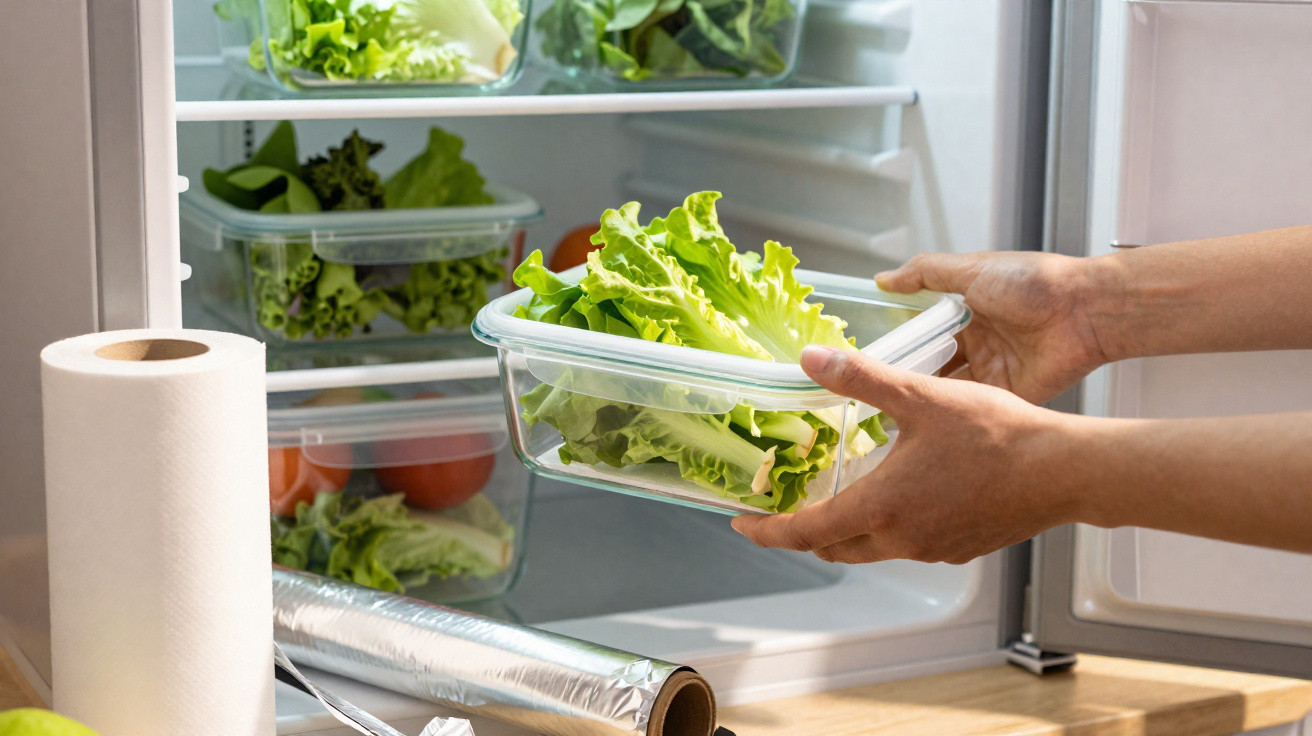
A straightforward method, used by many chefs and food stylists, can keep lettuce fresh for longer without foil or wrap. It only requires two items most people already have: paper towels and a rigid container.
Step 1: Rinse carefully, then dry completely
Pull the leaves apart and rinse them beneath cool running water. Remove every trace of soil, sand and insects hidden in the folds. Dirt retains moisture and makes spoilage happen faster.
Next, get rid of as much water from the leaf surfaces as you can. A salad spinner is effective, although clean kitchen towels work too. Pat leaves dry instead of squeezing them, as squeezing can bruise their fragile structure.
Dry leaves last longer. Surface moisture is the fast lane to wilted, slippery salad.
Step 2: Use absorbent paper to line the container
Choose a large, clean airtight container with a lid. Rectangular food containers often accommodate full leaves more easily than round bowls. Place one or two layers of paper towel across the base. Its fibres work as a sponge, absorbing the moisture naturally released by the salad over time.
Step 3: Arrange the leaves without overcrowding them
Lay the lettuce over the paper in one layer, or no more than two. Do not press the leaves down. Pressure harms the veins and produces damp patches where deterioration begins.
When you have more salad than the container can hold comfortably, use another container rather than piling it too high. Leaves packed too closely deteriorate more rapidly than leaves with some room around them.
Step 4: Add paper on top, then close the lid
Lay a further sheet of paper towel over the leaves. This upper layer absorbs condensation from the lid and stops droplets coming into direct contact with the salad.
Secure the lid and put the container in the fridge. The salad drawer generally provides a useful combination of cool conditions and moderate humidity. A middle shelf is also suitable, provided the container is not directly against the rear wall, where ice can sometimes develop.
With this method, many households keep lettuce fresh for 7 to 10 days, instead of throwing it out midweek.
What not to cut and where to keep lettuce
The base of a lettuce head is one often-missed detail. Keeping the core in place helps leaves retain their shape and moisture. Cutting away the root end exposes more of the leaf edges, allowing water to escape more quickly.
When you intend to store salad for several days, leave the base uncut. Take complete leaves from the outside, but wait until the day you want to shred or chop it before trimming the stump.
Where you place lettuce in the fridge is important as well. Keep it away from:
- Ripe apples
- Pears
- Avocados
- Bananas
- Tomatoes
These foods release ethylene, a ripening gas. Lettuce does not ripen; it breaks down. Ethylene speeds up this process, meaning a carefully stored container of salad may still wilt sooner if placed directly next to a fruit bowl in the fridge.
Paper towels compared with reusable alternatives
Many people are concerned about using disposable paper for vegetables they purchase each week. However, alternatives can recreate the same moisture-control benefits while producing less waste.
| Method | How it works | Best for |
|---|---|---|
| Paper towel in container | Absorbs excess moisture, easy to set up | Busy households, short- to medium-term storage |
| Cotton tea towel wrap | Reusable cloth absorbs water, then goes in the wash | People reducing disposables, larger fridges |
| Breathable produce bag | Light air circulation, slows condensation | Whole heads of lettuce, market shoppers |
Putting a clean cotton tea towel inside a lidded container can achieve results similar to paper. The cloth takes in moisture while shielding leaves from the coldest areas of the fridge. Wash the towel regularly so that it does not harbour bacteria.
Tips for making lettuce last even longer
Prepare it once and plan several meals
Washing and drying salad takes effort, so people often delay doing it and then abandon the plan halfway through the week. Preparing it once and storing it properly means later meals can be assembled within minutes.
Once the container is ready, plan ahead. Eat the crispest outside leaves in raw salads during the first few days. The slightly softer leaves from the centre are useful in:
- Warm grain bowls, stirred in at the final moment
- Fast stir-fries, where slight wilting is intentional
- Green omelettes or frittatas
This means that, even when the texture is less than perfect on day nine, the leaves can still be used on the plate rather than thrown in the bin.
Look out for early signs of spoilage
Check inside the container every few days. Replace the paper towels if they are saturated. If a leaf appears slimy or has an unpleasant smell, take it out immediately to prevent it affecting the others.
A five-second check can save an entire box of salad from going off before the weekend.
Using the same method for other greens
The paper towel container method is suitable not only for traditional butterhead or romaine lettuce, but for other delicate greens too. Spinach, rocket, lamb’s lettuce and mixed salad leaves are often sold pre-washed in plastic bags, then begin to decline as soon as the bag is opened.
Moving them into a lined container can give them several extra days. More robust greens, including kale and cabbage, cope slightly better with moisture, but they too benefit from being kept dry and loosely packed, particularly after chopping.
Some home cooks make a “greens box” part of their routine. At the beginning of the week, they wash several types of leaf, store them with the same method and use the container whenever a meal needs something fresh. The habit cuts waste, reduces preparation time and encourages the household to eat vegetables more frequently.
This method can help the budget as well. Discarding half a lettuce every week becomes expensive over a year. Keeping greens fresh for 7 to 10 days allows families to purchase slightly larger amounts when prices are lower, have side dishes and sandwich fillings for the week, and maintain an orderly fridge.

Comments
No comments yet. Be the first to comment!
Leave a Comment